What is Social Media Analytics
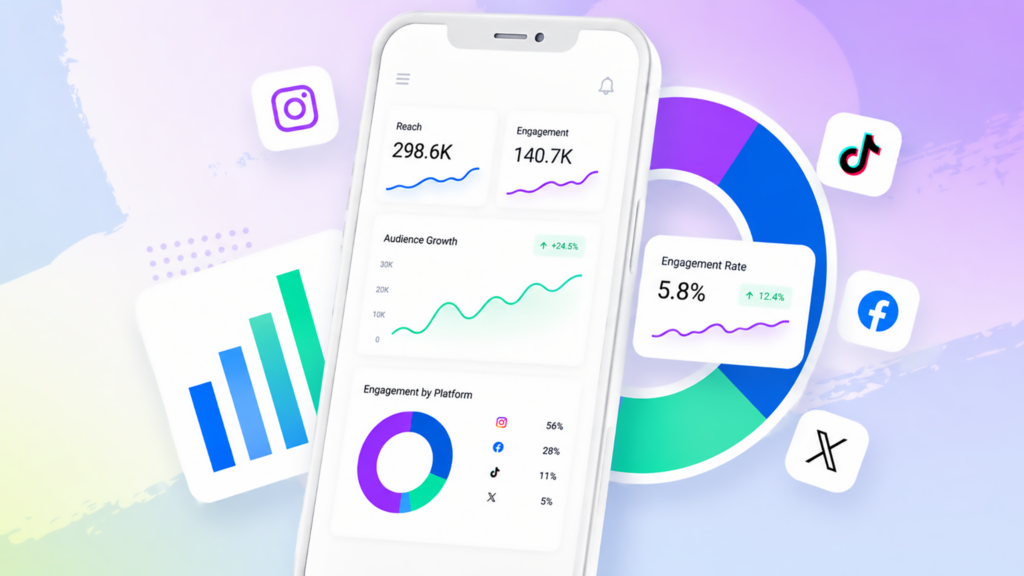
Social media analytics provides the context needed to assess content performance, review progress, and plan what to do next. Without it, important management decisions may rely on instinct rather than a connected view of performance. In reality, social media analytics connects several activities, including choosing relevant questions, comparing performance, identifying patterns, tracking change, and communicating results. When these areas work together, teams gain a clearer basis for planning content and making everyday management decisions.
This article unpacks what social media analytics involves and the different areas that are important to understand if you are looking to build up your own analytics activities. In this article, we will explore different areas of social media analytics that involve spotting content trends, benchmarking your competitors, and generating reports. We will do this to help you better understand all the different benefits that social media analytics can bring when crafting and assessing your social media strategy.
What is social media analytics?
Social media analytics is the structured analysis and interpretation of data from social profiles and content. It connects metrics with practical questions so that teams can understand performance and make informed decisions. Strong results can point to approaches worth testing again, while weaker results can reveal areas that need closer review.
Social media analytics also involves tracking and monitoring performance over the long term. Consistent measurement makes gradual changes easier to recognize and keeps short-term fluctuations in perspective. Reviewing content patterns over time can reveal optimization opportunities for future posts, formats, and topics. Regular benchmarking against relevant competitors can then help you assess how your progress compares within the wider market context.
In practice, your understanding of social media analytics should focus on 4 areas:
- How to select your metrics to analyze and track them in both the long and short terms
- How to benchmark your competitors and compare profiles
- How to identify recurring patterns that can guide content optimization
- How to present developments clearly through dashboards and reports
To better help you understand how to use social media analytics to your benefit, the rest of the article will go into more detail about what to pay attention to for each area.

Using Social Media Analytics Effectively
The four how to questions above form the practical foundation of social media analytics. The following sections take a closer look at each area and explain what you need to understand. Together, they show how these activities connect and support better-informed social media decisions.
How to select your metrics to analyze and track
Metrics are the starting point for understanding what is happening across your social media profiles and content. The most important metrics are the ones that connect directly to your objective and the decision you need to make. Before you begin tracking, make sure you can explain why each metric matters and what it can help you understand.
You can start by asking yourself the following questions:
- Which objective or decision should each metric help you evaluate?
- Which metrics best reflect the result you need to understand, such as visibility, interaction, audience development, or content performance?
- Over what timeframe should each metric be tracked to distinguish immediate changes from longer patterns?
- Which reference point will give the metric useful context, such as past performance, similar content, owned profiles, or competitor averages?
Once you have chosen your metrics and understand what each one should help you evaluate, the next step is to track them consistently. That requires decisions about the timeframe, comparison period, and context used to interpret the results.
Short-term tracking helps you examine what happened during a specific reporting period or around a particular piece of content. It can reveal immediate changes connected with a campaign, a shift in publishing activity, or an exceptional post. However, a short window can give an unusual result too much influence if it is viewed without a broader comparison.
Long-term tracking shows how performance develops across several consistent periods. It helps distinguish a temporary change from a pattern that continues over time. A longer timeframe gives you more data points to analyze, making repeated developments easier to recognize. It also reduces the chance that one unusual post or reporting period leads you down the wrong path.
Using a variety of metrics across both short and long timeframes creates a stronger basis for comparison. Short periods can help you inspect specific changes, while longer periods show whether those developments persist. This makes it easier to benchmark performance fairly and recognize recurring patterns across posts, topics, or formats. Those patterns can then point to content optimization opportunities that deserve a focused test. Having a social media analytics tool that allows you to adjust your timeframes is key because it lets you examine the same metrics at the level the question requires.
How to benchmark your competitors and compare profiles
Social media benchmarking is the process of comparing your profile and content performance with competitors or other similar profiles. It gives individual metrics context by showing how your results relate to other relevant profiles. This makes it easier to assess whether your performance is stable, improving, or needs closer review. A consistent benchmark gives you a clearer view of where your performance stands within the selected group.
Benchmarking is also important for goal setting. By reviewing performance across relevant competitors, you can calculate averages that provide an accurate reference point. Those averages can help you set goals based on observed performance rather than an isolated number. A social media analytics tool that can track and analyze dozens or even more competitors is important when you need larger data sets. It allows you to review more profiles and build a more informed picture of typical performance within the selected comparison.
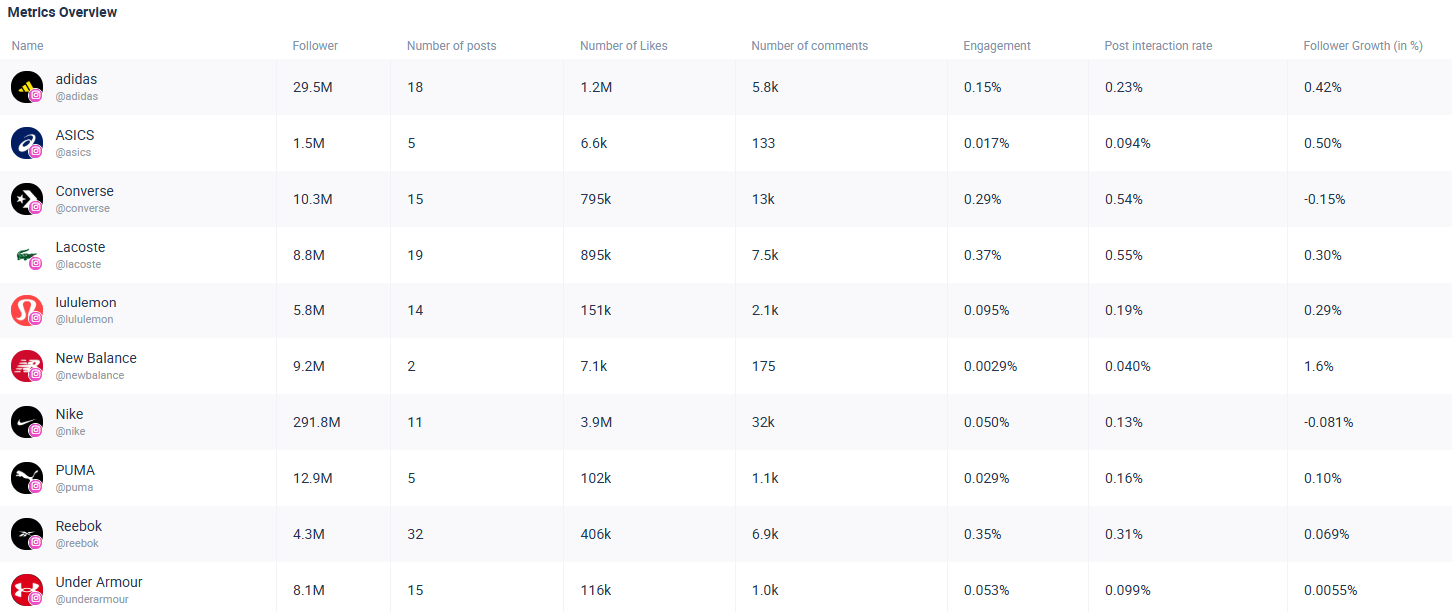
Overall, benchmarking can help you identify which profiles are performing most successfully within the selected comparison. You can then analyze those profiles more closely to understand which topics, formats, publishing patterns, or other visible approaches appear alongside their results. The comparison can cover many metrics, including those shown in the table below.
How to identify recurring patterns that can guide content optimization
Content optimization in social media analytics is the process of using performance data to improve future content decisions. It begins with patterns and trends found in your own past posts as well as the performance of your competitors. The goal is not to copy another profile or treat a correlation as proof of cause. Instead, the combined view helps you form focused hypotheses and decide what to test in future content.
Content optimization analyzes social media data to find patterns that you can use to better plan your future content. These patterns can show how different publishing choices relate to performance over time. Teams can use them to explore the best times to post, top-performing hashtags, or content formats that suit their objectives.
Below are some important content optimization techniques to consider:
1. Identify the Best Times to Post
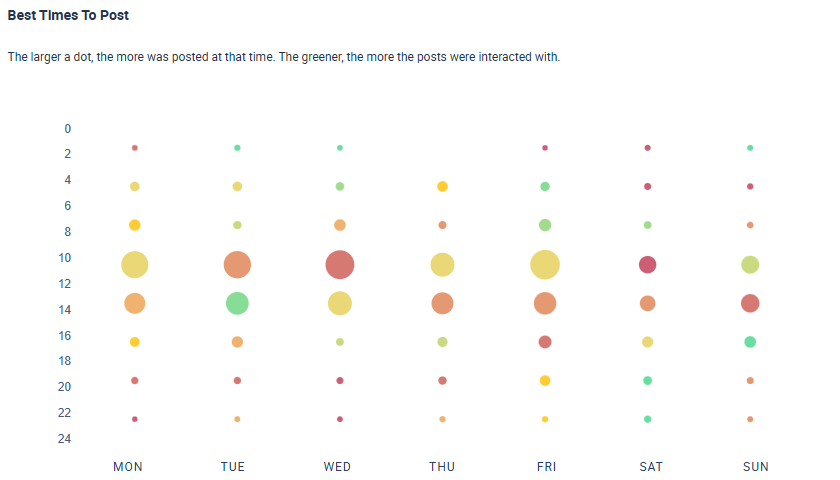
You can find the best times to post by comparing how similar content performs across different publishing times. This technique allows you to review your own historical data as well as data from comparable competitors. It allows you to use past patterns as a basis for testing future publishing times. Below is an example of how to visualize the best time to post using a social media analytics tool:
2. Find top content formats
Content formats are the different ways a post can be presented, such as Reels, Shorts, or carousels. Comparing these formats helps you see which ones are associated with stronger results based on the past activity of your target audience.
3. Review the best-performing hashtags
Hashtag analysis looks at how posts using specific hashtags perform across a consistent period. By comparing those posts, you can identify which hashtags correlate with metrics such as engagement rates. The relationship should be reviewed alongside the topic, format, audience context, and campaign activity. A correlation can guide further testing, but it does not prove that the hashtag caused the result.
4. Use a Tagging Analysis
A tagging analysis groups posts according to selected characteristics, such as tone, topic, format, or the number of people featured. Once posts are tagged consistently, you can compare the performance of each characteristic across relevant metrics. This makes it possible to see which characteristics correlate with higher levels of post interaction, for example.
How to present developments clearly through dashboards and reports
Visualizing and presenting social media results is essential for helping your team and management understand performance. A clear report should make it easy to see what is working, what is not, and which developments need attention. When the information is focused and consistent, it gives everyone a stronger basis for discussing priorities and next steps.
A useful reporting setup should include a clear mix of the following elements:
- A clear overview of what happened during the reporting period
- Charts that show trends, comparisons, and areas that may need improvement
- A clearly defined timeframe for every metric and comparison
- Plain language explanations that help every reader understand what the figures and charts show
A social media analytics dashboard and regular reporting exports can help keep teams and management informed between review meetings. A dashboard provides an ongoing view of selected indicators, while an export creates a version that can be shared or discussed. Using both formats can make it easier for everyone to follow changes without rebuilding the same information each time.
A social media analytics tool that automates report generation can reduce repetitive setup and support a more regular reporting rhythm. If the tool also uses AI to draft descriptions of visible changes, that can be beneficial as a starting point, provided a person reviews the wording, context, and interpretation before it is shared.

Conclusion: Better Analysis Leads to Clearer Decisions
Effective social media analytics depends on a well-defined measurement framework, consistent metric definitions, and reporting periods that match the questions being asked. Review that setup regularly so the analysis remains relevant, comparable, and useful for decision making.
If you are looking for a tool to help you grow your social media presence, you can try Fanpage Karma’s free 14-day trial today. Fanpage Karma offers unlimited profile tracking and analysis, giving you the ability to analyze large data sets and better understand your competitors. As an all-in-one social media tool, it provides powerful analytics, community management, publishing, and research features.
You can also take part in Fanpage Karma’s free weekly webinar to find out more about all that this tool can do.