Social media holiday calendar 2026: How to choose the right dates for your brand
- Ask these questions before adding a date
- How much effort should each occasion get?
- Social media holidays 2026: Six year-end dates and content ideas
- Plan the full timeline, not just the posting date
- How to tell whether your content met its objective
- Conclusion: Relevance matters, not how many dates you cover
Halloween, Black Friday, Christmas: you barely have one date planned before the next needs your attention. Then there are countless other observances that all seem to call for a post. Before long, your social media holiday calendar becomes a to-do list for your team to work through. Yet a familiar occasion guarantees neither visibility nor good results.
How can you turn that into a plan that helps you make decisions rather than creating an obligation to post? This article shows you how to select occasions, decide how much effort to invest and interpret the results. Six examples from October to December 2026 put the approach into practice. They’re a focused selection, not a complete annual calendar. Your calendar is a decision-making tool, not a list of obligations.
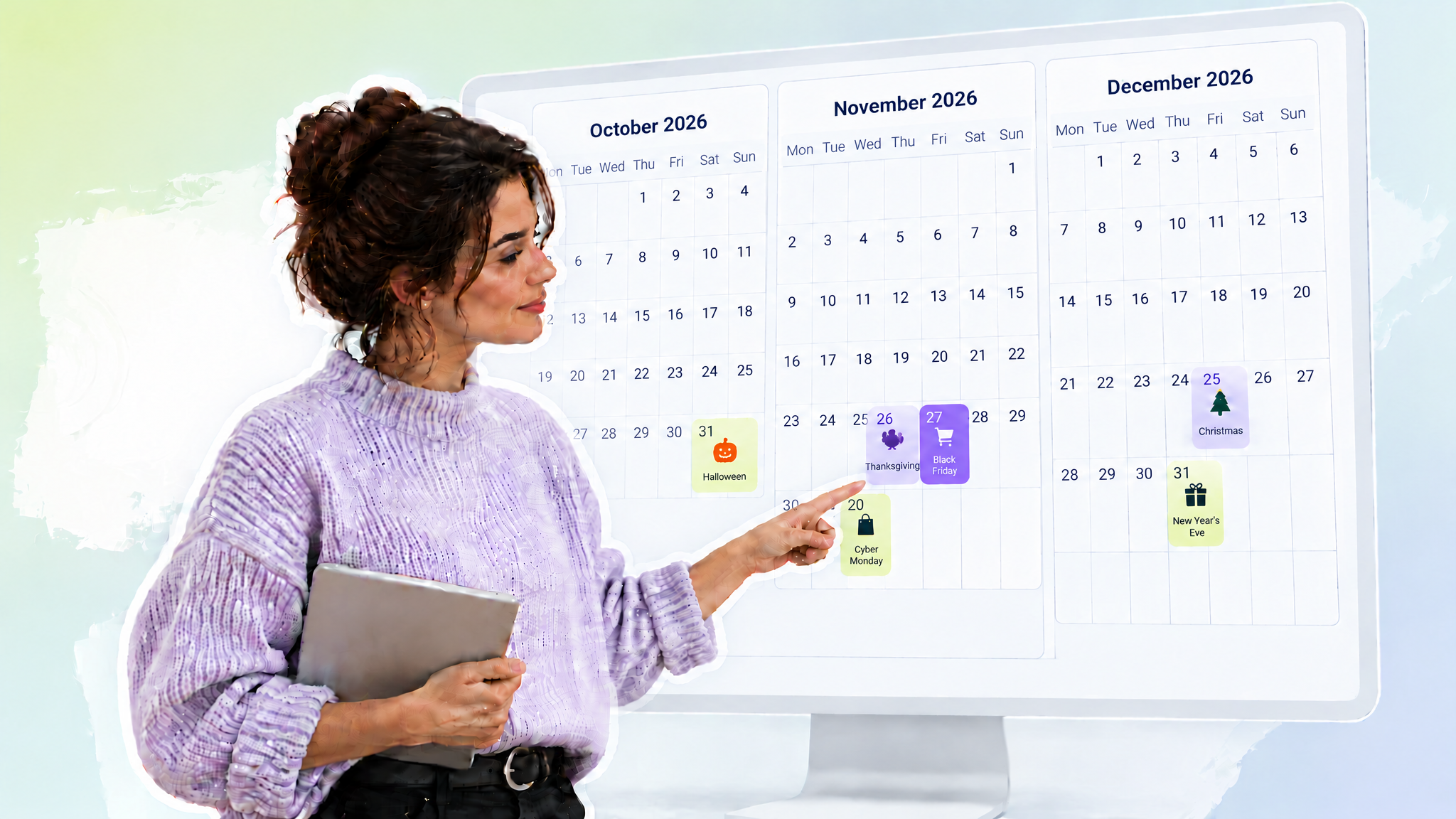
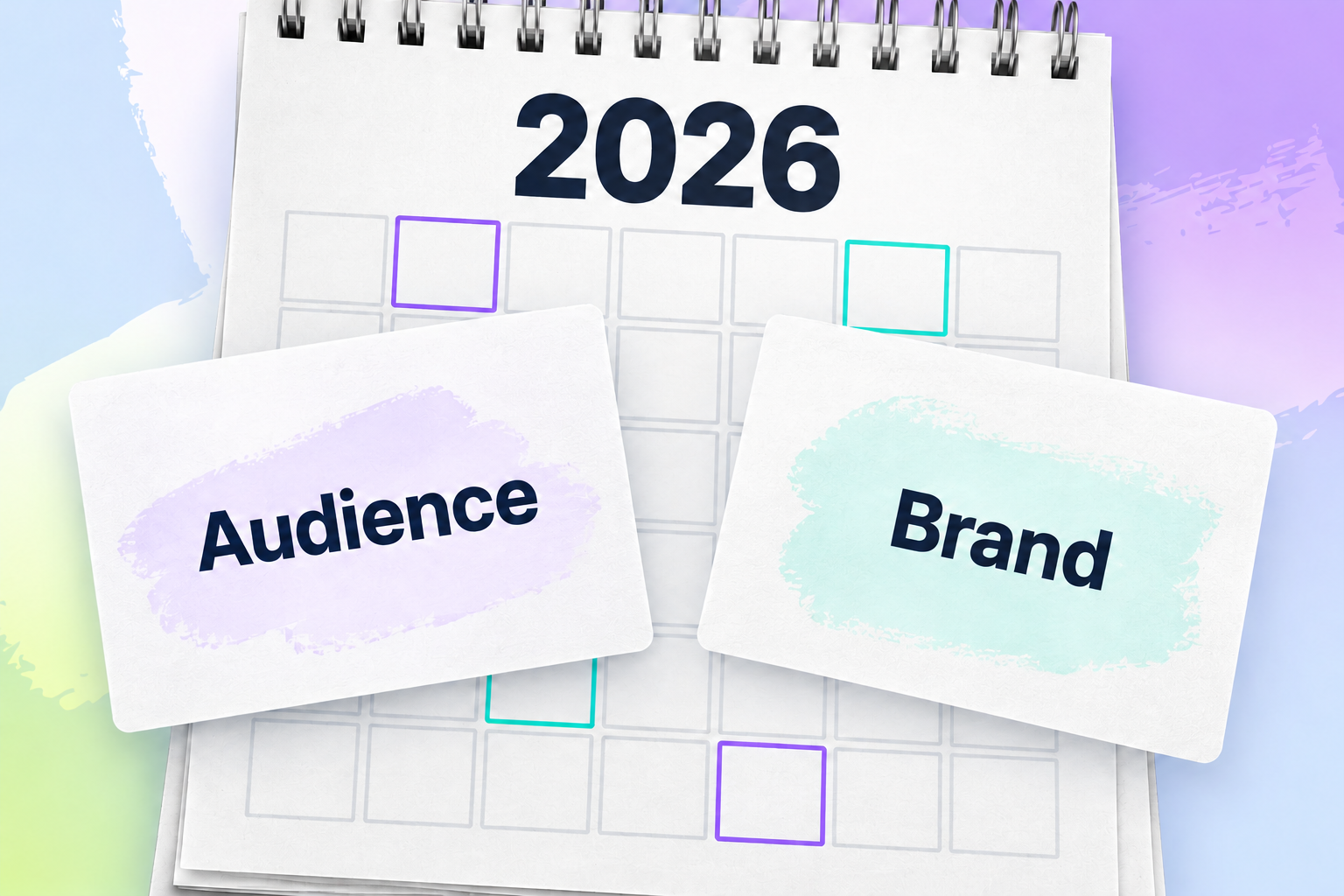
A large 2026 calendar page with a few highlighted squares and two overlapping cards labeled Audience and Brand.
Ask these questions before adding a date
What matters is whether your brand can contribute something useful to the occasion. An international calendar gives you dates, not reasons to publish. The significance of an event can differ between countries and communities. Before developing ideas, identify who you’re actually addressing and why those people should care about your content. These questions will help you choose:
- Audience relevance: Does the occasion interest the people you want to reach?
- Brand fit: Is there a credible connection to your offering, your work or your community?
- Cultural context: What does the date mean in the countries and communities you’re addressing?
- Content value: What question will you answer, or what problem will your post solve?
- Objective: Do you want to inform, encourage conversation, generate website visits or support purchases?
- Resources: Can your team handle content production, coordination and follow-up?
- Attention in the feed: How much other content should you expect? Popular events may attract more posts that compete with yours for attention.
Take particular care with awareness days dedicated to social issues. These call for credible educational content, practical resources or concrete action from your organization. An unrelated sales message doesn’t establish that connection. The link needs to come through in the content itself, whether through the information you share or the action your organization actually takes. Simply mentioning the awareness day isn’t enough.
How much effort should each occasion get?
Once you’ve made that initial assessment, look at audience relevance and brand fit together. This gives you a straightforward way to decide without a complicated scoring system. There are four combinations to consider:
- Both high: Prioritize the occasion as a potential opportunity. That fit isn’t evidence of strong performance.
- High audience relevance, low brand fit: Participate only if you can find a credible content angle.
- High brand fit, low relevance to the wider audience: Consider a targeted post for the audience segment it matters to.
- Both low: Skip the occasion.
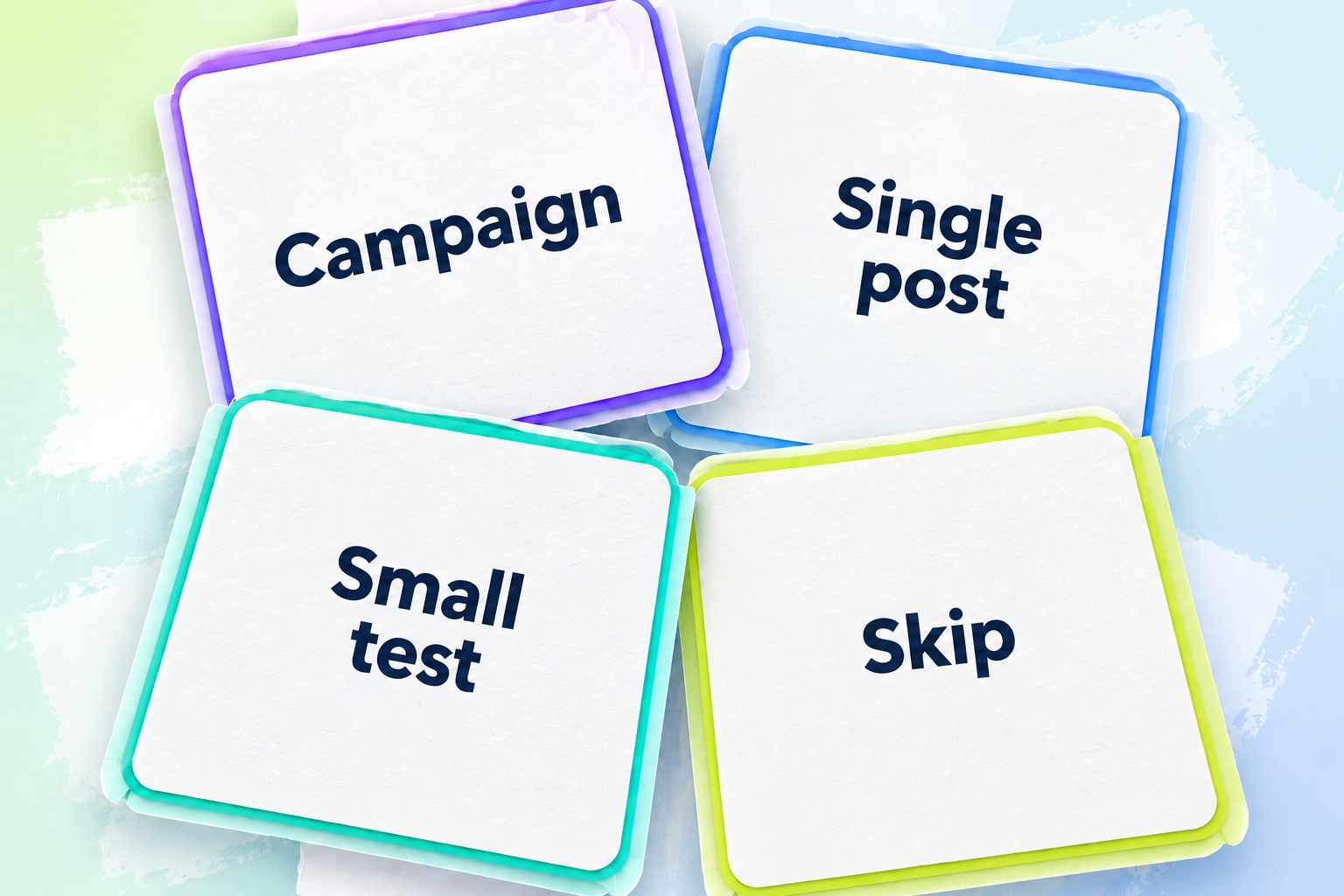
Next, decide how much to do. A highly relevant opportunity may warrant a campaign, but relevance alone doesn’t make one necessary. Use your objective, what you already know and your available resources to decide whether a larger initiative, a single post or a small test is appropriate. If you don’t yet know how your audience will respond, a limited test is an option, not a requirement. Even after this assessment, you can choose not to participate.
Four large, slightly offset planning cards show the options Campaign, Single post, Small test and Skip.
Social media holidays 2026: Six year-end dates and content ideas
Your business model also shapes which content makes sense. For consumer brands, offers and gift guides may fit. For B2B brands, customer education, insights into what it’s like to work at your company or conversations with the community may be more relevant. Your business model alone doesn’t determine whether an occasion is suitable, though.
An online store could publish a gift guide with confirmed delivery information ahead of Christmas. A B2B software provider could create a year-end tutorial that answers a recurring customer question. Both approaches connect with an occasion while offering a concrete benefit. The following dates show which approaches you could consider for the end of 2026:
- Halloween: October 31, 2026. If Halloween is a natural fit for your brand, consider a themed product demonstration, tutorial or community activity. A focused post may be enough. You don’t automatically need an extensive Halloween campaign just because you can make a thematic connection.
- US Thanksgiving: November 26, 2026. For audiences that observe the occasion, consider a focused thank-you post. The message should reflect your relationship with those people. If there’s no cultural connection or the thanks feel generic, skip the occasion.
- Black Friday: November 27, 2026. For retail and e-commerce brands, a campaign can make sense if you have a meaningful offer or useful buying advice. Consider the specific value you’re providing. The date alone isn’t a good reason to publish more advertising.
- Cyber Monday: November 30, 2026. Where relevant, plan it together with Black Friday as a single campaign window. This lets you coordinate explanations of your offers, product comparisons, FAQs and reminders. You don’t need two disconnected initiatives simply because the calendar lists two dates.
- Christmas: December 25, 2026. If Christmas is relevant to your retail audience, a campaign can begin several weeks ahead. Content might include gift ideas and confirmed delivery information. Adapt the messaging to your audience’s cultural context rather than assuming everyone celebrates Christmas.
- New Year’s Eve: December 31, 2026. Consider a useful year-in-review, selected community highlights or specific plans for the year ahead. Your post should offer something your audience finds interesting. That makes for a more meaningful year-end post than a greeting that could come from any brand.
Plan the full timeline, not just the posting date
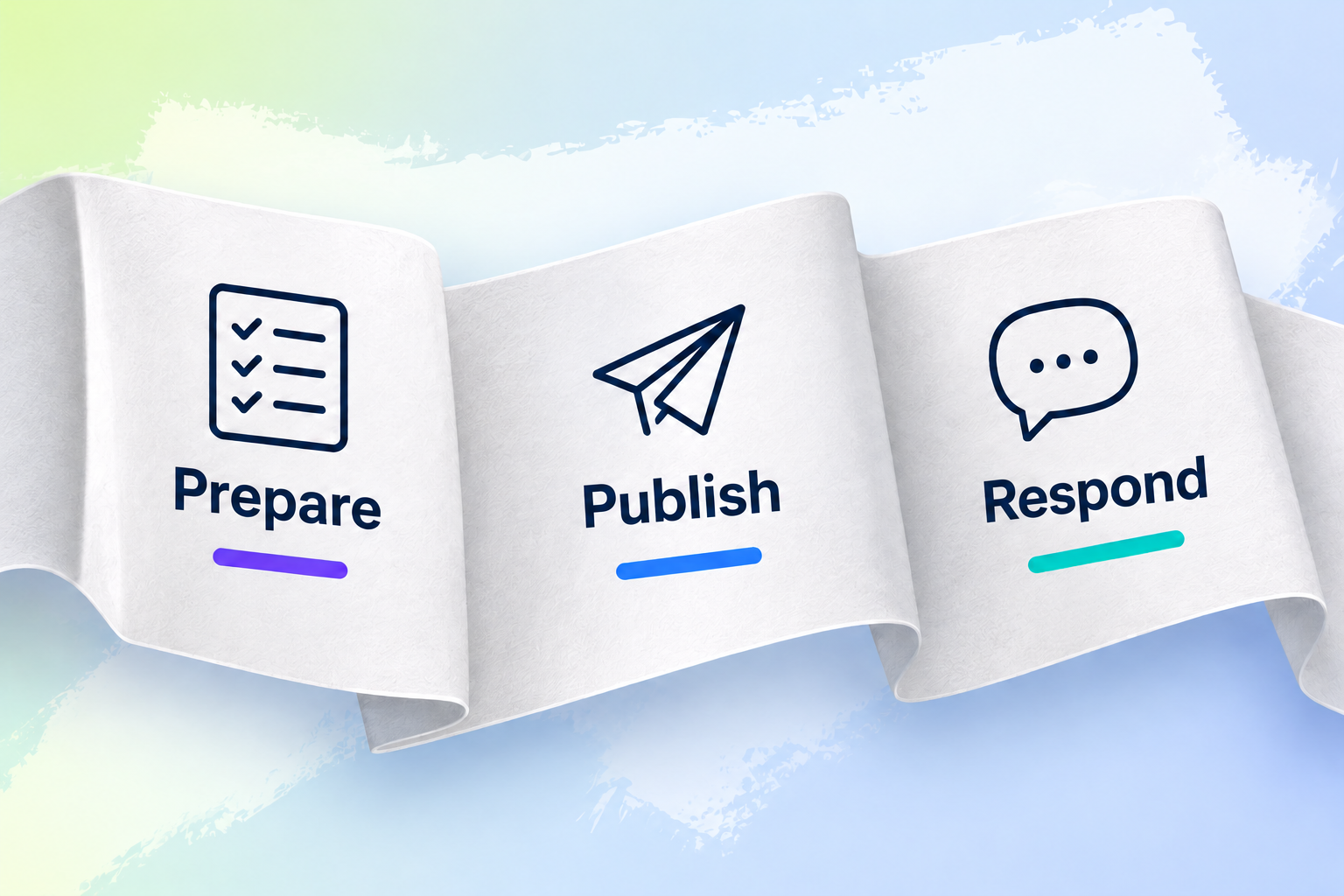
Before your team starts producing content, review recurring customer questions, comments and requests. These can reveal what information people actually need around an occasion. Use them to choose a topic and format, then agree on responsibilities, approvals and publishing. Also set aside time to respond after the post goes live. A shared editorial calendar should capture the whole process so preparation and follow-up don’t get overlooked in the focus on the publishing date.
A continuous strip of paper connects the three planning stages: Prepare, Publish and Respond.
Before publishing promotions, confirm prices, availability, offer conditions and deadlines. You also need to agree on who will answer questions and how support will be organized during the promotion. Only publish delivery information that has been confirmed, and don’t manufacture urgency or scarcity. Document these decisions in your campaign plan. That way, it covers not only when you’ll promote the offer, but also what information and processes need to be in place.
How to tell whether your content met its objective
Whether a post has done its job depends on the objective you set beforehand. Reach, interactions, clicks, shares and saves aren’t automatically equally important. Choose your metrics according to the question you want to answer. Check the conditions under which the results were achieved, too. Fanpage Karma can help you compare the performance of your own content and formats. When assessing holiday social media trends, results from competitor profiles can provide additional context. Work through these three steps:
- Compare with your regular content. Set the results of posts tied to these dates alongside your profile’s usual results. Include comparable posts that aren’t tied to an occasion, too. This gives each result a reference point, rather than judging it as good or bad in isolation.
- Account for the conditions. Consider the platform, format, paid promotion, audience size and measurement period. Assess format performance separately on each platform. An approach that works on one channel can’t simply be transferred unchanged to others.
- Measure business outcomes directly. If inquiries or purchases are your objective, evaluate tracked leads or orders. Keep these outcomes separate from interactions with the post. That keeps your assessment focused on your actual objective.
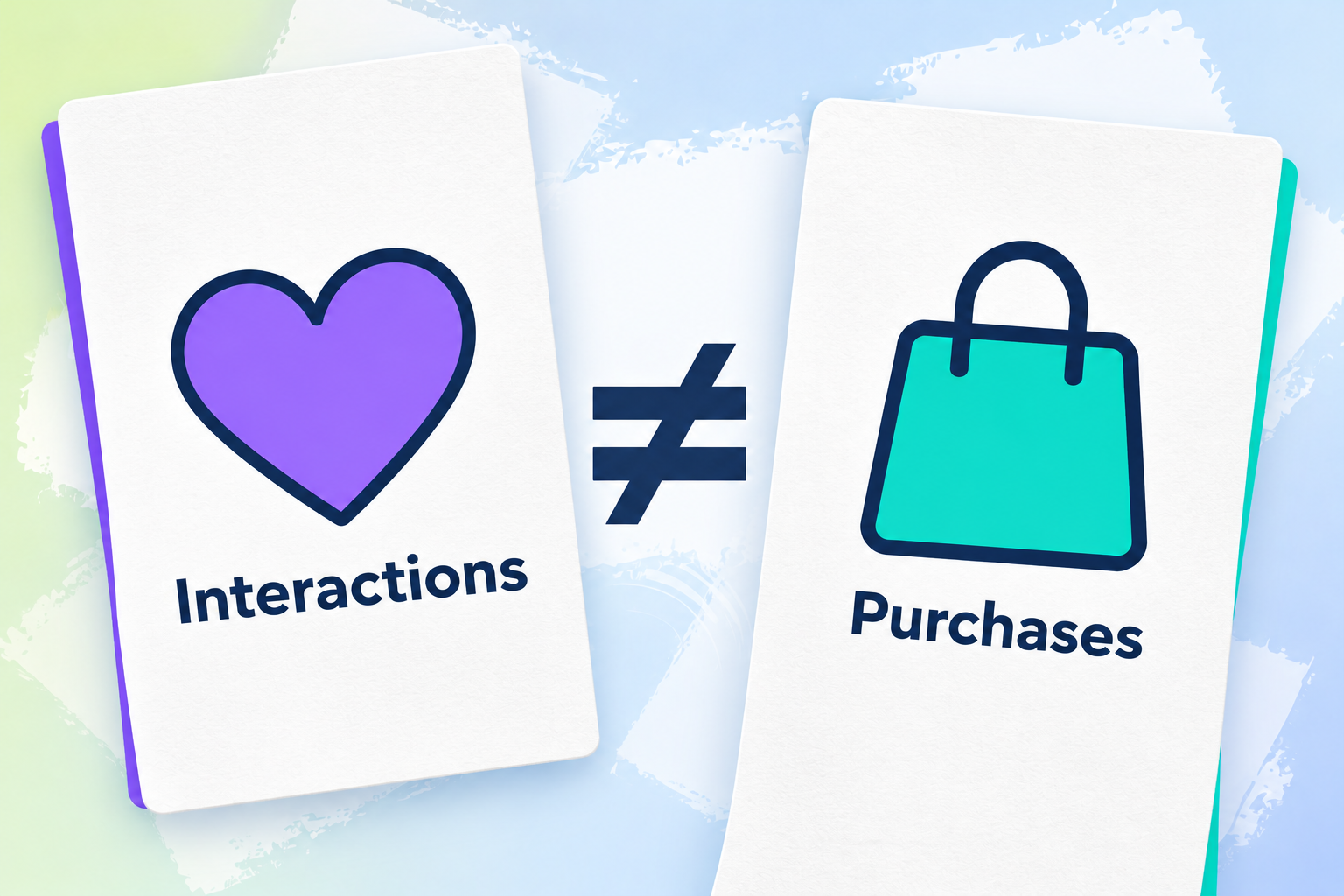
More interactions don’t prove higher revenue. Nor do they prove that the occasion itself caused an improvement. This limitation belongs in your interpretation of the results, not in the fine print. Use your analysis to make an informed decision about whether to participate next time and on what scale. A content idea that makes sense is initially just an opportunity. Only observed results let you assess its performance. They still don’t establish what caused those results.
Two large white cards, one with a heart representing interactions and the other with a shopping bag representing purchases, separated by a not-equal sign.
Conclusion: Relevance matters, not how many dates you cover
A useful social media calendar starts with your audience, brand fit and value. Scope, timing and measurement come next. Not every relevant occasion needs a campaign, and skipping one that doesn’t fit is a legitimate planning decision. Open your editorial calendar now and review the upcoming entries using the selection questions: What stays, what gets scaled back and what goes? Define how you’ll measure the success of your chosen activities before putting them into action. That’s how a list of dates becomes a content plan backed by clear decisions.
Want to know which content actually works for your brand? With Fanpage Karma, you can analyze the performance of your posts, compare formats and profiles, and use competitor data as additional context to make better decisions. That way, your holiday social media calendar draws on actual results, not just dates.