EU AI Act labeling rules from August 2026: Does every social media post need a label?
- What do the EU AI rules require from August 2026?
- AI labeling on social media: 3 cases to watch
- Not every use of AI automatically needs a label
- An authenticity check for everyday editorial work
- AI labeling on Instagram & other platforms: One label may not be enough
- EU regulations on AI and social media: A 3-part review
- What social media teams should prepare before August 2026
- 4 misconceptions social media teams should avoid
- Conclusion: Clear EU AI rules instead of labeling confusion
It goes without saying that AI is changing social media content in a lot of ways. Simply generate an image with AI, polish a caption, clone a voice, and the next post is ready. AI is now part of everyday social media work. But every new use raises another question: When must teams disclose their use of AI, what kind of label is required, and is a label provided by the platform enough? From August 2026, the EU AI Act will introduce clear rules for labeling AI-generated content.
The AI labeling requirements taking effect in August 2026 center on the new transparency obligations in Article 50 of the EU AI Act. This article explains which types of social media content deserve closer attention, where common misunderstandings arise, and how social media teams and agencies can prepare for the EU AI Act in August 2026 without panicking.
What do the EU AI rules require from August 2026?
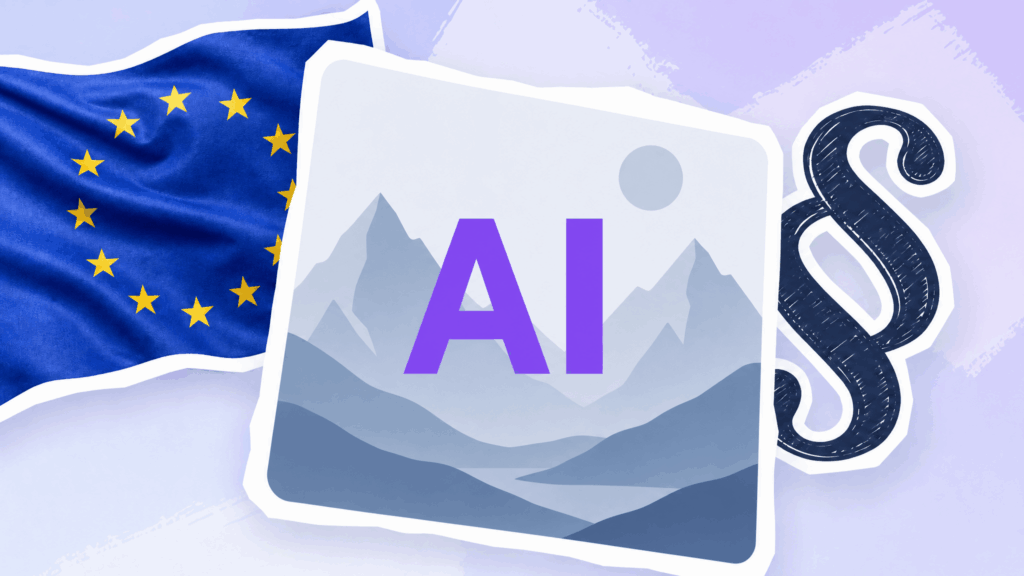
EU AI Act Article 50, part of Regulation (EU) 2024/1689, introduces transparency obligations for certain AI-generated and manipulated content. In social media marketing, this mainly affects realistic images, video, and audio, deepfakes, and certain AI-generated texts on matters of public interest. The EU AI Act does not ban AI content. Instead, it requires disclosure in specific cases when content has been artificially generated or altered. What matters is not simply whether an AI tool appeared somewhere in the workflow. The finished content, its likely impact, and its context all count.
AI labeling on social media: 3 cases to watch
For day-to-day editorial work, three areas deserve particular attention: realistic media, deepfakes, and texts on matters of public interest. The categories below offer social media teams a practical starting point for assessing AI-generated content, but they cannot replace a case-specific legal review.
1. Realistic images, videos, and voices
Teams should pay particular attention to AI-generated or manipulated media that looks like authentic footage. This could include an artificially generated product photo in a real-world setting, a video featuring apparently real people, or altered footage of an event. Content with an obviously artificial style calls for a different assessment than an image that looks documentary. The more easily users could mistake it for a genuine recording, the more important disclosure becomes.
2. The EU AI Act’s 2026 deepfake rules reach beyond politics
Deepfakes can involve images, video, or audio. Brands and agencies enter risky territory when they artificially recreate a real person, their voice, or a specific situation in a way that creates a false impression of authenticity. This can also affect creator formats, campaigns, and fast-turnaround reaction posts. Humor, satire, and creative staging may influence how content is assessed, but they do not remove the need for review. Teams should flag deepfake-like content at the concept stage, not moments before publication.
3. Public-interest topics require extra care
AI-generated text may also be subject to transparency obligations when it covers matters of public interest. Political and social issues are particularly relevant, as are posts about crises, public safety, or health. Not every topic fits neatly into one category. If content could influence public opinion, social media teams should review it carefully, apply editorial oversight, and document their use of AI internally.
Not every use of AI automatically needs a label
The good news for editorial teams is that using AI does not always trigger a blanket labeling requirement. Brainstorming, translation, copy editing, or caption drafts that have been revised by an editor generally do not need a label solely because an AI tool was involved. A draft that a person checks for accuracy, rewrites, and approves also needs to be assessed differently from text that is generated and published entirely automatically. The key question is not which tool was used, but what ultimately gets published, how much AI shaped it, and whether it could create a misleading impression.
An authenticity check for everyday editorial work
For images, video, and audio, one simple perspective can help: Would an average person scrolling quickly recognize that the content had been artificially generated or altered? Depictions of real people, voices, places, and events deserve particular scrutiny. These five questions can support an initial internal review:
- Does the image or video look like an authentic recording?
- Does the generated voice sound like a real person?
- Is a real place or event being artificially reconstructed?
- Does the AI alteration change the material’s message or meaning?
- Could the audience draw false conclusions about a person, brand, or situation?
The more often the answer is yes, the more closely the content should be reviewed. These questions offer practical guidance, not a legal checklist. In unclear or particularly sensitive cases, social media teams should arrange a qualified legal review before publication.
AI labeling on Instagram & other platforms: One label may not be enough
Meta, TikTok, and YouTube have required creators to label certain AI-generated media for some time. Each platform has its own rules, labels, and features. That means AI labeling on Instagram and elsewhere involves two separate layers: platform requirements and the legal requirements of the EU AI Act. A platform label may be useful or mandatory, but it does not automatically satisfy every legal obligation. Conversely, a platform may require a label regardless of how the content is assessed under the law. Teams publishing the same post across multiple channels must therefore review the rules for each one.
EU regulations on AI and social media: A 3-part review
To keep the EU AI Act from turning day-to-day social media work into guesswork, every relevant AI-generated asset should pass through three layers of review. This process belongs in the briefing stage, not in the final moments before upload.
- EU AI Act requirements: Check whether the content involves realistic AI media, a deepfake, or AI-generated text on a matter of public interest.
- Platform-specific rules: Confirm which labeling feature or disclosure each social media channel requires. Reviewing a post for Instagram does not automatically cover TikTok, YouTube, or LinkedIn.
- Brand and client policies: Define whether AI may be used, what must be documented, who approves the content, and when the brand wants a voluntary label.
Agencies in particular should clarify these points for each client. A general AI policy is a good starting point, but it may not be enough when brands have different requirements for use, labeling, and approval.
What social media teams should prepare before August 2026
The EU transparency obligations apply from August 2, 2026, but effective workflows do not appear overnight. Social media teams can use the time remaining to turn one-off decisions into a clear, repeatable process.
- Clearly distinguish between AI-assisted, AI-generated, and AI-manipulated content internally
- Introduce a short review process for images, video, audio, and text
- Review platform rules for each channel regularly
- Document client-specific policies on AI use and labeling
- Update approval flows for realistic media, deepfakes, and public-interest topics
- Record when and how AI was used in the content workflow
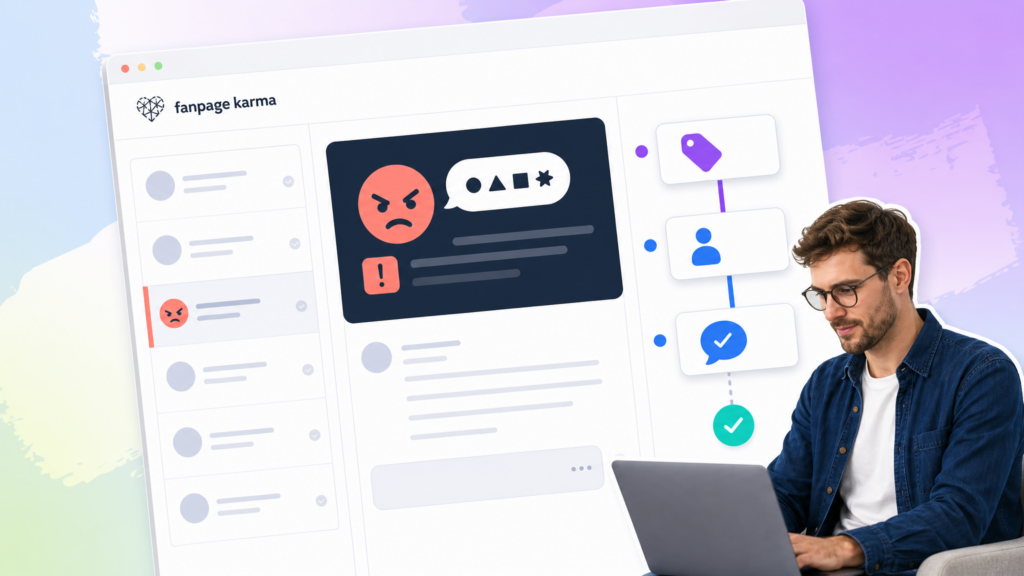
A social media publishing tool with centralized editorial planning and standardized approval processes can help prevent individual review steps from disappearing into chats, notes, or people’s heads. The value of a policy lies less in its length than in its practical usefulness: Everyone involved must understand the responsibilities, review questions, and approval stages.
4 misconceptions social media teams should avoid
The EU AI Act does not require every social media post to carry a blanket notice such as “created with AI.” Confusion often arises when teams mix up legal requirements, platform rules, and internal policies. These four questions highlight the distinctions that matter.
- Does every post need a label if AI helped with the caption? Not automatically. The nature, extent, and context of the AI use all matter.
- Is a platform label always enough to meet legal requirements? Platform rules and the EU AI Act must be reviewed separately.
- Are deepfakes only a concern for political accounts? Brand communications, campaigns, and creator content can also feature artificially generated depictions of real people or voices.
- Can teams wait until August 2026 before taking action? The new legal obligations apply from then, but policies, responsibilities, and approval processes should already be in place.
Conclusion: Clear EU AI rules instead of labeling confusion
The EU AI Act does not prevent brands from publishing AI-generated content. From August 2026, however, it raises the transparency requirements for certain types of content. Realistic media, deepfakes, and AI-generated texts on matters of public interest require particular attention. At the same time, brainstorming support, translation, or an editor-reviewed caption does not automatically need a label. What matters is a combined review of the EU AI Act, platform rules, and internal policies. Teams that define clear responsibilities and approval processes now can continue using AI creatively and responsibly.
An all-in-one social media tool such as Fanpage Karma can make it easier for the whole social media team to put the EU AI Act into practice. Its publishing features, including centralized content planning, standardized approval processes, and team workflows, help organize responsibilities and review steps in one place. You can try all Fanpage Karma features free for 14 days or sign up for a free weekly webinar to learn more about the features of the all-in-one social media tool.