Social Media Ban for Minors: Rethinking Reach, Targeting and Measurement

- Why Social Media Bans Don’t Mean Teenagers Disappear
- Which Countries Ban Social Media for Children?
- Australia’s Social Media Ban for Children Under 16: Early Findings
- The Bigger Marketing Problem: Targeting and Measurement
- Shift From Identifying Teenagers to Understanding Context
- Build Content for Discovery, Not Just Followers
- Think Beyond Teenagers as the Only Audience
- Don’t Let Your Strategy Depend on One Platform
- Measure Youth Marketing Through Several Signals
- Stress-Test Your Current Youth Marketing Strategy
- Make Your Social Media Strategy More Resilient
A social media ban for minors may reduce the number of teenage accounts, but not necessarily teenage attention. Young people can still encounter content through creators, search, reposts or other forms of discovery while becoming harder for marketers to identify, target and measure.
For social media teams, this creates a new challenge. Campaigns may still reach younger audiences even as the data behind targeting, reporting and attribution becomes less reliable. This article looks at what the first social media restrictions reveal and how marketers can adapt.
Why Social Media Bans Don’t Mean Teenagers Disappear
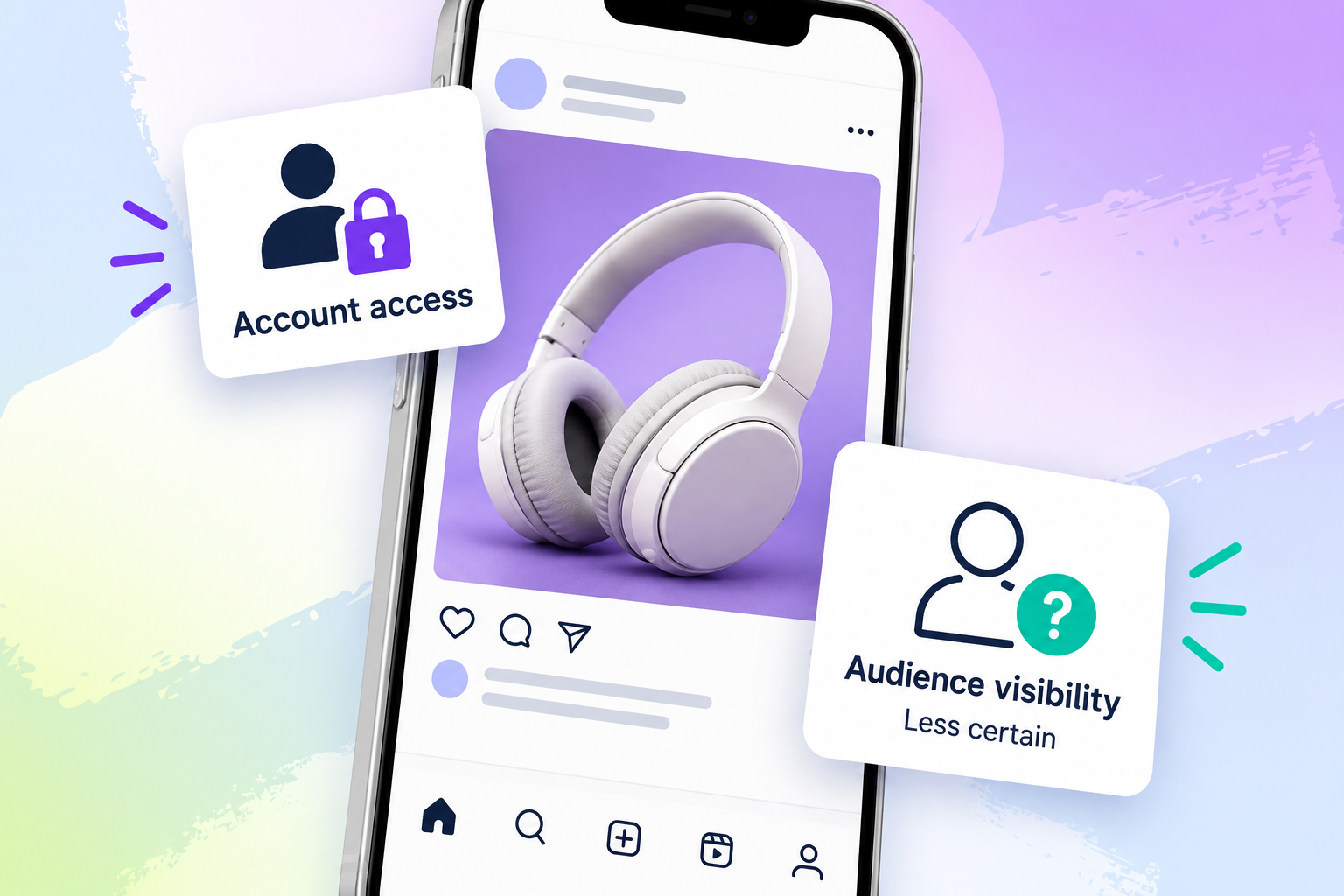
Policies that ban social media for minors are often discussed as if an entire generation could simply disappear from social platforms. For marketers, however, the more complicated question is what happens when teenagers remain part of digital culture but become harder to identify, target and measure.
Australia’s social media ban for children illustrates this distinction. Teenagers may still encounter content through search, creators, reposts, shared devices or other forms of discovery even when access to personal accounts becomes more restricted. At the same time, platforms may have fewer identifiable teenage accounts from which to generate demographic, behavioral, and campaign data.
Brands may still influence younger audiences while receiving a less complete picture of who saw a campaign, how often they encountered it and what happened afterward. For social media teams, adapting to new age restrictions therefore involves more than finding another platform. It requires reconsidering how campaigns are planned, distributed and evaluated.
Which Countries Ban Social Media for Children?
There is currently no single international model for a social media ban for children or teenagers. Countries are introducing different age thresholds, verification systems and platform obligations. Some measures are already in force; others remain proposals or face political and legal debate. Counting countries therefore requires distinguishing nationwide account bans from platform-specific restrictions, age-verification measures and rules that have not yet taken effect.
- Australia: In December 2025, Australia was the first country to introduce a social media ban for children under 16. A study published in July 2026 found that reported account ownership among people under 16 fell by 10.3%. Most previous users had, nevertheless, retained or created an account.
- Indonesia: The country began restricting accounts belonging to people under 16 on designated high-risk platforms in March 2026. By April 10, 2026, the government reported that TikTok had deactivated approximately 780,000 affected accounts.
- Malaysia: A minimum account age of 16 for licensed social media platforms took effect on June 1, 2026, supported by age verification based on government records.
- United Kingdom: The government announced an under-16 restriction in June 2026 and expects to bring it into force in spring 2027.
- European Union: The EU has no general social media ban for minors. It is preparing shared, privacy-preserving age verification infrastructure for rollout by the end of 2026.
- France: The Constitutional Council blocked a planned ban for people under 15 in August 2026 because of freedom of expression and privacy concerns.
- United States: The National Conference of State Legislatures reported that at least 40 states and Puerto Rico considered more than 300 initiatives concerning children and social media during 2026.
For international marketing teams, the result is a regulatory patchwork rather than one global shift. The important variables are not only the minimum age, but also which platforms are affected, how age verification works, which features remain accessible and how strongly individual rules are enforced.
Australia’s Social Media Ban for Children Under 16: Early Findings
Australia’s social media ban for minors provides one of the first opportunities to observe what happens after such a restriction takes effect. An eSafety evaluation published in July 2026 found that reported account ownership among people under 16 fell from 52.4% to 42.1% during the first three months after the restrictions were introduced. At the same time, the study found that most previous users had retained or created an account.
That difference matters. A social media ban can reduce the number of identifiable accounts without removing teenage attention from social media altogether. Account creation, continued access, inaccurate age information and alternative ways of encountering content can all influence what marketers eventually see in platform data.
For that reason, regulatory announcements alone are a poor basis for major changes to media budgets. More useful evidence comes from actual changes in reachable audiences, engagement, traffic, conversions and audience composition after a new rule takes effect.
The Bigger Marketing Problem: Targeting and Measurement
For marketers, the most significant consequence may therefore be less about losing all teenage reach and more about losing visibility into that reach. Behavioural targeting and retargeting rely on signals connected to identifiable users and their activity. Audience modelling, demographic reporting and attribution become harder to interpret when those signals become less reliable.
Several familiar questions can become more difficult to answer:
- Audience identification: Who actually encountered the campaign?
- Frequency: How often did they see it?
- Targeting and retargeting: Which behavioral signals remain available?
- Audience modelling: How representative are the users that can still be identified?
- Reporting: What do demographic and engagement figures still tell you?
- Attribution: What happened after exposure?
- Platform comparison: Are differences caused by campaign performance or platform-specific restrictions?
Historical comparisons can become more difficult as well. Campaign performance is easiest to interpret when the underlying audience remains relatively stable. Account removals, migration and age-verification systems can weaken that continuity and make demographic data less representative of the people who continue to use a platform. This makes youth restrictions partly a measurement problem rather than simply a reach problem. A campaign may still influence young people even when the dashboard provides a less complete picture of that influence.
Can a Social Media Ban for Minors Make Advertising More Expensive?
Bans for children and teenagers do not necessarily increase the cost of social media advertising. The available evidence does not establish that youth social media restrictions generally increase CPMs, customer acquisition costs or revenue losses. Those outcomes depend on factors such as the platform, market, audience, objective, enforcement approach and user response.
In individual cases, a smaller identifiable audience can create a business risk, but that is different from evidence of a universal cost increase. Social media teams should therefore separate plausible scenarios from changes that can already be demonstrated in their own performance data.
Shift From Identifying Teenagers to Understanding Context
If targeting teenage users becomes less dependable, context becomes more important. Rather than focusing only on whether a platform can identify someone as belonging to a specific age group, marketers can look more closely at where younger audiences already focus their attention. Gaming, music, entertainment, sport, streaming, creators and search are examples of environments connected to interests and communities that matter to younger audiences.
The objective is not to add every possible channel to a media plan. It is to identify environments in which the brand has a credible reason to appear. Context cannot replace targeting completely, but relevance to an activity, interest or community becomes more valuable when identity-based signals are less reliable.
This shift also changes how creator partnerships should be evaluated. Creator marketing does not depend only on the content itself; it also depends on having a reasonably accurate picture of who follows and engages with an account. If restricted users disappear from reported audiences or age data becomes less reliable, historical creator statistics become more difficult to interpret. Before committing to a partnership, teams may need to examine how strongly a creator’s audience is concentrated in affected countries or age groups and whether recent audience figures remain comparable with older results. Historical reach can provide context, but it should not function as a guaranteed forecast.
Build Content for Discovery, Not Just Followers
Youth-focused content may increasingly need to work without a stable follower relationship. A teenager could encounter your brand through a repost, screenshot, search result or creator collaboration without ever following your account or visiting your brand profile. Individual posts therefore need to carry more of their own context. Before publishing, ask yourself whether that content:
- makes your brand recognizable without requiring a profile visit
- gives a new viewer enough context to understand the idea
- uses captions, titles or spoken words that support discovery
- gives people a genuine reason to share it
- still makes sense when removed from the original feed

This principle reaches beyond youth marketing. Social discovery already happens across recommendation feeds, search, creator communities and private sharing. Content that can travel between these environments depends less on the audience relationships through which it was first distributed.
Think Beyond Teenagers as the Only Audience
For most brands and products, teenagers are only one participant in the purchase journey. A young person may discover or request a product while a parent or another household member evaluates price, suitability or trustworthiness before making the final purchase.
Different roles may therefore require different communication. Content designed to generate teenage interest can focus on participation, identity, entertainment or cultural relevance, while communication for parents or other decision-makers may need to answer more practical questions. The relevant question is not simply who encounters the campaign, but how demand moves through the purchase journey. The person creating interest is not always the person eventually making the transaction.

Don’t Let Your Strategy Depend on One Platform
If access to younger audiences becomes less certain on one social network, simply moving the same strategy to another platform can recreate the same dependency elsewhere. A more resilient youth strategy gives campaigns several routes to their audience. Depending on the product, those routes might include creators, gaming and streaming environments, search, events, retail activations, owned channels or cultural partnerships.
The objective is not maximum channel coverage. A stronger approach is to develop campaign ideas that remain understandable and relevant across different settings. A campaign concept should ideally still work whether someone encounters it through a creator, a community, a search result, a physical experience or another person’s recommendation. This reduces the strategy’s dependence on the access rules or audience data of any single platform.
Measure Youth Marketing Through Several Signals
If platform data offers a less complete picture of teenage attention, measurement also needs to become broader. Reach, followers, clicks and engagement remain useful, but they may no longer describe the complete path between exposure and outcome. Fewer visible interactions do not automatically mean that fewer young people encountered an idea. Depending on the campaign objective, social media teams can complement platform metrics with performance signals such as:
- branded search
- direct website traffic
- brand and product mentions
- carefully designed surveys
- event participation
- community feedback
- retail indicators
- relevant enquiries
- sales data where appropriate and used responsibly
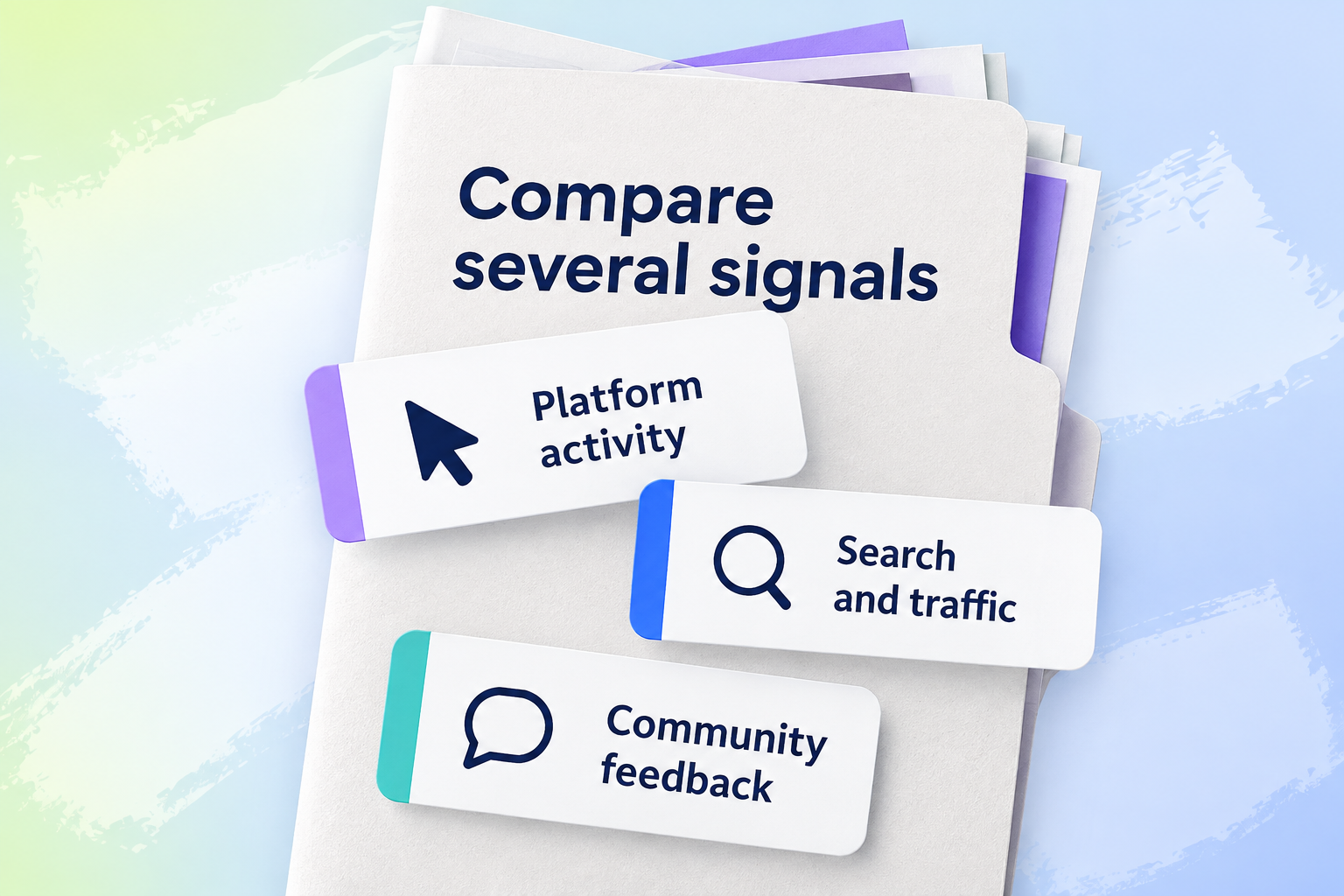
No single indicator proves teenage exposure. The goal is therefore not to replace platform reporting with one supposedly perfect metric. Instead, teams can triangulate: compare several relevant indicators over time and remain clear about what each one can and cannot demonstrate. Establishing a baseline before regulations or major platform changes take effect becomes particularly useful in this context. Current reach, engagement, audience composition, conversions and paid media results provide a benchmark against which later changes can be evaluated.
Stress-Test Your Current Youth Marketing Strategy
Social media teams do not need to redesign every youth campaign simply because regulation may change. A more practical starting point is to take one active or planned campaign and identify which parts rely heavily on conditions that could become less reliable.
- Determine account dependency: Mark every targeting, distribution or measurement decision that depends on an identifiable, logged-in teenage account.
- Review placements: Check which placements and creative ideas still make sense if that account data becomes less reliable.
- Stress-test the creative: Assess whether an individual post works for someone who has never followed the brand or visited its profile.
- Map the purchase journey: Identify whether parents or other household decision-makers need separate information.
- Review channel dependency: Determine whether awareness, traffic, leads or sales depend too heavily on one social network.
- Create a baseline: Record current reach, engagement, audience composition, conversions and paid performance before major regulatory or platform changes.
- Reassess creator partnerships: Request recent audience information and examine exposure to affected age groups and markets.
- Broaden measurement: Add relevant indicators beyond platform interactions where they help evaluate the campaign objective.
- Prepare scenarios: Consider how the campaign would respond if youth reach changed slightly, fell substantially or shifted toward other channels.
- Check current requirements: Confirm the latest platform classifications, advertising rules and relevant legal requirements before launch.
The purpose of this audit is not to predict every regulatory development. It is to identify the parts of the strategy that depend most heavily on audience identification, platform access or measurement systems outside the marketer’s control.
Make Your Social Media Strategy More Resilient
Social media bans for minors do not necessarily mean that teenage attention disappears from digital culture. What they can change, however, is how visible that attention becomes to marketers. While strategies built around persistent, identifiable teenage profiles are more susceptible to changes in account access and audience signals, those built around relevant contexts, strong creative ideas and several routes to discovery have more ways to continue working.
At the same time, businesses should avoid assuming that youth restrictions will automatically lead to higher advertising costs, lower reach or lost revenue. The impact depends on audience age, geography, platform dependency, regulation and product functionality. The more useful preparation is therefore to understand current dependencies and establish reliable benchmarks before major changes occur. If audience visibility declines, teams can then compare what actually changed instead of reacting to assumptions.
Social media analytics tools can support that process by keeping performance data comparable over time and making shifts in reach, engagement and audience behavior easier to identify. Fanpage Karma supports this work with cross-channel performance analysis, historical comparisons and competitor benchmarking, making it easier to distinguish meaningful shifts from short-term fluctuations and adapt strategies based on data rather than assumptions. Start using Fanpage Karma for free and build a reliable baseline for whatever changes come next.