Your Guide to TikTok Competitor Analysis

TikTok has quickly become one of the most powerful platforms for brands to grow their visibility and promote themselves in the last few years. But its popularity has also made it a highly competitive platform. Although simply posting videos at random can deliver short-term results, that’s really not a long-term strategy. If you really want to be sustainably successful on TikTok, you need to base your content on data and strategies that really work.
One of the smartest ways to build that strategy is by analyzing what already works for other profiles inside your industry that are targeting the same audience. Studying your competitors helps you uncover proven content formats, posting patterns, and engagement tactics that you can adapt to your own profiles. This is why TikTok competitor analysis has become increasingly important for those who want to succeed on this platform.
In this guide, we will show you 5 techniques for conducting effective TikTok competitor analysis. Most of all, you will learn how to identify what drives results for others in your niche, benchmark performance, and apply those insights to improve your results. After presenting these 5 techniques, we will present our list of the 10 top TikTok competitor analysis tools on the market so you can find the right tool for your needs.
How to Do TikTok Competitor Analysis
Instead of focusing first on TikTok competitor analysis tools, we want to first guide you through the process of analyzing and comparing your TikTok account to others in your niche. The techniques and strategies we will discuss below are valuable for both new accounts starting on TikTok as well as established accounts that want to maintain or improve their performance on the platform over time.
Below, we will go into more detail about the 5 steps for performing an effective TikTok competitor analysis:
- Identify all your Competitors
- Build your Data Set
- Create a TikTok Benchmarking Report
- Analyze your Performance and Find Optimization Potentials
- Keep your Performance Updated
1. Identify all your Competitors
First of all it’s important that you identify the profiles for your analysis. These should be profiles that share a similar audience with you. On TikTok, “competitors” refers not only to businesses that sell the same products or services as you, but also to accounts that target the same audience as you. Even if they’re not your direct business rivals, their content still shapes your audience’s expectations and sets the standards by which you’ll be measured.
The more specific your list of competitors is, the more valuable your analysis will become since you will be more closely focusing on your target audience. Looking at every profile in a broad category like food won’t give you overly meaningful insights. For instance, if your focus is on batch cooking or vegan recipes, you will get much more accurate insights by comparing yourself to accounts in those exact niches. To do this effectively, you first need to define your target audience. Knowing who you want to reach makes it easier to identify which TikTok profiles are actually competing for their attention.
Although you can manually research through hashtags or TikTok’s search function, you may miss relevant accounts if you rely on this method alone. That’s why many teams use social media research tools to find effectively relevant profiles within their niche, which will help you create a larger data set.
2. Build your Data Set
Once you have identified who your competitors are, the following step is to build your data set by adding the accounts you want to track in your analytics dashboard. The more accounts you monitor, the richer your insights will be. Nevertheless, take into account what we have pointed out in the last section and just choose accounts that really match your niche.
Let’s discuss a concrete example. In this case, we are talking about chefs and have selected a group of popular food creators and chefs on TikTok including abir.sag, anorldpo, bobonsantoso, chefabbys, chefschwarz, cznburak, firhan_ashari, gordonramsayofficial, henriquefogaça74, jorge.rausch, nadiaelsayed.official, nusr_et, tabithabrown, chefhussien, chef_hiro. These chefs have similar target audiences and more or less have similar goals, which makes them a good grouping. In the following steps, we will be analyzing these profiles to better demonstrate what types of insights you can get when analyzing a group of profiles.
Another key element to consider when building your data set is to select a timeframe for your analysis. Looking at a full-year reveals long-term consistency, while looking at just a few weeks of data may highlight current trends or seasonal effects. Balancing both helps you develop a solid strategy.
Finally, as we’ve discussed, make sure that the profiles you have chosen match your audience and goals. If your brand focuses on vegan cooking or Indian food, it makes more sense to compare yourself to profiles in those specific niches rather than only comparing yourself to celebrity chefs who post across different cuisines.
3. Create a TikTok Benchmarking Report
Once your data set is ready, the next step is to translate those numbers into a clear benchmarking analysis. The report shows how your competitors compare to each other across key performance indicators, such as follower growth, interaction rate, posting frequency, and content reach. By comparing all accounts, you can immediately see where leaders dominate and where niche players outperform. However, what should be included in a TikTok benchmarking report? We will provide some tips on what to include below.
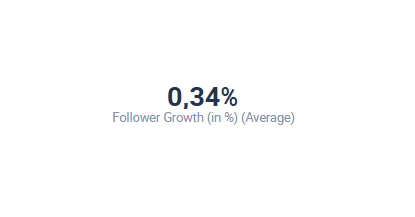
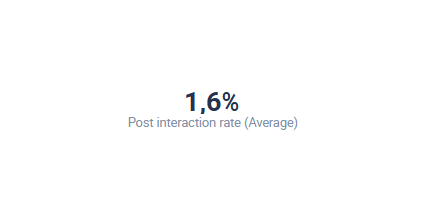
In our analysis of food creators and chefs on TikTok, the average follower growth was 0.34%, and the average interaction rate was 1.6%. These benchmarks provide a baseline into accounts performing above these averages are outperforming the competition, while those below may need to adjust their strategies. This can be incredibly useful for goal setting since it shows you what you need to reach to be above average.
However, a more comprehensive look comes from looking at the competitor overview table below, global names like CZN Burak (74.8 million followers) and Gordon Ramsay (41.1 million) naturally dominate in followers. However, the real insight can come from engagement metrics. For instance, Chef Abby (1.6 million followers) boasts a 4.5% interaction rate, far surpassing the group average, demonstrating that smaller accounts can outperform larger ones in terms of audience connection. Similarly, Arnoldpo has fewer followers, but his posts generate an interaction rate of 4.1%, proving that consistency and niche focus can rival those of global brands.
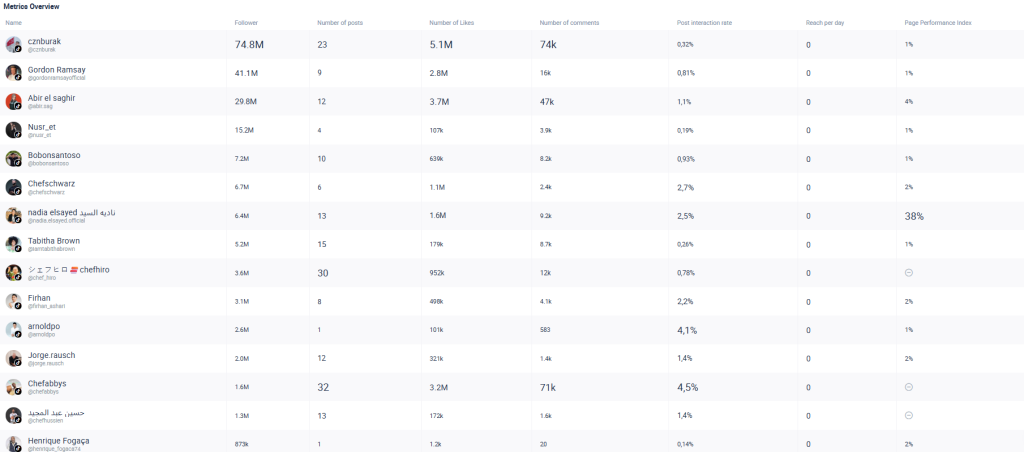
A benchmarking report like this one highlights not only who has the biggest following but also gives you insights into other metrics as well. These insights allow you to set realistic, data-driven goals for your own TikTok presence. It can also help you see how your own performance stacks up to others in different areas. Profiles have different goals, whether they are focused on growth, engagement, or something else. A benchmarking report helps show you your strengths and weaknesses, and then it’s up to you to decide how to proceed.
4. Analyze your Performance and Find Optimization Potentials
While benchmarking shows you how your performance compares to other accounts, content optimization helps you find opportunities to improve your performance. After mapping out the numbers, the next step is breaking them down into actionable insights. This involves examining when competitors post, which formats they use, and which content elements consistently generate interaction.
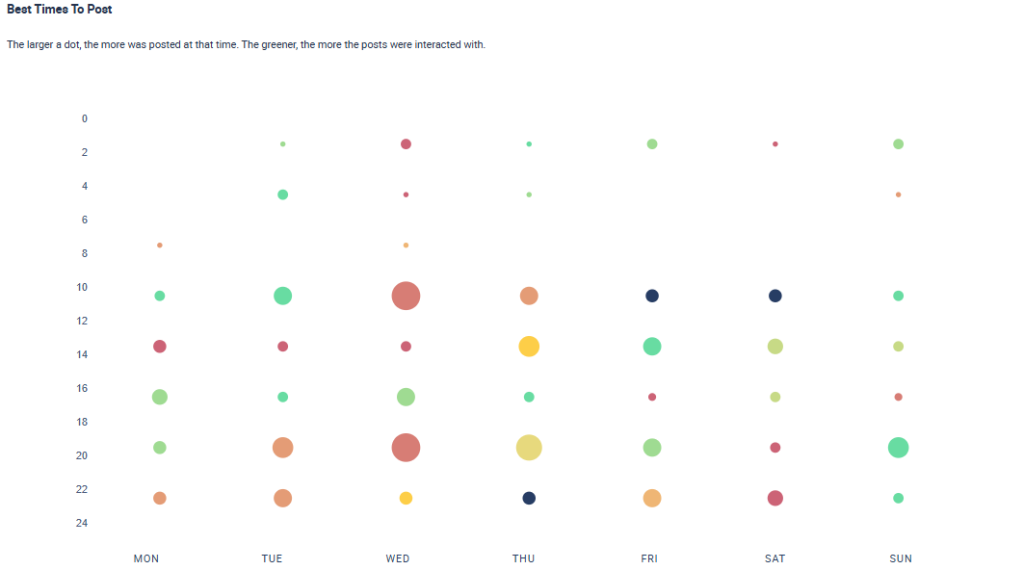
One of the most effective approaches is conducting a best time to post analysis. By combining your own historical performance with your competitors´ posting patterns, you get a much broader dataset to work with. In our study of food creators, we saw that mid-mornings and evenings during weekdays generated the strongest interaction rates. Scheduling content for these high-engagement windows increases the likelihood that your videos will reach a wider audience at the right time.
For example, our analysis of food creators reveals two clear patterns. First, timing matters. Posts made on weekends during the midday hours received the highest interaction rates. Second, more posts were made in the evening. Aligning your posting schedule with these activity peaks increases your chances of reaching your audience when they’re most engaged. Second, more posts were made in the evening. Below, you can see the chart that we have used for our analysis of previously mentioned profiles for the month of July, 2025. If you want to read more about finding the best times to post on TikTok, we have a full guide on that topic.
Similarly to finding the best times to post in your niche, you can expand your analysis to include keywords and high performing hashtags. Which hashtags consistently drive engagement? Which keywords or topics appear frequently in high-performing posts? Answering these questions will help you identify content opportunities and avoid wasting time on topics that don’t resonate with your audience.
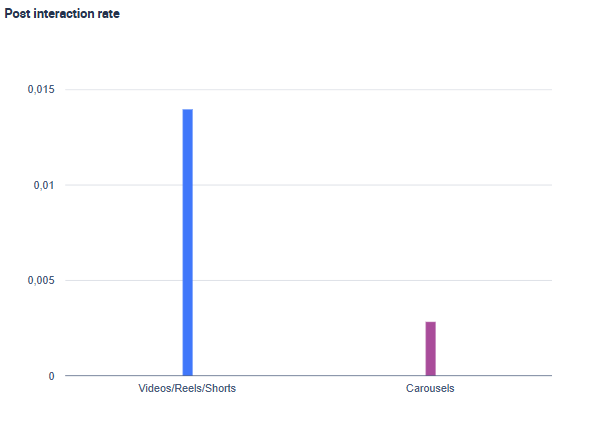
Additionally, choosing the right format for your content can also be crucial for your strategy. As you can see in the chart below, short-form videos significantly outperform static content during the month of July, 2025, proving that TikTok rewards creators who focus on fast, engaging clips.
The goal isn’t to copy others, but rather to apply competitor insights to your own strategy. By applying the best practices revealed through data analysis, you can improve your performance while staying true to your brand’s voice and creative style. If you are interested in on the content optimization potentials, we have an in-depth article on the topic.
5. Keep your Performance Updated
Analyzing your competitors is only valuable if you apply what you’ve learned. After identifying the best posting times, formats that generate the most interaction, and themes that resonate with audiences, apply these insights to your TikTok content plan. For example, if your analysis reveals that short-form recipe videos generate more engagement than carousels, you should prioritize that format in your schedule. Similarly, if the data suggests that Tuesday mornings and Friday evenings are peak times for your niche, those should become your target publishing windows.
A social media analysis tool can make this process much easier. A good social media tool that comes with research features can help you find the profiles you need for your competitor analysis. Ideally it should allow you to analyze an unlimited number of profiles since this will give you the opportunity to build large data sets. Moreover, a social media publishing tool can help you schedule posts at optimal times, coordinate content with your team, multipost in different social media platforms, and integrate features like hashtag recommendations to optimize reach.
Beyond publishing, don’t overlook community management. Posting at the right moment is only half the equation. Replying to comments, answering questions, and actively engaging with your audience strengthens loyalty and encourages more interaction. With a good community management tool, you can manage all your interactions from a single dashboard.
With the right combination of insights, planning, and engagement, you can transform competitor analysis into a concrete strategy that will improve your performance on TikTok. Additionally, remember that updating your analysis is important if you want your profile to be successful in the long term. A continuous analysis will allow you not only to be trendy or go viral but also to maintain that success over time.
Best TikTok Competitor Analysis Tools
A social media analysis tool can be very beneficial when conducting a TikTok competitor analysis. The right TikTok competitor analysis tool can transform the time-consuming, manual process of TikTok competitor analysis into a streamlined source of strategic insight. With the right dashboard, you can track your competitors’ growth, identify trends early on, and determine which content formats, hashtags, and posting strategies are driving their success.
In this section, we are going to walk you through the top ten social media analysis tools for TikTok competitor analysis. Moreover, we will explain the benefits of each tool. Our list of the 10 best TikTok competitor analysis tools includes:
- Fanpage Karma
- Hootsuite
- Sprout Social
- Metricool
- Brandwatch
- AgoraPulse
- SocialPilot
- HubSpot
- Zoho Social
- Rival IQ
1. Fanpage Karma
Fanpage Karma offers one of the most comprehensive solutions for TikTok competitor analysis, combining in-depth performance tracking with unlimited profile monitoring. You can compare as many TikTok accounts as you want and see exactly how their content evolves over time. This is because Fanpage Karma offers unlimited profile analysis and tracking. Moreover, you are not just getting a snapshot of what works now, but also an in-depth history of their strategies, from follower growth and posting frequency to engagement rates and hashtag usage.
Its interactive dashboards make it easy to compare your TikTok metrics side-by-side with any competitor. You can identify their best-performing videos, track which audios and trends they’re using, and even filter results by content format or post type. The platform’s tagging and filtering tool lets you go deeper, grouping competitor content by themes or campaigns to see which approaches drive the most interaction. In addition to benchmarking and analytics, Fanpage Karma offers publishing, community management, research and monitoring capabilities, Fanpage Karma doesn’t just show you what your competitors are doing. It gives you the insights and tools to outperform them. If you want to see how you can start benchmarking your competitors on TikTok with Fanpage Karma, it offers a free 14-day trial. You can also join one of Fanpage Karma´s free weekly webinars to get a clearer understanding of the tool’s capabilities.
2. Hootsuite
Hootsuite offers marketing teams a complete social media management solution, including TikTok support. For competitor analysis, it allows you to centralize key metrics like engagement rate, follower growth, and content performance. With customizable dashboards, you can easily compare your activity with relevant TikTok accounts and spot winning patterns.
One of Hootsuite’s strengths is combining content scheduling with analytics, enabling you to adjust strategies in real time. Its social listening integrations also help identify emerging trends and hashtags your competitors are already using, so you can join in before the wave peaks.
3. Sprout Social
Sprout Social brings TikTok right into its all-in-one analytics dashboard. You’ll get clear, detailed reports on video views, engagement, follower growth, and audience demographics which help for understanding not just what’s working for you, but what’s driving your competitors’ success.
Its social listening tool makes side-by-side benchmarking easy, so you can compare post volume, share of voice, sentiment, and engagement patterns. For teams looking to fine-tune their TikTok presence, Sprout Social turns competitive analysis into actionable strategy.
4. Metricool
If you want a clear picture of your competitors’ TikTok game, Metricool delivers. The platform lets you see what formats, hashtags, posting schedules, and engagement tactics your rivals are using, which makes it much easier to spot patterns and opportunities.
Metricool also focuses on trend tracking and content gap analysis, showing you where you can outperform your competitors. Whether you’re planning a new campaign or simply want to sharpen your daily content, these insights can be the difference between blending in and standing out on the “For You” page.
5. Brandwatch
Brandwatch brings heavyweight, AI-powered insights to TikTok competitor analysis. Its benchmarking feature lets you instantly compare your TikTok presence against a database of over 100,000 brands. This can help you in spotting who’s winning at engagement, content reach, and trend adoption in real time.
What’s more, Brandwatch’s TikTok integration enables deep listening and trend discovery, allowing you to track emerging hashtags, challenges, and conversation patterns across platforms. It means you stay one step ahead and not just chasing trends, but setting them.
6. AgoraPulse
AgoraPulse excels in making competitor benchmarking approachable and visual. Its comparative dashboards let you see side-by-side how you stack up against rivals on metrics like engagement rate, follower velocity, and use of trending hashtags or sounds.
What makes it stand out for TikTok is its ability to track exactly which formats, such as Duets, Stitches, or trending audios, are driving competitor growth. This way, you can spot patterns early and decide whether to adapt the idea to fit your brand or counter it with something fresh.
7. Social Pilot
SocialPilot is a user-friendly tool designed for agencies juggling several clients on TikTok. Beyond scheduling and basic analytics, it offers clear reports on competitor performance, which highlight who’s posting most often, when engagement peaks, and which hashtags are dominating their traffic.
You get easy-to-share visuals that are ideal for client updates or stakeholder presentations, plus actionable insights like best posting times drawn from competitor behavior that make your TikTok strategy both smarter and more data-informed.
8. HubSpot
HubSpot seamlessly links TikTok analytics to broader marketing goals. When tracking competitors, it doesn’t just tell you which video styles get more engagement since it shows which ones are driving conversions, inquiries, or lead magnet downloads.
This means you’re not only benchmarking content but also measuring how competitor engagement strategies translate into actual business outcomes that make your TikTok decisions strategic, not just creative.
9. Zoho Social
Zoho Social is perfect for small teams or agencies looking for a clean, affordable tool with TikTok insights included. You can compare how multiple competitor accounts perform, tracking their posting frequency, most effective hashtags, and engagement scores all in one place.
What’s especially useful? Automated reports sent to your inbox weekly or monthly keep you on top of shifts in competitor tactics without having to log in constantly, which gives you time to focus on adapting, not just monitoring.
10. Rival IQ
Rival IQ is all about spotting competitor behavior at a glance. After creating a “TikTok competitor landscape,” you can monitor metrics like average engagement per post, hashtag frequency, and posting cadences.
This real-time insight means you don’t just learn what they did best last week so you can act immediately when they drop new trends or ramp up their posting, turning competitor moves into your strategy spark.