Best Social Media Publishing Tools

Publishing on social media has become more complex than ever before. What started as simply sharing posts has evolved into a multi-platform process that demands structure, teamwork, and efficiency. With different social media platforms and multiple new formats such as Stories, Reels, Videos, Carousels, and Posts, social media teams have different ways to engage with their audience but also more steps to manage along the way.
For social media managers, maintaining consistency across channels while staying creative can be a real challenge. Coordinating content approvals, ensuring brand alignment, and publishing at the right time require structure and the right resources. Clearly, publishing on your social media accounts is more than just coming up with a creative caption or uploading an image. For professional social media content teams, there are many tasks to manage and coordinate as efficiently as possible.
That’s where social media publishing tools come in. These platforms bring everything together so teams can save time, collaborate smarter, and create better content. In this article, we will explain what a social media publishing tool is, what benefits it offers, and what features you should be on the lookout for when choosing one. At the end of the article, we will present our list of the best social media publishing tools available with insights into their features, strengths, and how they can help you simplify your content creation and publishing process.
What is a Social Media Publishing Tool?
If you’ve ever managed multiple social media accounts, you’ll be familiar with how quickly things can become disorganized, with endless tabs, various login screens, and content scattered across drives and chat threads. This is where a social media publishing tool can give you an advantage, since these platforms bring everything together.
A social media publishing tool helps you to plan, create, approve, and publish content for multiple networks all in one place. Rather than switching between different platforms and browsing multiple tabs, you can manage your entire workflow from a single dashboard. A tool for posting on social media doesn’t just automate uploads. They make teamwork easier, keep campaigns organized, and ensure that every post goes live at the right time and in the right format, whether it’s a post, carousel, story, reel, or video. Moreover, a publishing tool for social media gives structure to your creative chaos. It helps you transform ideas into posts, posts into campaigns, and campaigns into measurable results, all while maintaining control over your process.

Important Features of a Social Media Posting Tool
Once you understand what these tools do, the next question is why they matter. The real value lies in how they improve your day-to-day work, s supporting your teamwork, and helping you work more efficiently.
A social media publishing tool does not just simplify posting content, but it also enhances your entire workflow. It keeps teams connected, automates repetitive tasks, and helps make the process of creating and publishing content more strategically. Here you have some of the most important benefits of incorporating a social media publishing tool into your daily workflow:
- Unified Multi-platform Management
- AI-Powered Content Creation
- Collaborative Approval Workflows
- Post Automation and Advanced Scheduling
- Data-Driven Performance Tracking
- Centralized Media Library
1. Unified Multi-platform Management
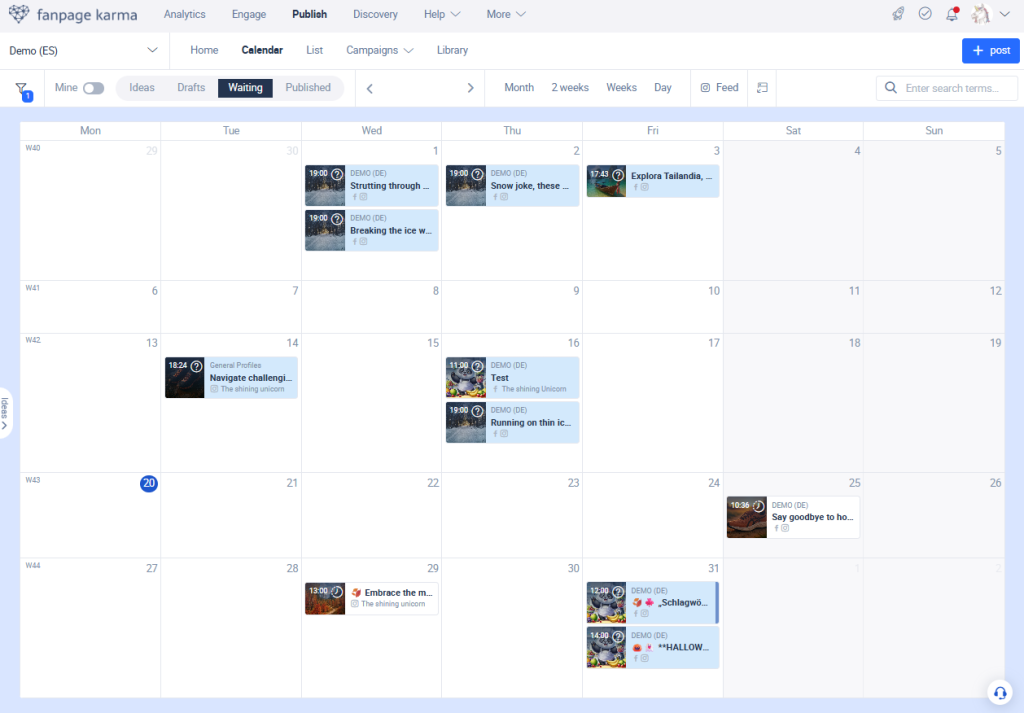
As we have already discussed, managing a multi-platform strategy can easily become overwhelming. Different formats, posting times, and approval processes all competing for attention. That is why having everything in one place makes such a big difference. Therefore, a social media publishing tool should provide a centralized dashboard that functions as the main control center for all your social media profiles. This integration unifies every network, from high-volume platforms like TikTok and Instagram to professional channels like LinkedIn, into one interface.
This unified interface is essential for managing a variety of diverse creative formats. Make sure that your platform automatically manages the complex technical specifications required for formats like Reels, Carousels, and long-form video, ensuring native delivery without manual intervention. With this, you can guarantee visual integrity and correct formatting across all channels, eliminating errors and streamlining content approval.
When it comes to handling all your social media accounts from one place, a centralized setup maintains efficiency and consistency. With every scheduling, formatting, and publishing action managed centrally, teams gain complete oversight of their publishing process. The result is greater workflow efficiency, better team collaboration, and a smarter strategy. Making it simpler to align campaigns, maintain brand voice, and efficiently manage a large volume of content across your entire social media presence.
2. AI-Powered Content Creation
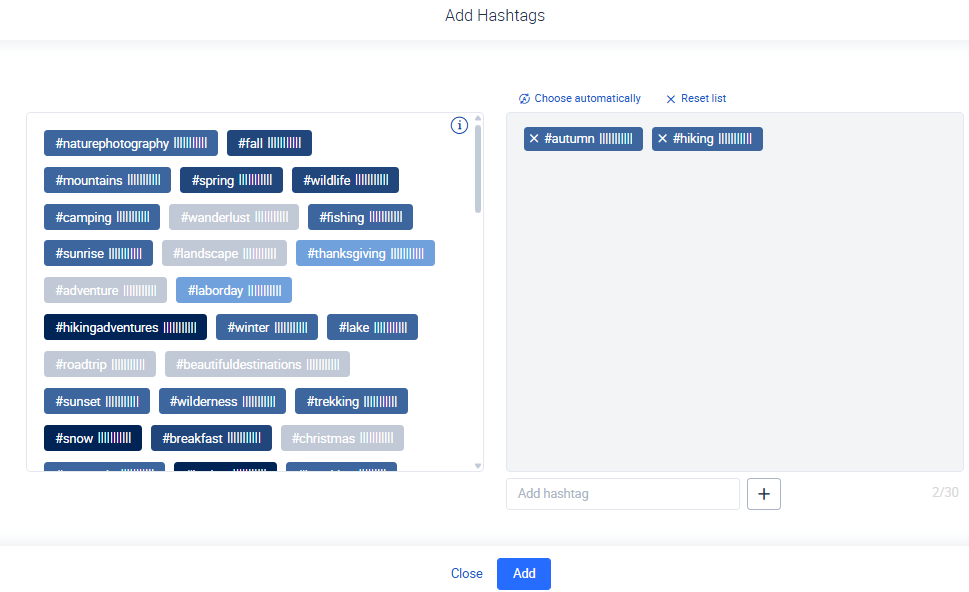
The process of coming up with fresh ideas, writing captions, and finding the right hashtags can take hours. Especially if you need to manage multiple platforms at the same time. That is where AI can make a big difference. Modern social media publishing tools now include built-in AI assistants that eliminate the need for endless brainstorming sessions or switching tabs to access external copywriting platforms.
This integrated feature provides value by supporting three core creative elements: captions/content, visuals, and hashtags. A tool’s AI capabilities should include being able to draft captions that match your specified tone, create visuals based on your needs, and provide highly relevant, high-performing hashtags based on real data. This support accelerates your content creation process by turning an idea into a ready-to-publish post.
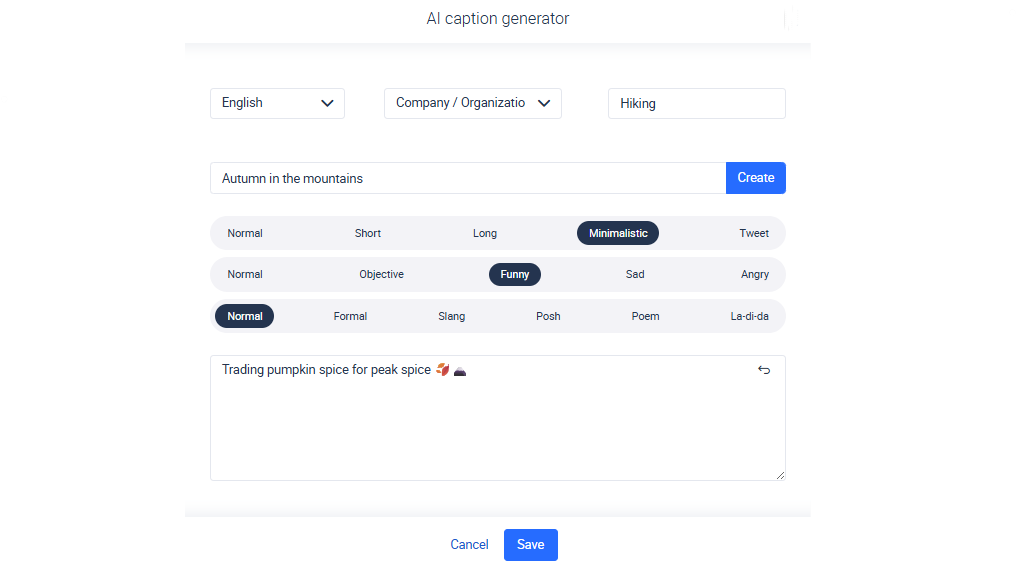
When combined with efficient social media content planning, these AI features make it easier to manage large-scale campaigns while keeping your messaging clear and consistent. This allows teams to efficiently maintain a high-volume of content, ensuring that every post is fast to produce and strategically optimized for discoverability and engagement before it goes live.
3. Collaborative Approval Workflows
Social media publishing usually involves more than one person. Copywriters, designers, managers, and sometimes even clients need to collaborate when creating a post. Each step adds value, but it can also add friction when feedback happens across different channels, messages get lost, or approvals take too long.
That’s where collaborative approval workflows make this process easier. Modern social media publishing tools bring everyone together in one space right inside the post draft. Teams can comment, tag colleagues for input, and assign tasks directly from the publishing dashboard. This keeps feedback organized and transparent, without the endless email threads or chat messages.
The system also makes accountability effortless. Every change and approval is recorded, so you always know who reviewed what and when. You can also customize the approval process. For instance, some teams might need multiple approvals, while others only require one final sign-off. This flexibility helps to ensure that your publishing process is both efficient and secure, guaranteeing that every post that goes live has been reviewed, approved, and is aligned with your brand standards.
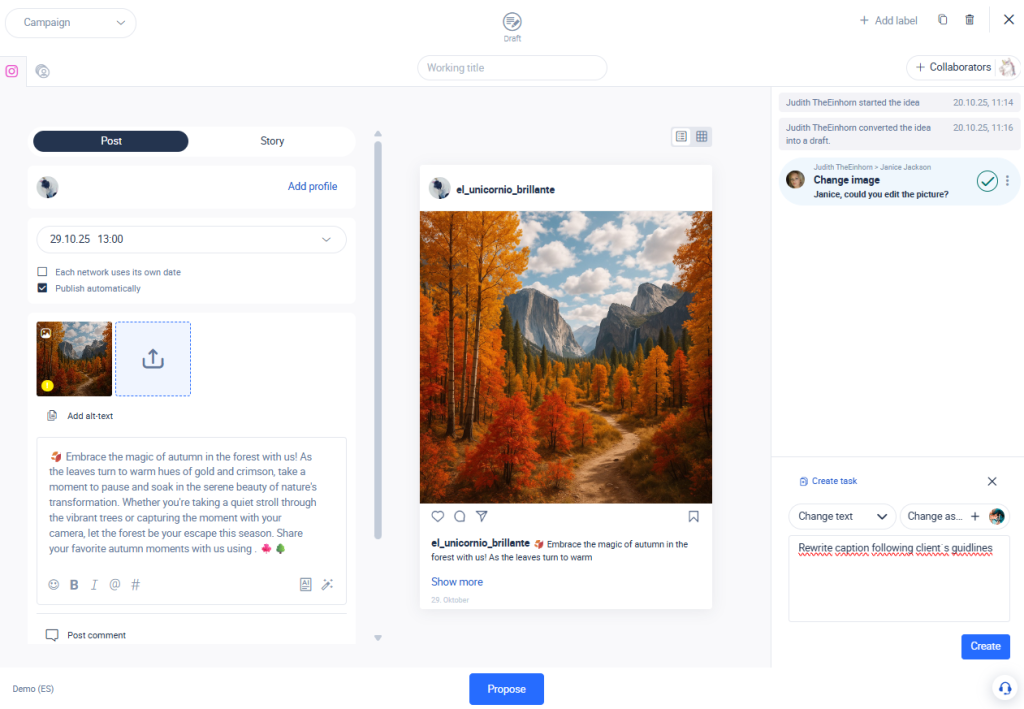
Your social media publishing tool should make oversight and organization effortless. Every change and approval is recorded, so you always know who reviewed what and when. You can also customize the approval process: some teams might need multiple approvals, while others only require one final sign-off. This flexibility helps to ensure that your publishing process is both efficient and secure, guaranteeing that every post that goes live has been reviewed, approved and helps you maintain your social media reputation.

4. Post Automation and Advanced Scheduling
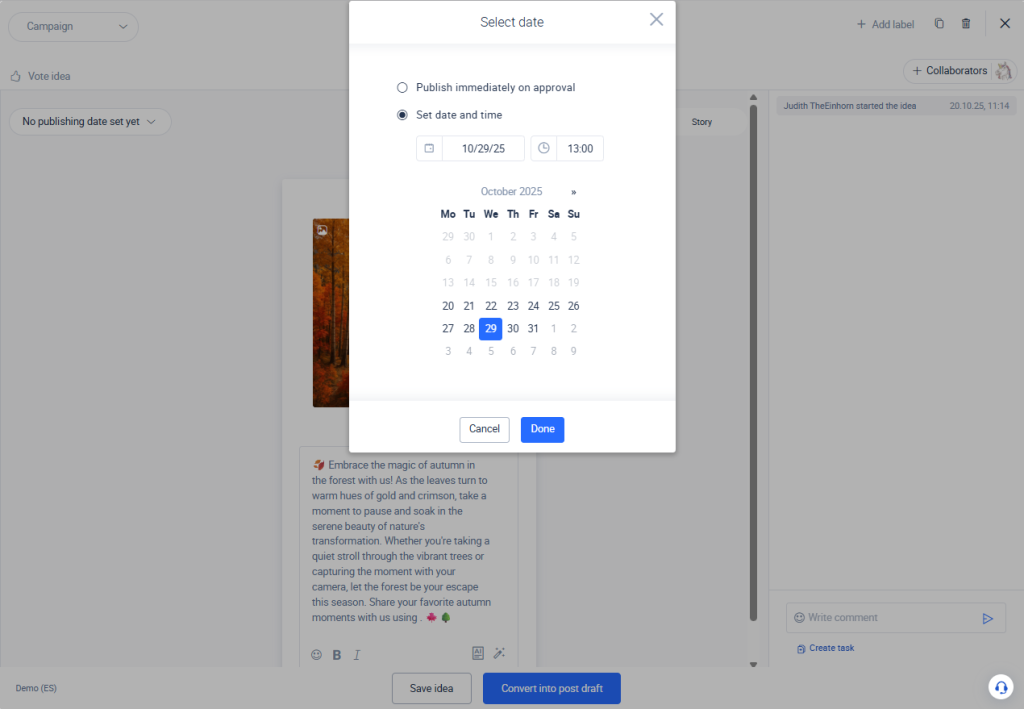
Manually publishing posts might seem manageable at first, but it quickly leads to inconsistency and missed opportunities. For instance, maybe you want to post on the weekend when most companies have nobody is in the office. Social media auto-posting tools can solve this problem by making sure your content goes live exactly when your audience is most active, even if no one from your team is working.
Once a post has cleared the approval process, the system automatically schedules and publishes it on all selected platforms. You can plan days or even weeks in advance, safe in the knowledge that everything will be posted on time. Modern social media publishing tools with analytics functions take it a step further by using data to suggest the best times to post on each platform. This ensures your posts reach the right people at the right time, maximizing visibility and engagement. Once the content is live, performance metrics flow directly into your analytics dashboard, creating a seamless connection between planning, publishing, and tracking.
5. Data-Driven Performance Tracking
The success of a social media strategy is not measured by how often you post, but by how your audience reacts. A good publishing tool continues to work behind the scenes once a post is live, tracking engagement, reach, and performance in real time. While not always mentioned when talking about social media publishing tools, don’t forget that built-in analytics features can be a real help. These analytics features, as part of an all-in-one social media tool, can help reveal what hashtags you should use, when your audience is most active, and what content formats you should use. If you want to learn how to put that data into action, take a look at our guide on social media content optimization strategies.
Furthermore, every time you publish a post, you collect data to help you make smarter decisions, whether that’s adjusting your tone or timing or refining your creative approach. Over time, this creates a continuous cycle of improvement, with each piece of content performing slightly better than the last. Having the ability to track and benchmark your performance against other profiles can also help you with your goal setting. By combining planning, publishing, and analysis in one place, an all-in-one social media publishing tool replaces guesswork with strategy.
6. Centralized Media Library
Great content starts with easy access to the right assets. A centralized media library stores videos, images, logos, and templates in one organized place, so your team won’t have to search through folders or track down files. The best tools extend their reach beyond internal storage, offering seamless integrations with external platforms like Canva and Google Drive. This ensures that design files and finalized assets are always available directly within your publishing workflow.
It’s more than just storage. The media library becomes a shared workspace where everyone, from designers to managers, can access approved, on-brand visuals directly within the publishing tool. With clear tags, categories, and version control, you can be confident that you’re using the most up-to-date and accurate materials. This speeds up content creation and ensures consistency across every post and platform, making your brand look cohesive, professional, and ready to publish at any moment.
Another advantage of many of these tools is that their media libraries include a large selection of high-quality, royalty-free photos, as well as an AI photo generator.

The Best Social Media Publishing Tools
The benefits we mentioned in the previous section are the foundation of any social media publishing tool worth using. These are the essentials that make publishing smoother, smarter, and more consistent across channels.
Choosing the right tool, however, can be an investment in time. It’s worth taking the time to explore your options, compare features, and make sure the platform you choose includes everything your team needs, from advanced scheduling to project management. Whether you are searching for the best social media reel publishing tool on the market or simply one that covers all available formats across platforms, finding the right balance between functionality and usability is key.
To make your search easier, we’ve put together a list of the best social media publishing tools available right now. In our opinion, here are some of the best social media publishing tools on the market today:
- Fanpage Karma
- Hootsuite
- Sprout Social
- Social Pilot
- Agorapulse
- Later
- Swat.io
- Sprinklr
- Kontentino
- Sendible
1. Fanpage Karma
Fanpage Karma brings together everything social media teams need to plan, publish, and analyze content all in one place. The publishing tool streamlines the entire workflow, from idea generation to approval and automated posting, allowing teams to manage every stage of content creation efficiently. Moreover, the platform’s AI assistant speeds up content production by generating captions, visuals, and hashtags tailored to your brand’s tone and target audience. Meanwhile, collaborative approval workflows keep feedback organized and ensure that every post is reviewed and approved before going live.
Beyond publishing, Fanpage Karma’s offers unlimited profile analysis, which powers its analytics tool, allowing you to track performance across all channels while finding data-based ways to improve your content. This feature is especially valuable for agencies and larger teams managing multiple brands or markets, as it offers a complete view of what’s performing well, why, and how to optimize future campaigns.
In addition to analytics and publishing features, Fanpage Karma also comes equipped with community management, monitoring,and research functionalities. If you want to see how Fanpage Karma can improve your publishing strategy, you can use Fanpage Karma´s publishing tool for free and without limits or join one of our free weekly webinars.

2. Hootsuite
Hootsuite is one of the longest-standing names in social media management. It offers a comprehensive publishing suite that allows teams to plan, approve, and distribute content across all major networks with ease. The interface provides a clear overview of campaigns, ensuring that every post aligns with brand objectives and timelines.
For marketing departments and agencies managing multiple accounts, Hootsuite brings structure and transparency to the process. Role assignments, approval workflows, and integrations with tools like Canva or Google Drive create an efficient publishing environment that scales with business needs.
3. Sprout Social
Sprout Social is a well-structured platform that combines publishing, collaboration, and analytics. Its visual calendar, post previews, and AI-assisted publishing features make campaign planning intuitive and data-driven. Teams can coordinate seamlessly while maintaining visibility across all social channels.
The platform’s strength lies in its balance of creativity and governance. Role-based access, approval hierarchies, and detailed analytics make it ideal for brands and agencies seeking a high level of control over their publishing operations.
4. Social Pilot
SocialPilot is a practical and cost-effective publishing solution designed for growing businesses and agencies. It enables users to schedule, queue, and upload posts in large quantities across multiple platforms, helping teams to maintain consistency and organisation.
The platform also supports collaboration and client management features, including content approvals and white-label reporting. Companies looking to streamline their publishing processes without incurring the complexity or cost of enterprise tools will find that SocialPilot provides a balanced, scalable option.
5. Agorapulse
Agorapulse is an all-in-one platform designed to streamline publishing and engagement. Its content calendar provides a clear overview of scheduled posts, and queue categories and approval workflows help teams to work efficiently and in alignment.
Collaboration is a key focus, with team members able to assign tasks, share feedback, and finalize content directly within the interface. When combined with detailed analytics and reporting, Agorapulse enables marketing teams to manage their entire publishing cycle, from planning to performance, in one place.
6. Later
Later is a publishing tool designed for brands that rely on creative storytelling. With its intuitive drag-and-drop calendar and post previews, it is simple to plan and publish Reels, Stories, and static posts that fit seamlessly into a brand’s visual identity.
With automation for Instagram, TikTok, and other visual platforms, Later enables marketing teams to maintain a consistent publishing schedule while optimizing content performance. Later is particularly well-suited to lifestyle, retail, and e-commerce brands that prioritize design and engagement.
7. Swat.io
Swat.io is a structured and reliable publishing solution designed for teams that manage complex approval workflows. Its centralized calendar and collaboration tools make it easy to track who is responsible for each stage of the content creation and publication process.
The platform is particularly well-suited to businesses in regulated industries, offering compliance-ready audit trails, user permissions, and approval systems. With AI-driven optimization features and detailed analytics, Swat.io combines creativity with operational control.
8. Sprinklr
Sprinklr is a leading enterprise platform for large organizations that require complete oversight of their social media publishing. It enables teams to plan, approve, and distribute thousands of posts across global markets while ensuring compliance and brand safety.
With advanced governance features, automated workflows, and robust analytics, Sprinklr supports even the most complex communication structures. It is particularly valuable for financial institutions, government organizations, and multinational corporations that need precision, accountability, and scalability.
9. Kontentino
Kontentino’s focus is on simplifying collaboration between agencies, brands, and clients. The platform offers intuitive tools for planning, drafting, and previewing content, showing it exactly as it will appear once published. Feedback and approvals can be handled directly within the interface, minimizing confusion and improving turnaround times.
In addition to publishing, Kontentino includes campaign tagging, media organization, and performance tracking. Its blend of structure and usability makes it a reliable choice for agencies managing multiple accounts or clients requiring close content oversight.
10. Sendible
Sendible is a versatile publishing platform designed for agencies and consultants who manage multiple social media profiles. Supporting bulk scheduling, RSS content feeds, and reusable templates, it enables the efficient management of high-volume posting.
The platform also integrates seamlessly with creative and storage tools such as Canva, Google Drive, and Dropbox, ensuring that all assets remain accessible. Sendible’s combination of automation, collaboration, and client approval workflows helps teams deliver professional, consistent publishing at scale