The Golden Gate Bridge Method: How to Use Successful Posts to Boost Important Content

- A high-reach post changes the starting point
- The Golden Gate Bridge Method: How reach becomes a bridge
- The Golden Gate Bridge Method in practice: Build the right post sequence in 5 steps
- Three bridges from reach to relevance
- How to keep the method from getting stuck in the content calendar
- What the Golden Gate Bridge Method cannot promise
- Conclusion: Use reach windows more deliberately
When a humorous post about day-to-day social media work strikes a chord with your audience and suddenly reaches far more people than usual, take a close look at what is next on your content calendar. Simply returning to the regular schedule after an exceptionally successful post could mean letting a valuable reach window go to waste.
If the planned sequence remains unchanged, your next important piece of content may miss out on the attention available at that moment. The Golden Gate Bridge Method shows what to do after a high-reach post. It turns a measurable pattern into a practical decision for everyday content planning. This article explains what our analysis found, how to apply the method, and where its limits lie.
A high-reach post changes the starting point
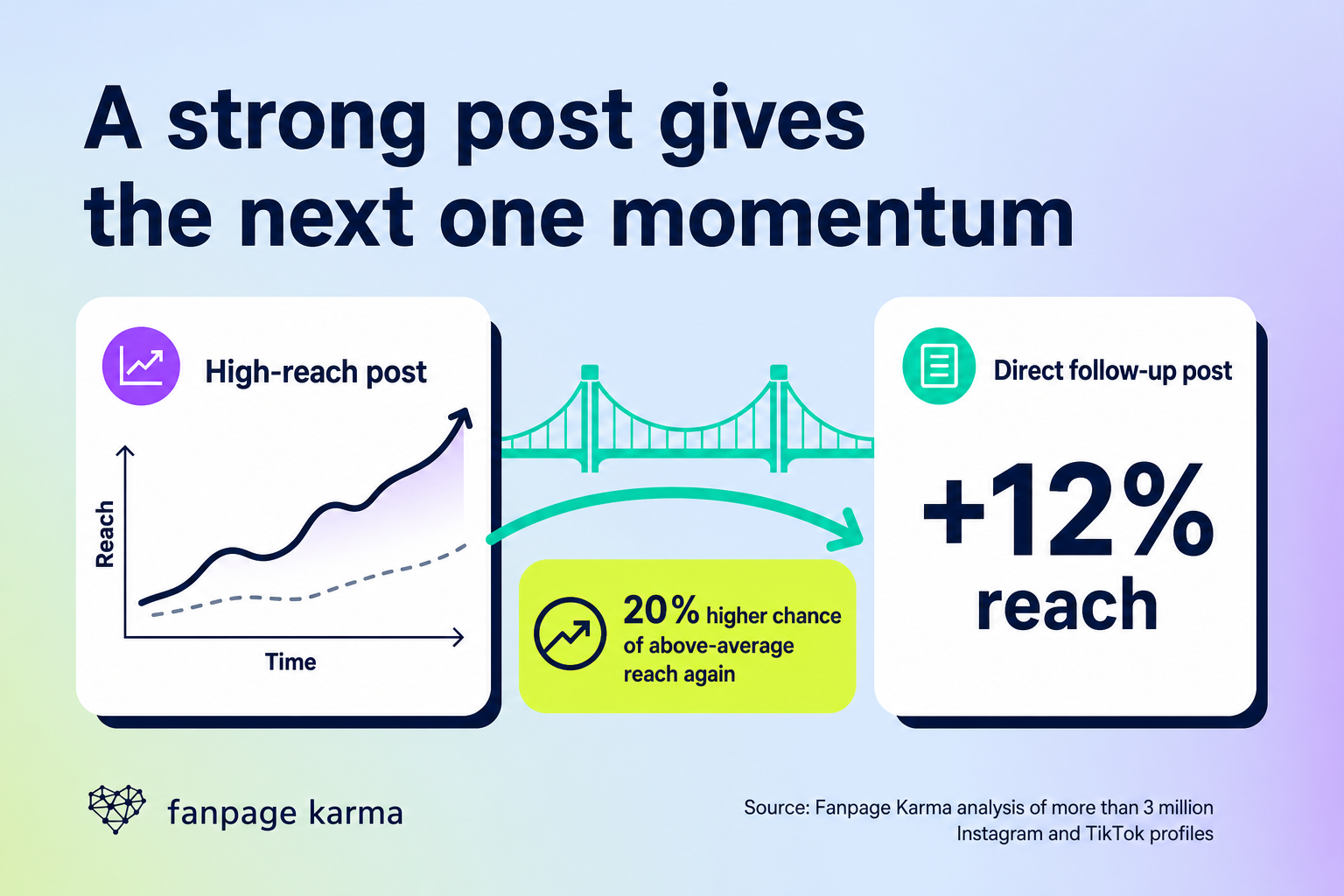
We analyzed more than three million Instagram and TikTok profiles, and our findings reveal a clear pattern. After an above-average post, the next post receives 12 percent more reach on average. The likelihood of another above-average result also increases. According to our analysis, the chance that the next post will achieve above-average reach is 20 percent higher after a high-reach post. Put simply, the next post starts from a more favorable position on average.
The measured effect is particularly strong on TikTok. There, the post following a successful one receives 29 percent more reach on average. This does not mean that one strong post automatically causes the next one to succeed, but the figures point to a statistically more favorable starting position. Whether the follow-up post actually resonates still depends on its quality, relevance to the audience, timing, and platform.
The Golden Gate Bridge Method: How reach becomes a bridge
The idea behind the Golden Gate Bridge Method is simple. A successful post creates a bridge to content that matters to the team or brand. Instead of publishing a random post after a surge in reach, you deliberately follow it with a prepared, high-priority post. In this way, attention-grabbing content becomes an entry point to a topic that may be more factual, require more explanation, or focus more heavily on a specific CTA. The follow-up post can be used to:
- Give an important announcement more visibility
- Share knowledge or relevant information
- Draw attention to a relevant offer
- Prompt a specific action
The key is preparation. A reach window will not necessarily open when it suits your production schedule. Copy, creative assets, links, and approvals should therefore be ready before a post begins to perform significantly better than usual. Only then can the social media team respond quickly without sacrificing quality for speed.
The Golden Gate Bridge Method in practice: Build the right post sequence in 5 steps
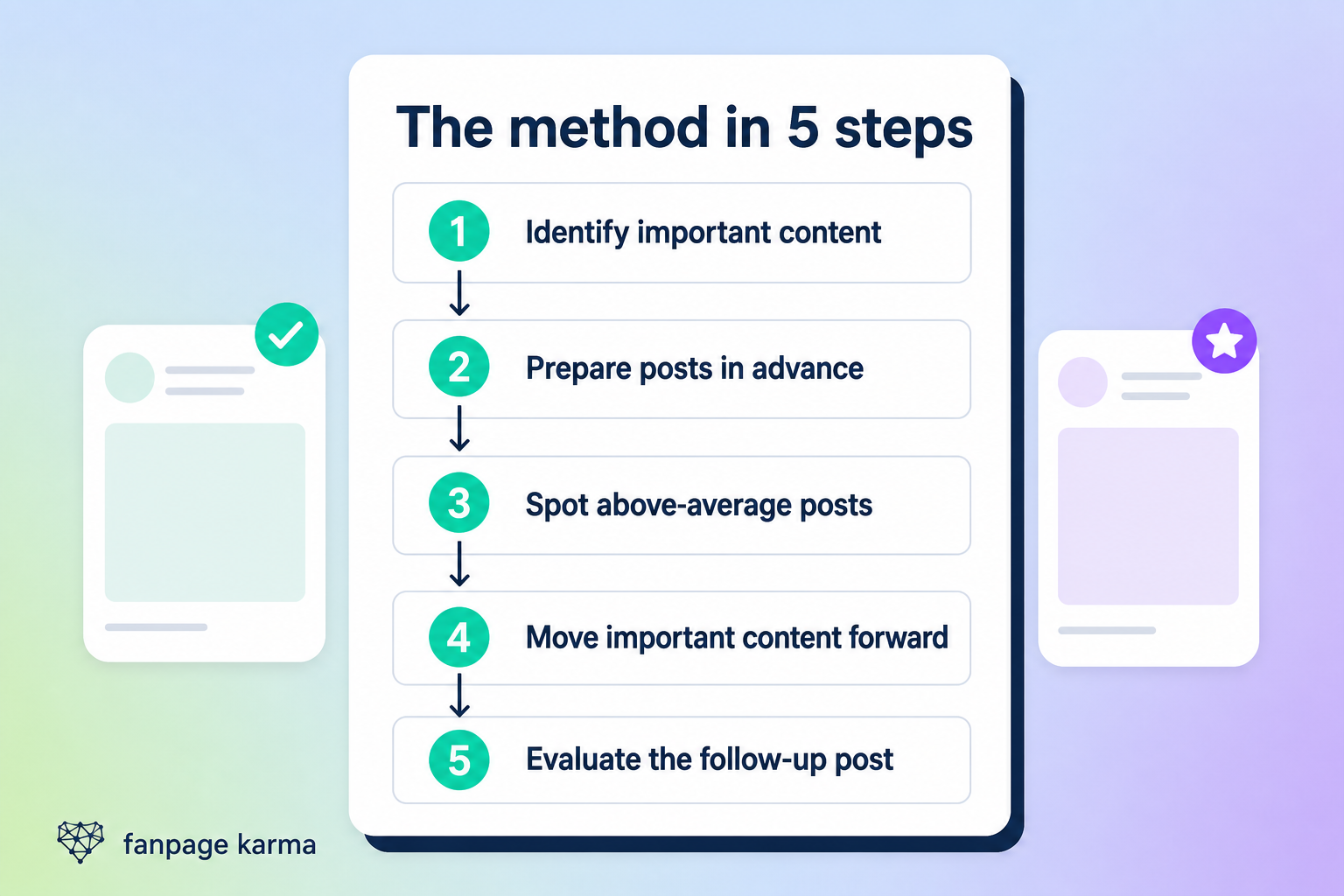
1. Identify important content
Start by deciding which posts would benefit most from additional reach. These could include product announcements, event information, important updates, topics that require more explanation, or offers. The selected posts should still make sense on their own and remain relevant to the audience, even without the success of the preceding post. The sequence creates an opportunity, but each post still needs to stand on its own.
2. Prepare posts in advance
Prepare important posts far enough in advance that they can be published flexibly when needed. Ideally, the copy, creative assets, links, and internal approvals are already complete. For time-sensitive content, you should also know how large the potential publishing window is. An announcement that only makes sense after a specific date cannot simply be brought forward at any time.
3. Spot above-average posts
Do not rely on gut feeling alone to decide whether a post is performing exceptionally well. Compare its reach with your channel’s typical performance while accounting for the platform. There is no universal threshold because above average means something different for every profile. What matters is how far the result exceeds the account’s usual level.
4. Move the important content forward
As soon as a post performs significantly better than usual, the prepared content can become the next post. Before publishing, run one final check. Do the topic, creative, and timing still fit the current situation? An unfinished or unsuitable post does not become better just because its predecessor generated substantial reach. The method should support a strong post, not accelerate a weak one.
5. Evaluate the follow-up post
After publishing, compare the important post with your usual social media performance to see whether it gained additional reach. Record the platform, format, topic, and result so that individual trials gradually add up to a useful picture. Over time, this can reveal where the method works particularly well for your account. One success or failure is not enough to establish a general rule.
Three bridges from reach to relevance
Humor meets an important announcement
A humorous post about working life reaches far more people than usual. Next comes a prepared announcement that is relevant to the audience but would probably have attracted less immediate attention on its own. The entertaining post and the factual update serve different purposes. Publishing them in this order allows the existing attention to support the important topic.
A trend leads to useful knowledge
A trend that fits both the brand and its audience generates above-average reach. It is followed by an informative post that explains a relevant topic or offers practical advice. The first post captures attention, while the second delivers practical value. There is no need to force a connection between them. What matters is that both posts make sense for the same audience.
Reach opens a window for an offer
A successful post can also be followed by a relevant offer or a specific call to action. The offer still needs to be relevant, clear, and compelling. The measured momentum is no substitute for a clear value proposition or strong content. It simply improves the starting position for a post that should already work on its own merits.

How to keep the method from getting stuck in the content calendar
A good content calendar should leave room for flexible posts alongside fixed publishing dates. Clear responsibilities matter just as much. Who identifies an above-average post, who decides to move the next post forward, and who approves the prepared content? Ongoing analytics reviews help compare current results with the channel’s usual performance. Without a simple process, the favorable window may close before everyone has signed off.
- Was the previous post genuinely above average?
- Is the prepared follow-up post relevant to the audience?
- Are the copy, creative assets, links, and approvals complete?
- Does the post suit the platform and the current moment?
- Can the result be evaluated clearly afterward?
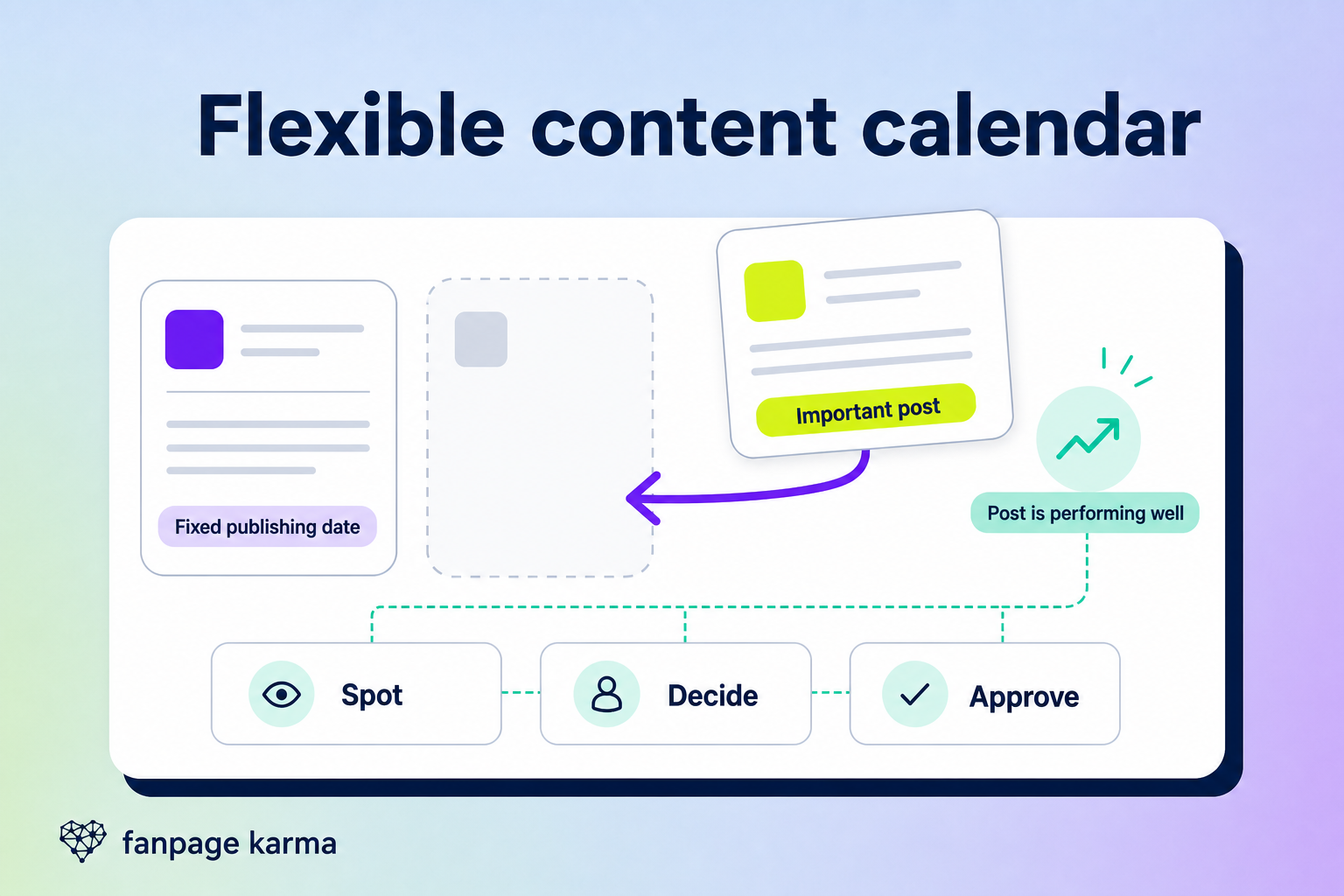
This review should be fast enough to preserve flexibility, but thorough enough to prevent poor decisions. It helps to maintain a small pool of priority posts that the team can choose from depending on the platform and situation. This turns the method into a repeatable part of content planning rather than an improvised response to an isolated spike in reach.
What the Golden Gate Bridge Method cannot promise
Not every successful post should automatically be followed by an ad or offer. A rigid rule like that would ignore the audience’s interests and could produce an unsuitable post sequence. The next piece of content must provide clear value and fit the current situation. High reach alone also says nothing about whether people will take the desired action afterward.
The strength of the effect may vary by platform and situation, so your own analysis remains essential. The Golden Gate Bridge Method takes advantage of a statistically more favorable starting position, but it does not replace a sound content strategy. Topic relevance, quality, and timing still determine whether a reach window leads to a compelling follow-up post.
Conclusion: Use reach windows more deliberately
An above-average post can give the next post measurable momentum. According to our analysis, the follow-up receives 12 percent more reach on average, while the likelihood of achieving above-average reach again is 20 percent higher. On TikTok, the measured reach advantage averages 29 percent. Prepare important content, identify strong posts early, publish the right follow-up next, and evaluate the result. The Golden Gate Bridge Method cannot make success predictable, but it helps social media teams use favorable reach windows more strategically. In your next content planning session, decide which important post should be ready when that window opens.