Social Media Content Management Tools
Nearly every marketing team that has a significant social media presence can use a social media content management tool to help them with their social media activities. However, instead of looking at content management as just a part of a social media tool, you should view it as an all-around function that different parts of an all-in-one tool contribute towards.
In this case, a more holistic understanding of content management involves not only the content itself, but the processes that go into creating, publishing, and measuring the success of that content. However, one question still looms: what features should a social media tool provide you, so your content management is effective?
In this guide, we will explore how content management works within the framework of a modern, all-in-one social media tool. You’ll learn which features truly matter, how they support every stage of the content lifecycle, and why choosing the right platform can save your team valuable time and deliver stronger results.
Features of the Best Social Media Content Management Tools
Effective content planning on social media involves more than just working on a content calendar that details when and where you will post. In fact, an effective social media content management tool should be able to provide you and your business with a number of features that help make your content a success. It should support your team across every stage of the content cycle.
Content management involves more than just publishing a post. It´s a structured process that includes several steps: researching a post, planning and creating the post, publishing it, and then managing and tracking it. Based on this content creation process, these are the 6 key features that great social media content management tools should offer:
- Tracking, Benchmarking, and Reporting
- Research What Works for your Content Strategy
- Centralized Media Library and Content Calendar
- Plan, Collaborate and Publish with Precision
- Manage Posts and Engage with Your Audience
- Fine-Tune your Content for Maximum Impact
- Enhance Your Workflows with AI-Powered Tools

1. Research What Works for your Content Strategy
Many may not associate research functions with a social media content management tool, but this function is crucial. Since we are talking about the entire process of content management, this necessarily involves discovering what type of content works, and what doesn’t. We have already written articles relating to topics such as how to find the best time to post or hashtag research that give you insights about those topics. However, what we want to do here is to highlight the importance of being able to research content and to manage and observe content approaches that inspire you.
In reality, being able to monitor and analyze content that is performing well or that inspires your own content creation is an important part of content management. It is important to keep learning from content or profiles that you see as successful so you can begin to craft your own content strategy. What is needed, in this case, is for a social media tool to be able to discover other profiles that are in your industry and be able to get an overview of their metrics and content approach.
2. Plan, Collaborate, and Publish with Precision
For many teams, the content planning and publishing features represent the core “content management” part of a social media tool. While many may look at various scheduling tools for social media, there are a few points related to planning and publishing as a whole when it comes to content management.

Planning content for social media needs to be done transparently and usually is closely related to the overall marketing strategy of a company. The creation process of social media posts involves different steps including drafts, review, edits, and publication. Various posts are also part of a more comprehensive social media content schedule. Marketing teams must have clear visibility over the planned post to keep everything coordinated. For this reason, content management tools should offer features that enable the sharing of schedules for those who don’t have a subscription to the tool.
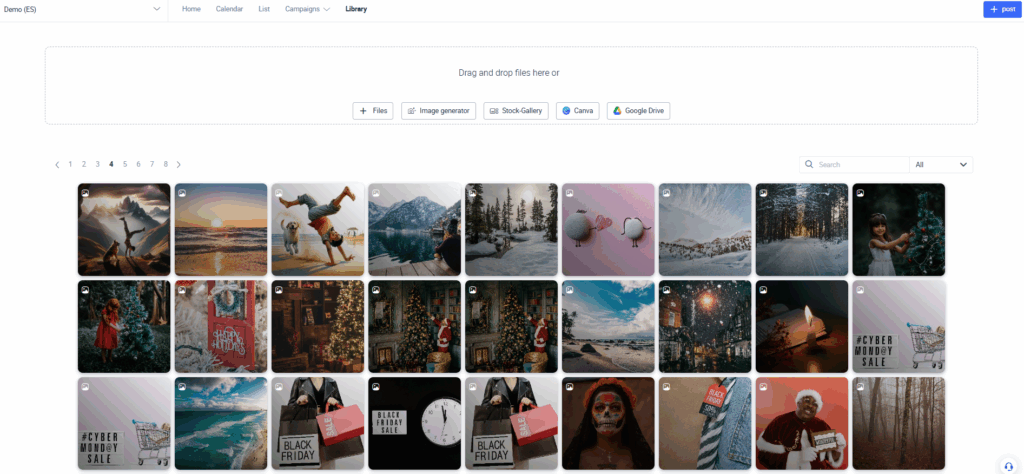
Second, effective social media content planning tools should provide you with a simple way to manage and organize your images. This is done through an image library, where you can upload and manage all the images and pictures you will be using in your posts. The best content management tools for social media will enable image organisation and easy uploading.
3. Centralized Media Library and Content Calendar
Effective social media content management tools should provide you with a simple way to manage and organize your images. This is done through an image library, where you can upload and manage all the images and pictures you will be using in your posts. The best content management tools for social media will enable image organization and easy uploading. A well-structured library helps teams stay consistent with brand visuals, avoid duplicate uploads, and reuse high-performing content efficiently.
A centralized content calendar is equally important. It gives you a clear overview of everything scheduled to go live across your channels. This allows teams to plan campaigns weeks or months in advance, align messaging across platforms, and identify potential content gaps. Most tools allow you to drag and drop posts, adjust timing, and collaborate in real time, ensuring that everyone is on the same page.
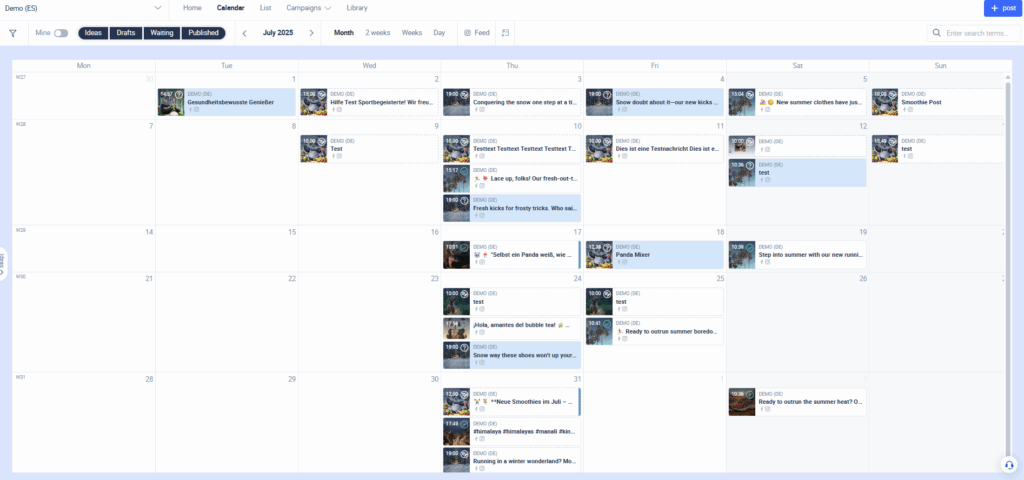
Many tools include multiposting features that allow you to publish the same content across multiple networks simultaneously while adapting the format, caption, or hashtags for each platform. This feature saves valuable time, maintains consistency, and optimizes every post for each channel’s audience and format.
4. Manage Posts and Engage with Your Audience
Once your content is live, the job isn’t finished. Post management involves other different activities that need to be performed after posting. Firstly, you need to be able to edit or change a post if an error needs to be corrected or if something else needs to be changed. Generally, this can be relatively easily and quickly done so we won’t go into more detail here.
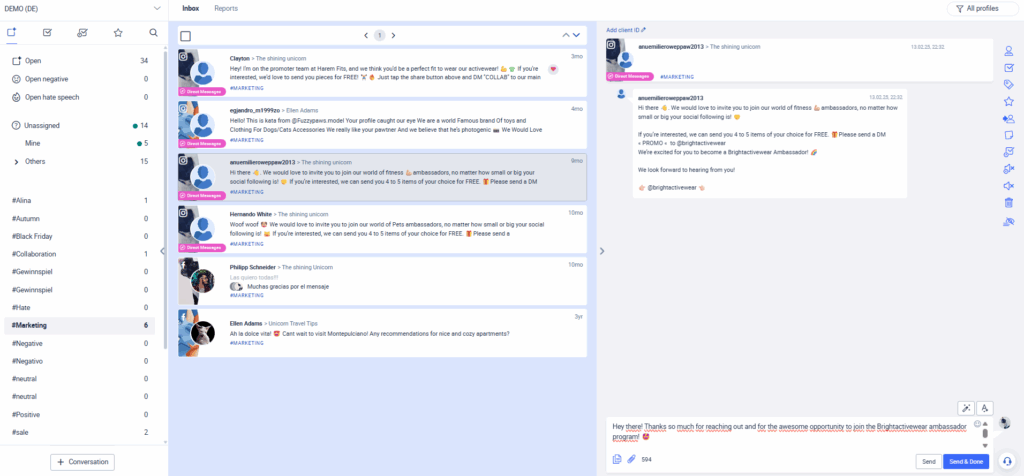
The second area involves managing the various responses and interactions with your posts. An effective social media post management tool would also incorporate powerful community management features so you can make sure you are keeping up with all the interactions of your posts. The best tools consolidate all engagement into one inbox, reducing response time, keeping conversations organized and saving valuable working hours through automation features like using templates, assigning messages, and adding labels.
5. Fine-Tune Your Content for Maximum Impact
A consistent publishing schedule is important, but it won´t drive you results if your content isn´t resonating with your audience. That’s where content optimization comes in. It ensures that your posts don´t just go live, but also perform with purpose by aligning with what your audience engages with. Additionally, it allows you to create posts that really perform by basing your content creation process on real performing data.
With the right insights, you can get inspiration from the top-performing posts, refine underperforming ones, and adapt continuously to your niche’s preferences. Whether it´s adjusting your timing, tone, content format, content optimization turns research into progress and helps you to engage, stay relevant and effective.
6. Enhance Your Workflows with AI Features
Are you still writing every caption manually or guessing which hashtags will perform best? AI is transforming how content is managed across social media platforms. Social media tools with AI capabilities don´t just schedule posts, they also help you to optimize them.
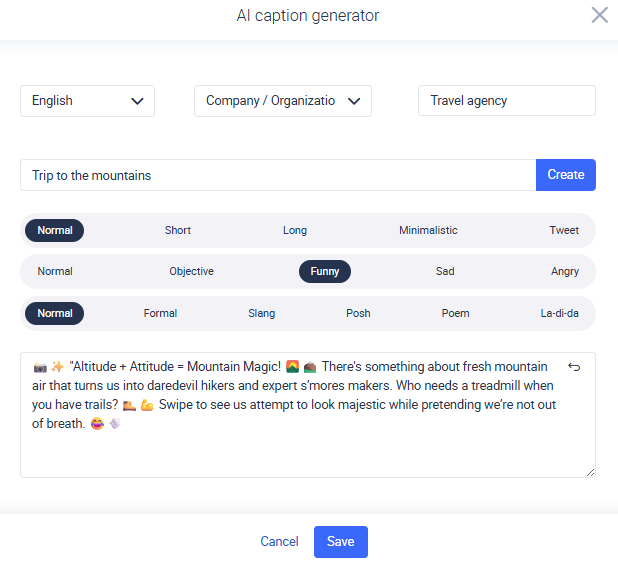
Imagine cutting your content planning time in half. If you manage multiple accounts, or you need to post across different platforms, AI can streamline your process without sacrificing quality. From generating caption ideas to creating images. AI features reduce your workload while improving content performance. It enables a faster, smarter workflow, freeing your team to focus on strategy and creativity.
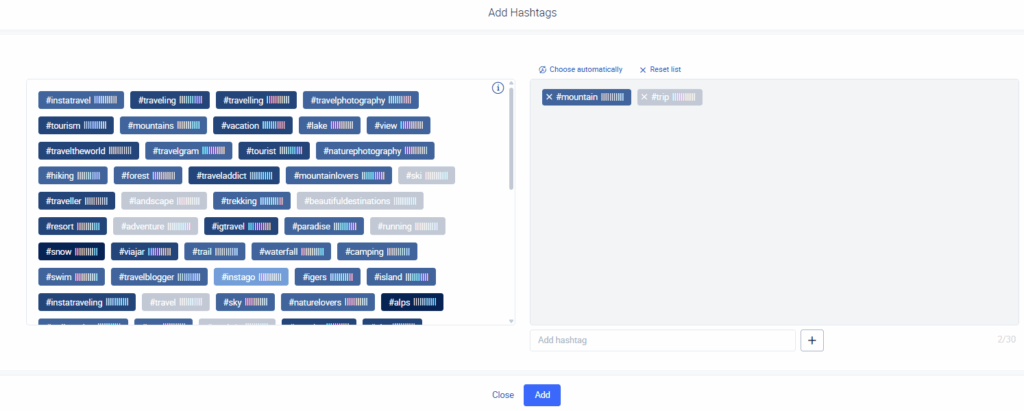
7. Measure your Content’s Success with Tracking, Benchmarking and Reports
A key part of content management is knowing what works and why. That´s why analyzing, benchmarking and reporting are essential features in any all-in-one social media content management tool. How else can you determine whether or not your content is performing? This is another reason why your content management solution should also include social media content management tools.
Your tool should also make it easy to compare your results over time and against your competitors. Important insights include using the data you collect to find the best times to post or to determine what hashtags correlate with higher engagement rates. At the end of the day, content management is not just about setting up publishing processes, but is also about understanding what the best approaches are for future content.
Finding the Best Social Media Content Management Tools
With so many content management tools available, you should ask yourself if what you need is just for planning and publishing, or if you want to concentrate on more comprehensive content management functions. As we have shown in this article, if you are looking for a holistic content management solution, you should always consider the four areas above.
Now that you might have a clearer understanding of what to look for in a tool, we´ll walk you through the best 10 Social media content management tools. Each one offers a unique approach to supporting your content strategy. Making them the best choices between the social media content management tools:
- Fanpage Karma
- Hootsuite
- Buffer
- Sprout Social
- Swat.io
- SocialPilot
- HubSpot
- Zoho Social
- Facelift
- AgoraPulse
1. Fanpage Karma
If you’re looking for a comprehensive social media content management tool, Fanpage Karma stands out as a top choice. It supports the entire content lifecycle across unlimited profiles. During the research stage, you can monitor competitors, discover top-performing content, and identify trends to inform your strategy. This makes it ideal for teams managing multiple clients or complex social media portfolios.
Now you can use Fanpage Karma´s publishing features for free to see for yourself how this tool can help you with your content management strategy. Fanpage Karma combines publishing features with community management, research, analytics and monitoring features, all in one tool. It also includes structured planning tools such as content calendars, post drafts, and approval workflows that make collaboration simple and transparent. Its built-in media library helps teams organize visual assets for efficient publishing across platforms. You can also tag and label content for easier performance analysis and campaign tracking—making content management more strategic and organized.
In addition to this free trial, Fanpage Karma also offers a free weekly webinar focused on how to improve your social media performance and management.

2. Hootsuite
Hootsuite is one of the most established social media content management tools on the market, offering a robust set of features across all four content management areas. Its planning and publishing functions include an intuitive content calendar, support for post drafts and approvals, and the ability to bulk schedule posts across multiple social media networks. Hootsuite also supports collaborative workflows, enabling teams to manage content creation and publishing processes with clarity and oversight. The built-in media library allows you to organize and reuse visual assets across campaigns, while the shared calendar view helps keep internal and external stakeholders aligned.
Beyond planning, Hootsuite excels in post management and performance tracking. Its unified inbox helps teams efficiently manage interactions and community engagement from different channels in one place. The analytics dashboard provides in-depth insights into post performance, audience engagement, and ROI, with customizable reports to support your broader content strategy. For competitive research, Hootsuite’s listening and benchmarking features can help identify trending content and monitor industry players—giving you the information you need to improve your own content management decisions.
3. Buffer
With its clean, straightforward approach to social media content management, Buffer is especially appealing to smaller teams or agencies focused on transparency and efficiency. Its planning and publishing features are designed to streamline workflows, from drafting and scheduling posts across multiple platforms to previewing them in calendar view. Buffer allows users to create and manage publishing queues, which is ideal for maintaining consistent posting frequencies. It also supports collaborative planning with built-in team member access and approval flows. Although its media library is relatively simple, it allows for the effective organization of visual assets, helping teams maintain visual consistency across campaigns.
Buffer stands out with its user-friendly interface and clear reporting tools, which make post analysis and content optimization accessible to non-analysts. Performance metrics are presented in a digestible format to help you identify which content drives engagement and when your audience is most responsive. Buffer also includes link tracking and campaign labels, which provide more granular insights into post success. Although its competitive benchmarking capabilities may be more limited than those of larger enterprise tools, Buffer still enables you to manage your content pipeline holistically, from ideation to performance review.
4. Sprout Social
Sprout Social positions itself as a complete content management solution by seamlessly integrating research, planning, publishing, and analysis into one platform. For planning and publishing, it offers a collaborative content calendar, post approval workflows, and dynamic asset libraries—ideal for teams that require structured editorial processes. Its campaign tagging and visual calendar views help marketing teams maintain clarity across multiple profiles and channels. What makes Sprout especially effective is how it connects content planning with broader marketing goals, offering cross-team visibility and easy sharing of schedules with external stakeholders.
In terms of post management and analysis, Sprout provides a powerful Smart Inbox for monitoring all post interactions in real time, as well as rule-based tagging to organize messages by campaign, sentiment, or priority. Its analytics suite offers deep insights into post performance, engagement trends, and audience behavior, along with competitive benchmarking tools. Users can identify high-performing content and refine their strategy using actionable metrics. Additionally, Sprout’s social listening capabilities support the research phase of content management, helping you uncover emerging trends and audience interests before you even start planning your next post.
5. Swat.io
Swat.io is designed for marketing teams that value structured collaboration and clarity in their content management process. Its strength lies in transparent planning and publishing workflows, offering a detailed editorial calendar, version control, and multi-level approval processes. Users can plan content across multiple channels, assign tasks, and leave internal comments—all within a shared environment. Swat.io also supports external sharing of calendars, making it easy to align with stakeholders outside the tool. Its media asset management is integrated directly into the planning process, helping teams stay organized when dealing with large volumes of visual content.
Beyond publishing, Swat.io delivers robust post management and analytics features. The centralized inbox allows teams to manage and respond to user interactions efficiently, while labeling and filtering tools help categorize content for easier reporting. On the analytics side, Swat.io provides insights into performance by platform, post type, and campaign. It also includes competitive benchmarking and social listening features, which feed into the research phase of content management. Altogether, Swat.io supports every step of the content lifecycle—from idea discovery to performance review—making it a strong choice for teams with complex coordination needs.
6. Social Pilot
SocialPilot offers a well-rounded content management solution that balances ease of use with powerful scheduling and publishing features. Its core strength lies in high-volume post scheduling across multiple platforms, which is especially valuable for agencies and businesses managing many accounts. The tool includes a shared calendar view, bulk scheduling, and a content library for organizing reusable assets. Team collaboration is supported through role-based access and approval workflows, helping streamline the content planning process while maintaining quality control. It also allows sharing of calendars with clients or external stakeholders—supporting transparency in content operations.
When it comes to managing and analyzing published content, SocialPilot includes a unified inbox for monitoring post engagement and handling conversations across networks. Its analytics dashboard provides performance metrics like post reach, engagement, and follower growth. While its reporting features are more straightforward than enterprise-level tools, they’re more than sufficient for identifying top-performing content and refining posting strategies. Though SocialPilot doesn’t offer deep social listening capabilities, it does allow you to track competitor pages on Facebook—giving you a starting point for content research and benchmarking.
7. HubSpot
HubSpot integrates social media content management into its broader marketing automation platform, making it ideal for businesses looking to align content planning with larger inbound strategies. Within HubSpot’s Marketing Hub (Professional and Enterprise plans), users can draft, schedule, and publish posts across major platforms from a unified content calendar. Each post can be tied to specific campaigns, making it easy to track how social efforts contribute to broader marketing goals. The platform also supports team collaboration with approval workflows and user permissions, while media management is handled via a centralized file manager integrated across content types.
In terms of post management and analysis, HubSpot allows marketers to monitor interactions across channels, engage with followers directly, and measure the impact of content based on engagement, traffic, and conversion data. What sets HubSpot apart is its ability to connect social media analytics with website behavior, giving you a clearer picture of how content drives leads and sales. While it doesn’t focus heavily on competitor benchmarking or trend research, its CRM integration enables a more customer-centric content strategy—allowing you to tailor content based on lifecycle stage, persona, or previous engagement.
8. Zoho Social
Zoho Social offers a practical and well-integrated approach to social media content management, especially for small to mid-sized teams and agencies. Its planning and publishing tools include a centralized content calendar, bulk scheduling, post previews, and a built-in media library to manage images and assets. Teams can collaborate through approval workflows, shared calendars, and client-specific portals—making it easier to streamline communication both internally and externally. Integration with Zoho’s broader ecosystem (like Zoho CRM and Zoho Marketing Plus) adds an extra layer of value for businesses looking to unify their marketing efforts.
Beyond planning, Zoho Social provides strong post management and performance tracking tools. The unified inbox allows teams to respond to messages and mentions across platforms, while monitoring columns let users track hashtags, keywords, or competitor activity. Its analytics dashboard delivers performance insights for each post, campaign, or platform, and includes customizable reports to evaluate what content resonates best. While its research capabilities are more limited compared to enterprise platforms, Zoho Social still supports a full-cycle content management approach—from content creation and scheduling to engagement tracking and reporting.
9. Facelift
Facelift is a robust social media content management tool designed with enterprise teams in mind, offering structured workflows and high-level coordination across large teams and multiple profiles. Its content calendar is central to planning, with features that support post scheduling, team collaboration, approval processes, and customizable workflows. Facelift also includes a media library for managing visual assets and campaign folders to organize content by theme or objective. These capabilities make it easier to maintain consistency across distributed teams and to align social efforts with broader marketing campaigns.
For post management and analytics, Facelift provides a centralized inbox to track and respond to audience interactions, as well as moderation tools to maintain quality engagement. Its analytics dashboard offers deep performance insights across platforms, with benchmarking and customizable reporting features ideal for agencies or organizations that need detailed post-campaign evaluation. While it may not focus as heavily on trend discovery or content inspiration tools, Facelift delivers a strong foundation for managing social content at scale—from ideation to impact measurement.
10. AgoraPulse
AgoraPulse is a versatile social media content management tool that balances usability with depth, making it suitable for agencies and marketing teams that need both structure and speed. Its content calendar supports collaborative planning, scheduling, and publishing across major platforms, complete with post previews and approval workflows. Teams can manage visual assets through a built-in media library, while the calendar view offers a clear overview of scheduled and published posts. Sharing calendars with clients or external stakeholders is also possible, reinforcing transparency and alignment across teams.
Post management is where AgoraPulse particularly shines. Its unified Social Inbox centralizes all interactions, enabling teams to respond to comments, messages, and mentions from one place—complete with internal notes, assignments, and automated moderation tools. On the analytics side, AgoraPulse offers detailed performance reporting with engagement metrics, follower trends, and content comparisons across platforms. It also includes basic competitor analysis and social listening tools, supporting the research phase of content management. Altogether, AgoraPulse enables end-to-end control over your social media content lifecycle with a focus on efficiency and collaboration.