How to Succeed with the Pinterest Algorithm: 8 Practical Tips
- How Does the Pinterest Algorithm Work?
- 8 Ways to Succeed with the Pinterest Algorithm
- 1. Find the Right Posting Times for Your Audience
- 2. Choose Keywords and Hashtags Carefully
- 3. Follow and Research Trends
- 4. Build Clear and Relevant Boards
- 5. Make the Next Step Obvious
- 6. Treat Measurement as Part of Publishing
- 7. Make the Value Clear at First Glance
- 8. Earn Attention with Better Visuals and Hooks
- Turning these Best Practices into a Repeatable Workflow
- Make Every Pin Easier to Understand, Discover, and Use
The Pinterest algorithm plays an important role in whether a useful Pin reaches people who may care about it. Understanding the Pinterest algorithm helps turn publishing from a guessing game into a process you can test and improve. There is no secret switch that guarantees reach, but there are practical choices that can strengthen discovery and make each Pin easier to understand.
In this article, we will first explain how the Pinterest algorithm works and how discovery connects content and audience intent. We will then introduce 8 best practices that can give you a better chance to succeed with the Pinterest algorithm. At the end, we will provide a few tips about integrating these best practices into your existing workflow.
How Does the Pinterest Algorithm Work?
The Pinterest algorithm is important to understand when building a more consistent publishing strategy. Knowing how it connects relevance and topic clarity with discovery makes it easier to create Pins that Pinterest and the audience can interpret. The next two subsections examine the foundations of Pinterest discovery: relevance and a clearly defined topic. First, we look at how the elements marketers can control help a Pin appear relevant to Pinterest and the audience. Then, we explain why aligned wording, board context, and a consistent content promise are important for search visibility and attention.
For the Pinterest Algorithm, Relevance Comes Before Tricks
Relevance matters because Pinterest and the audience both need to understand what a Pin is about. When the topic is vague, changing the timing, adding keywords, or redesigning the creative can become a set of disconnected tactics. The better starting point is one clear topic and a consistent promise. Use the words, visual, board context, and destination to reinforce that same idea. This will not remove uncertainty from distribution, but it gives the team a more rational way to improve and evaluate each Pin. When checking whether a Pin sends clear relevance signals, focus on:
- The words and topics associated with the Pin
- The relevance of the board where it appears
- The clarity and appeal of the visual
- The timing and current interest in the topic
- The actions people take after seeing the content
No single part of a Pin can guarantee performance, so treat these areas as a connected framework rather than a ranking formula. Clear wording identifies the subject, the board adds context, and the visual helps the audience recognize the idea. Timing influences when the Pin enters the publishing flow, while subsequent actions help the team evaluate whether it achieved its purpose. Reviewing the topic, creative, board, and destination together can reveal unnecessary friction and improve later analysis. Keep these elements aligned and avoid changing them all at once if you want the results to provide useful guidance.
The Pinterest Search Algorithm Needs a Clear Topic
Search adds another layer to Pinterest discovery, and a clearly defined topic is essential. The Pinterest search algorithm uses the title, description, creative, and board to understand how the content relates to searches and interests. These elements should support the same idea without turning the copy into a string of repeated keywords. The title can state the core topic, while the description, visual message, and board add useful context. Choose language based on what the destination delivers so the complete Pin creates a consistent and accurate promise.
Discoverability creates an opportunity, but relevance and creative quality determine whether people use it. A precise description paired with a generic or unreadable visual may provide context without creating interest. A striking visual paired with vague copy may attract attention without explaining what the audience will receive. The strongest process checks both topic clarity and the reason to act before publication. This distinction helps teams avoid blaming keywords for a creative problem or redesigning a Pin when its subject is still unclear.
8 Ways to Succeed with the Pinterest Algorithm
These eight tips and best practices bring timing, keywords, trends, boards, calls to action, measurement, clear messaging, and visuals into one practical publishing process. Instead of treating them as separate tricks, you can also use them together so every choice supports a coherent Pin and its intended goal. The following best practices can help you succeed with the Pinterest algorithm:
- Find the Right Posting Times for Your Audience
- Choose Keywords and Hashtags Carefully
- Follow and Research Trends
- Build Clear and Relevant Boards
- Make the Next Step Obvious
- Treat Measurement as Part of Publishing
- Make the Value Clear at First Glance
- Earn Attention with Better Visuals and Hooks
1. Find the Right Posting Times for Your Audience
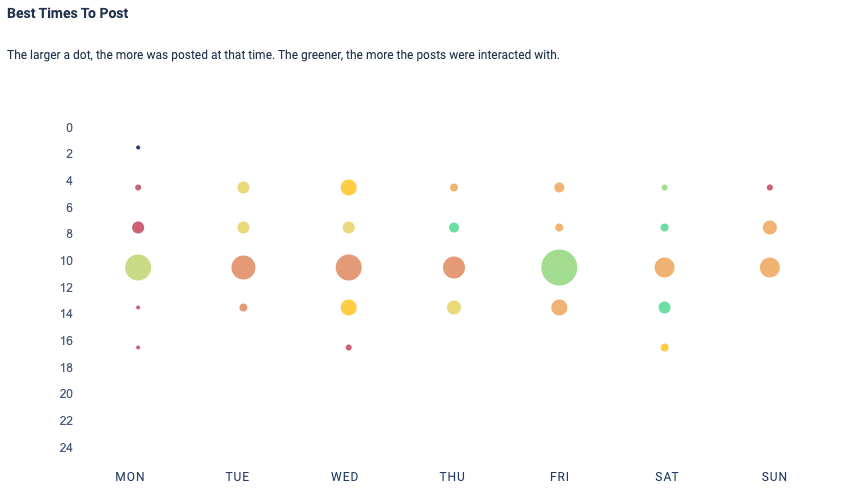
Posting at the right time means on Pinterest choosing publication windows based on evidence from your account instead of following a universal recommendation. Audience routines, content themes, and current interest can differ, so the most useful time may also vary between types of Pins. Consistent timing tests create a clearer baseline and make it easier to understand whether the schedule supports the content. Timing is only one part of success with the Pinterest algorithm, but it becomes more useful when the topic, visual, board, and destination are already aligned.
Researching the best times to post on Pinterest involves analyzing historical performance data. This can reveal when Pins have produced stronger results in the past. Start with your own profile, then compare the publication days, times, topics, and resulting actions with data from competitors or similar accounts. When certain time windows perform consistently across several comparable Pins, they provide a more useful basis for deciding when to publish in the future. Tracking a broad set of profiles with an analytics tool can make these recurring patterns easier to review and apply to your schedule.
A best times chart can plot days and hours against average interaction results while also showing how frequently each time slot was used. This makes it easier to compare your own history with similar profiles and separate repeated patterns from isolated results. Once you have identified promising windows, a scheduling tool can help publish Pins at those times consistently without relying on manual reminders.
2. Choose Keywords and Hashtags Carefully
Clear keywords and relevant hashtags give Pinterest context about what a Pin covers. They matter because search discovery needs a topic that stays consistent across the title, description, visual message, board, and destination. Choose terms that reflect the actual content and add a specific angle rather than relying on broad wording. Use hashtags with restraint so they support the message instead of replacing useful copy. This alignment makes the Pin easier for Pinterest to interpret and for the audience to understand.
Start with the historical performance of your own profiles to see which keywords and hashtags recur in successful content. Group comparable Pins by topic and review the terms alongside their boards, creatives, publication times, and resulting actions. Then examine competitors or similar profiles to identify additional patterns across related content. These recurring relationships can guide future tests, but every term should still match the promise and destination of your Pin. A tool that supports unlimited profile analysis and tracking can make the comparisons easier to organize and turn them into practical keyword and hashtag choices.
3. Follow and Research Trends
Trends can show when audience interests are changing and when a seasonal or timely topic may deserve attention. Monitoring them supports Pinterest discovery by helping teams connect content with subjects that are currently relevant. The goal is not to chase every popular idea, but to identify trends that match the audience, account purpose, and content promise. A useful trend should lead to material that adds real value and can be published while the topic still matters. Evergreen content should remain part of the plan so timely opportunities strengthen the strategy instead of constantly rewriting it.
A social media tool can support this process by bringing research, profile tracking, and performance analysis into one place. Start with your own historical data, then examine similar profiles to identify topics and content patterns that appear repeatedly. Reviewing a wide range of profiles can provide broader context than relying on isolated examples or personal impressions. The data still needs interpretation, since a recurring topic is only useful when it fits your audience and the content you can deliver.
A trend deserves space in the plan when timing, audience relevance, and content value meet in the same idea. However, make sure to make sure the trends you find fit with your overall content strategy. Some questions to ask yourself along the way include:
- Is the topic relevant to the target audience?
- Can the brand add something useful?
- Does the destination genuinely match the trend?
- Can the content be published while the topic is still useful?
4. Build Clear and Relevant Boards
A relevant board helps clarify where a Pin belongs and what broader topic it supports. Give every board an understandable name, a defined purpose, and content that genuinely fits its subject. Avoid unnecessary overlap between boards, but also keep individual categories focused enough to prevent unrelated ideas from being grouped together. Someone encountering the account for the first time should be able to understand the organization without additional explanation. Visual variety is fine as long as the Pins inside each board serve a connected interest or need. Some tips to follow in this case include:
- Define one understandable topic for each board
- Write a description that reflects its actual content
- Group Pins that serve a related interest or need
- Review older boards for unnecessary overlap
Relevant boards give people a clear path from one useful Pin to related content. That path becomes harder to follow when categories overlap or their names create the wrong expectation. Extra boards do not automatically improve the account and may divide content that belongs together. Keep each board focused on a recognizable role and revisit the structure when the content strategy changes.

5. Make the Next Step Obvious
A Pin should tell people what they can do next and what they will receive. The right call to action depends on the content. It might invite someone to read a guide, view a collection, try a process, or save an idea for later. Direct language works when the destination delivers on it. Before writing the CTA, decide what action fits the purpose of the Pin rather than adding a generic command at the end. A piece of content designed for later reference may call for a different response than one that introduces a detailed resource. The wording should remove uncertainty without applying unnecessary pressure. It should also fit naturally with the headline and visual. If the creative promises an explanation but the CTA asks for an unrelated action, the Pin creates friction at the moment when the audience needs a clear path forward. A focused CTA completes the message instead of competing with it. Some examples to get you started include:
- “See the full guide”
- “Explore the complete checklist”
- “Save these ideas for your next campaign”
- “Learn how to apply each step”
Accuracy matters more than intensity when writing a CTA. If a Pin promises a checklist, guide, or other resource, the destination should provide exactly that. Review the CTA alongside the intended goal before publication rather than adding a generic prompt at the end. Different goals may call for saving the Pin, exploring related content, or continuing to a detailed resource. When the message and destination support the same promise, people can act with less uncertainty and the team can evaluate a more meaningful result.
6. Treat Measurement as Part of Publishing
Set a clear goal before publishing so you know which results will matter afterward. A Pin created to encourage saves may be successful for different reasons than one designed to direct people to a detailed resource. Use that goal to guide the creative, CTA, destination, and the information you track. If you are testing timing or hooks, document the publication time, wording, and layout of each comparable Pin. This connects performance data with a decision the team can apply to future content. Keep in mind these important points before getting started:
- Set the goal before publishing.
- Record the topic, creative, timing, board, and CTA.
- Review patterns across several Pins.
- Change one major element at a time where possible.
- Use the findings in the next content batch.
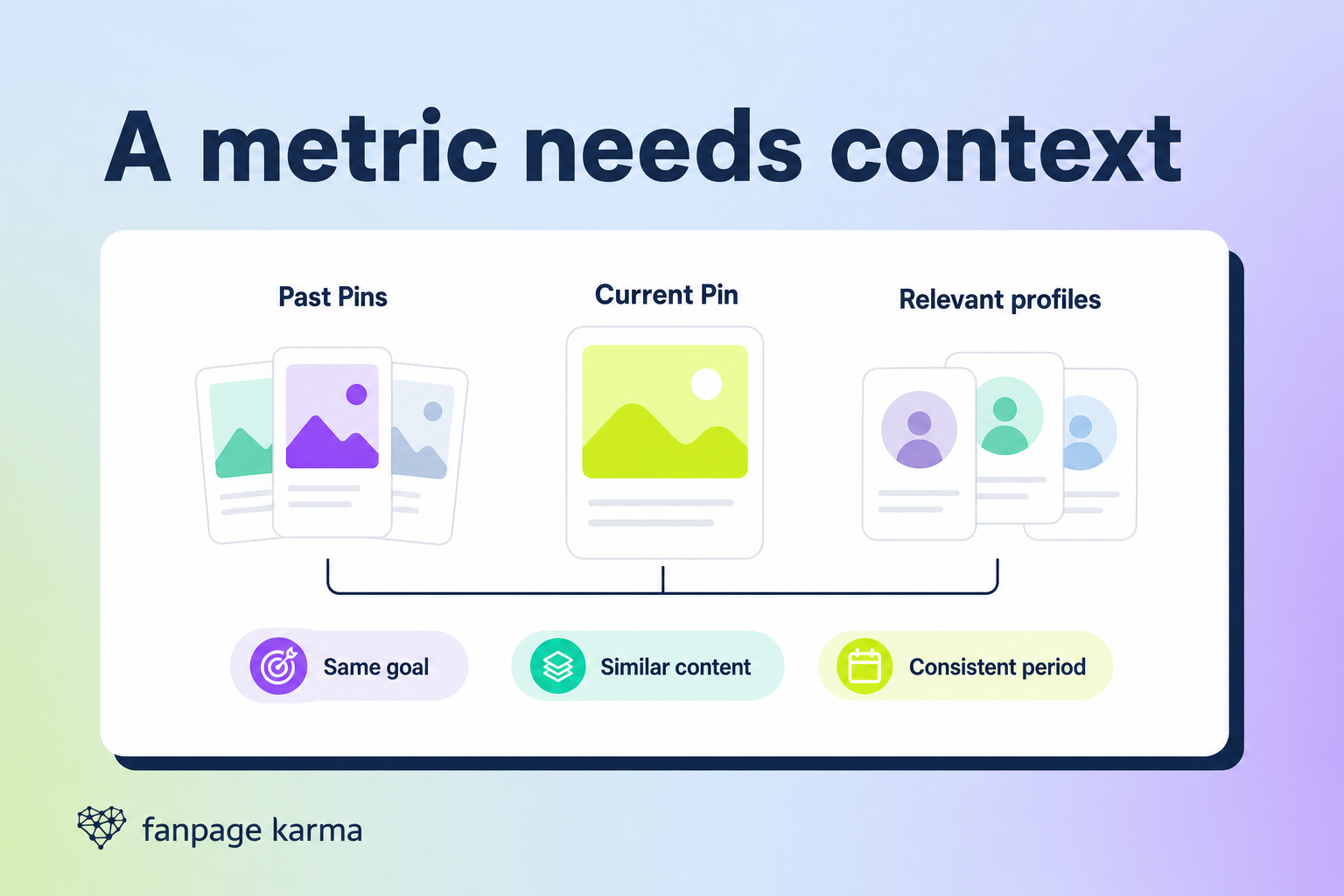
A benchmark is a comparison point that shows how current results relate to previous performance or relevant profiles. Historical data can establish the starting level, while recurring reviews show whether the account is moving toward its goals. This context is important because an engagement metric has limited meaning when it is viewed as an isolated number. Saves, clicks, and other meaningful actions become easier to interpret when they are compared across similar Pins and consistent periods. A suitable analytics tool can organize these comparisons and make ongoing progress easier to track. The resulting patterns help teams understand how well they are performing and which changes to timing, content, creative, boards, or CTAs deserve further testing.
7. Make the Value Clear at First Glance
People should not have to interpret several competing messages to understand a Pin. Focus the creative on one topic, one audience need, and one clear benefit. Keep the headline, visual, description, board, and destination aligned with that promise. If an image, secondary headline, or design element suggests a different outcome, simplify it before publishing. A clear hierarchy gives the Pin personality while directing attention to the information that matters most. Be sure to consider the following points when creating your Pins:
- What is this Pin about?
- Who is it for?
- What useful idea or resource does it offer?
- Does the destination deliver what the Pin promises?
Use the clarity questions to identify where a Pin may confuse Pinterest or the audience. Trouble defining the subject usually means the content needs a tighter focus. If the intended audience or benefit is unclear, revise the wording and hook rather than adding more design elements. Check the destination carefully because it must deliver what the Pin promises. The finished Pin should communicate one consistent idea across every element.
8. Earn Attention with Better Visuals and Hooks
A Pin needs more than visibility to capture attention. Make the central message easy to identify through clear hierarchy, readable text, and deliberate contrast. Avoid crowded designs where every element appears equally important. Use logos, colors, and recurring visual details to create consistency without competing with the content. The topic and its value should remain the strongest parts of the creative, but also don’t forget to consider:
- A practical outcome the audience wants
- A familiar problem the content can address
- A simple process the reader can follow
- A focused collection of useful ideas
Use the hook to introduce a genuine outcome or point of interest rather than relying on clickbait. The visual and headline should make the promise easy to understand and match the destination. When testing creative options, compare focused variations instead of changing every element at once. Document which hook, layout, or visual approach changed so the result is easier to interpret. This process helps the team identify patterns in audience response without treating one design as the answer for every Pin.
Turning these Best Practices into a Repeatable Workflow
We recommend building the eight best practices mentioned above into one workflow instead of optimizing a finished Pin at the last minute. Research defines the opportunity, planning creates a focused idea, and creation turns it into accurate copy and design. Publishing follows a consistent schedule, while analysis connects the results with the next piece of content. This joined process gives every Pin a clearer purpose and helps the team collaborate, test, and learn more effectively:
- Research audience interests, relevant keywords, trends, and previous results.
- Plan one clear topic, the right board, a useful angle, and the intended action.
- Create an eye-catching visual, a focused hook, accurate copy, and a fitting CTA.
- Publish consistently and test timing without relying on a universal recommendation.
- Review performance, identify patterns, and apply what you learn to future Pins.

Make Every Pin Easier to Understand, Discover, and Use
Success with the Pinterest algorithm does not come from one isolated tactic. Clear topic signals, relevant keywords, and focused boards provide context, while strong visuals, accurate hooks, and fitting CTAs make the value easier for people to understand. Test timing and trends within a stable plan, then use regular measurement to identify where the process needs adjustment. The eight tips and best practices work together as a repeatable system for improving each Pin without relying on algorithm tricks.
Build performance analysis into your publishing workflow rather than treating it as an occasional report. With a tool that organizes performance data and recurring comparisons, teams can see which choices around timing, topics, creatives, boards, and CTAs may need adjustment. This makes the best practices above easier to implement because each change is guided by a clear question and useful patterns.
Social media tools can help you research trends, plan content, and build your presence. Fanpage Karma is an all-in-one social media tool that combines analytics, community management, research, and publishing features. You can get started for free today or take part in a free weekly webinar.