Micro-Communities and Micro-Influencers: Why Relevance Often Matters More Than Reach

- What Are Micro-Communities and Micro-Influencers?
- Why Micro-Creators Are Particularly Interesting for Brands
- Follower Counts Do Not Tell You Enough
- Working With Many Smaller Creators Requires Clear Processes
- Start With the Goal, Then Choose the Metric
- Conclusion: Relevance Does Not Automatically Beat Scale
The biggest accounts often command the most attention. At the same time, social media audiences are fragmenting around specific interests, local topics, and niche concerns. This makes it harder for brands to reach relevant audiences credibly through a single high-profile placement. Reach can create visibility, but it does not guarantee closeness or genuine conversation.
That is why micro-communities and micro-influencers are becoming a bigger strategic consideration. But what actually defines this kind of community, when does working with smaller creators make sense, and which metrics reveal real impact? This article explains the key distinctions and walks through the essential questions, from creator selection to performance analysis.
What Are Micro-Communities and Micro-Influencers?
A micro-community cannot be reliably defined by a fixed number of members. Shared interests, active interaction, and a clear sense of belonging matter more. There is no single cross-platform metric for measuring how these communities develop. Micro-influencers, by contrast, are individuals who can be visible and influential within such audiences. They are part of the ecosystem, but they are not the community itself.
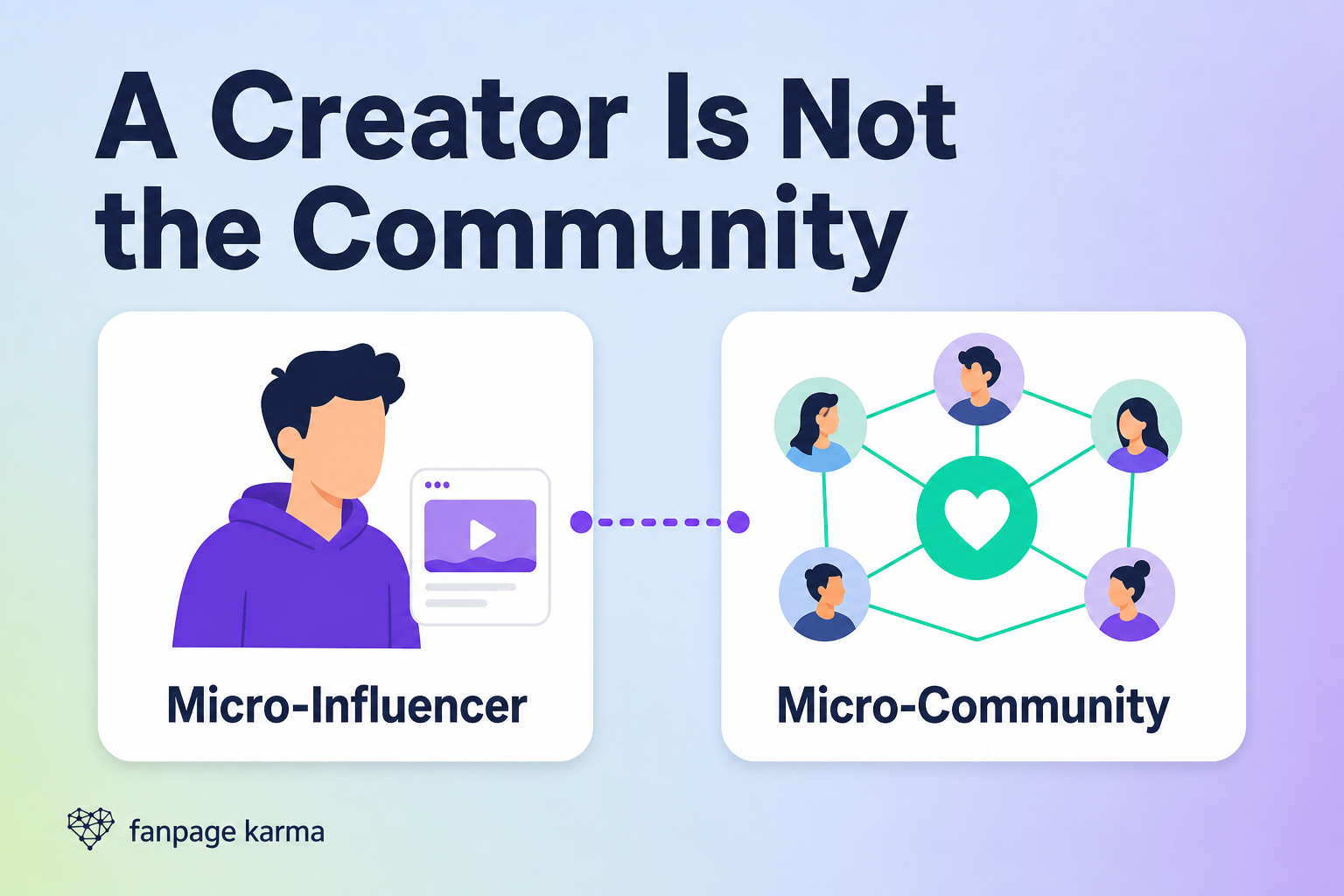
Definitions of micro-influencers also vary. Depending on the source, the micro tier includes creators with roughly 10,000 to 50,000 followers, or as many as 100,000. These figures are a rough guide, nothing more. They reveal little about whether a creator reaches the right people, demonstrates genuine expertise, or consistently sparks meaningful conversation.
Why Micro-Creators Are Particularly Interesting for Brands
More Focused, Less Generic
Micro-influencers can be particularly well suited to specialist, local, or complex offerings that require explanation. They often understand how their community talks, address recurring questions, and show products in a recognizable context. For brands, that can mean less wasted reach, provided the community genuinely overlaps with the intended audience. The real advantage is not the smaller size itself but the sharper subject focus.
Studies indicate that smaller creators can generate higher engagement, greater persuasiveness, or better cost efficiency in certain situations. This does not translate into a universal formula for success. Any advantage depends on factors including the platform, format, industry, campaign objective, and measurement method. A micro-influencer may perform well against a tightly defined goal while still being the wrong choice for a broad awareness campaign.
Content, Conversation, and Feedback Work Together
The potential value extends beyond distribution. Micro-creators produce platform-native content, answer questions, and surface reactions from their communities. This can give brands useful insight into audience needs, points of confusion, or product issues. A smaller following does not automatically create trust. Credibility grows through subject expertise, a sense of closeness, ongoing conversation, credible content, and a logical fit between the creator, community, product, and brand.
Follower Counts Do Not Tell You Enough
Sorting a long list of creators by size is easy, but it rarely produces the best shortlist. Social media teams should first define whom they want to reach and what the partnership should achieve.
The next step is an assessment that combines quantitative data with the quality of the community. These questions can guide the process:
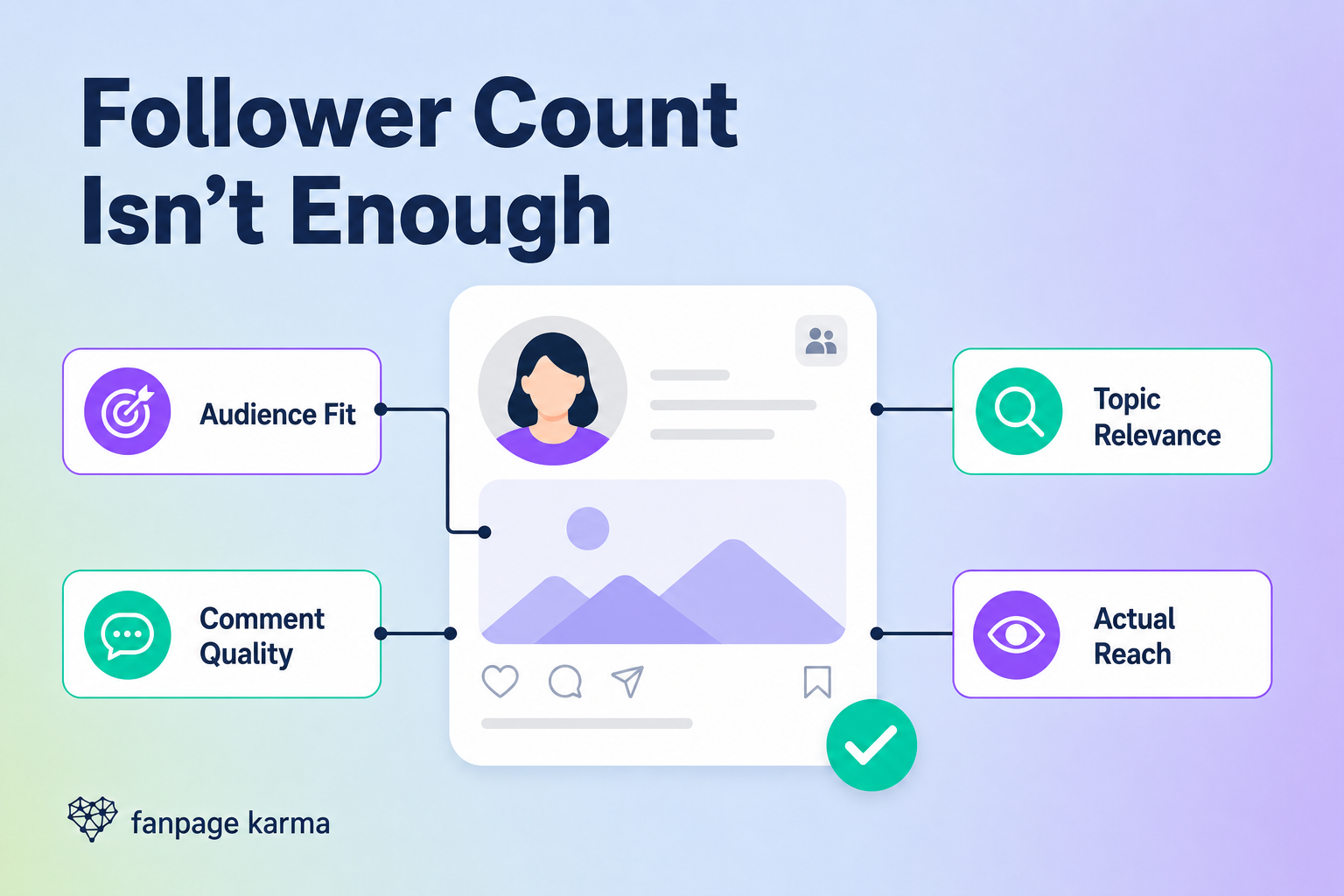
- How closely does the community overlap with the target audience?
- Is the creator’s existing subject matter a credible fit for the product and brand?
- How do actual reach and views compare with the follower count?
- Do the comments contain genuine questions, experiences, and discussions?
- How regularly does the creator engage with the community?
- Which brand partnerships has the creator worked on before, and did they feel credible?
- Are there visible brand safety risks or conflicts with the brand’s values?
- Are the content quality, reliability, and ways of working suited to a longer-term partnership?
A smaller account with the right expertise may be more valuable for a tightly defined campaign goal than a large creator whose audience has little overlap with the target market. That decision should not be based on instinct alone. Only a combination of performance data, content analysis, and audience conversations can show whether the expected relevance is really there.
Working With Many Smaller Creators Requires Clear Processes
Working with multiple micro-influencers increases operational complexity. Every additional relationship adds creator discovery, vetting, communication, compensation, and approvals. Contracts, ad disclosure, usage rights, and reporting also need to be managed properly. Without clear ownership, a tightly targeted creator portfolio can quickly turn into overlapping approval loops that consume more time than expected. Teams should avoid these common mistakes:
- Over-scripting creators until they lose the voice their audience recognizes
- Pushing purely promotional messages that offer no value to the community
- Leaving ad disclosure, usage rights, and approvals unclear
- Judging platforms and formats against identical expectations
- Overvaluing one-off placements without a learning phase or comparison data
Ongoing partnerships often make more sense than isolated one-off placements. They can make the relationship between creator and brand feel more credible, support shared learning, and provide better comparison data over time. They do not guarantee stronger results. Larger creators still have a role to play: macro-influencers can support broad awareness, while smaller creators can contribute relevance, deeper community connections, and activation. A blended portfolio can serve both purposes.
Start With the Goal, Then Choose the Metric
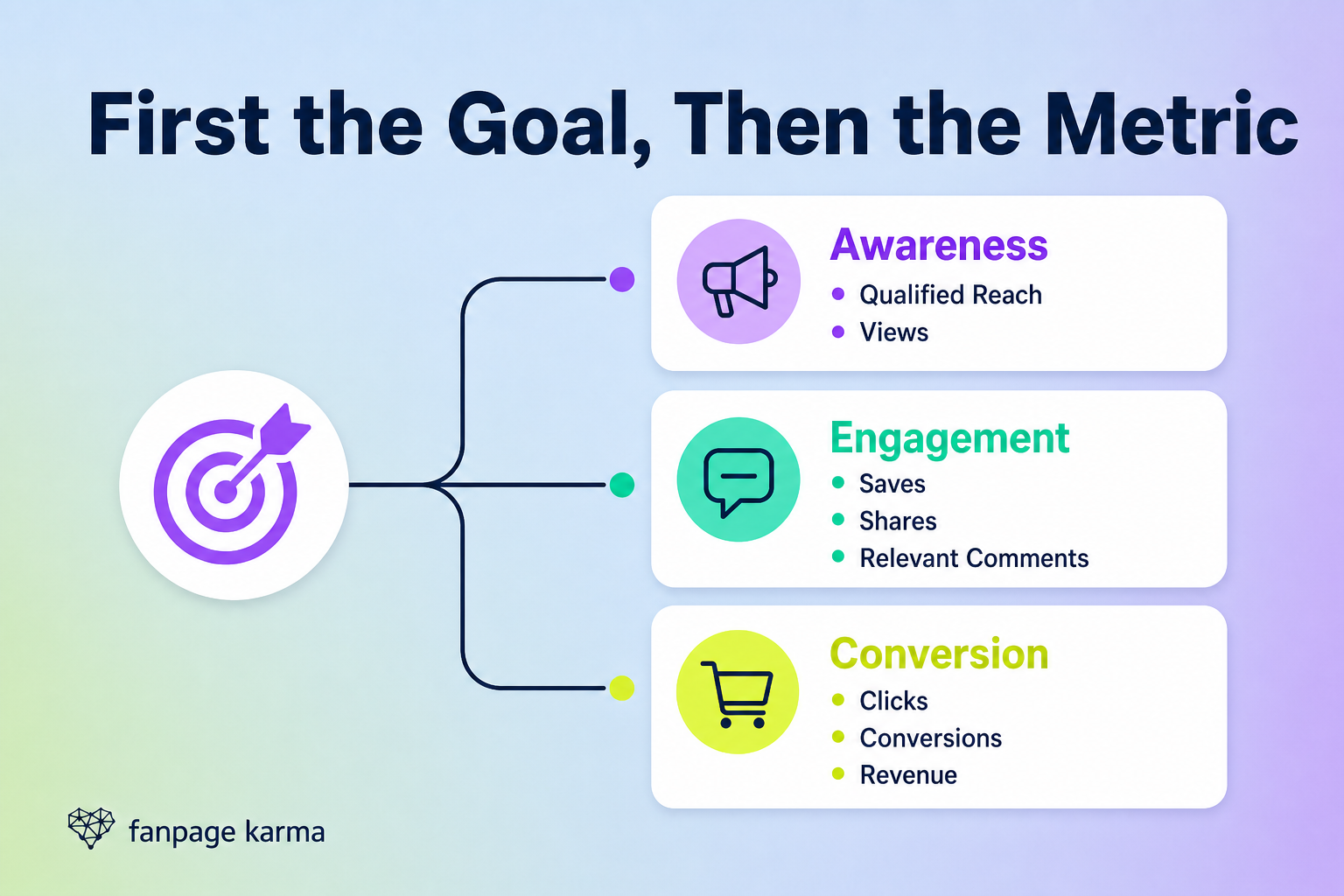
Likes and follower counts are not enough to prove success. The metrics that matter should follow from the campaign objective. Teams should also assess platforms and formats separately because their metrics and calculation methods are not fully comparable. A reel, story, and feed post play different roles and require appropriate evaluation. Depending on the goal, different metrics come into play.
- Awareness: qualified reach, views, view-through rate, and, where applicable, brand lift
- Engagement: saves, shares, relevant comments, questions, and the quality of discussion
- Traffic and conversion: clicks, conversions, CPA, revenue, contribution margin, and repeat purchase rate
- Content value: quality and reusability of the content, plus actionable community feedback
Engagement should ideally be calculated against actual reach or impressions. Using the total follower count can distort the result because many followers may never have seen the post. The qualitative dimension matters just as much. For a campaign built around a complex product, a large number of brief reactions may be less valuable than a smaller number of specific questions, firsthand experiences, or signs of purchase intent. In conversion campaigns, the following steps make impact easier to assess:
- Use UTM links and unique codes
- Set consistent attribution windows
- Assess creators and formats using the same methodology
- Include control groups or regional tests where possible
- Do not treat correlation as proof of impact
Centralized social media analytics and shared reporting provide a more reliable foundation. Teams can consolidate platform data, compare partnerships using consistent rules, and reduce manual work. A sound test design remains essential for conversion campaigns. Only by applying links, codes, and attribution windows consistently can teams better isolate what a partnership actually contributed.

Conclusion: Relevance Does Not Automatically Beat Scale
Micro-communities and micro-influencers are most valuable when the brand, topic, creator, and target audience fit together in a credible way. Their strength does not come from a smaller following alone, but from specialist content, close conversation, and access to clearly defined communities. Realizing that potential requires informed selection, clear processes, and goal-based measurement. In practice, this leads to three recommendations:
- Select creators based on audience fit, community quality, and actual performance
- Support partnerships with clear processes, usage rights, and realistic approval requirements
- Measure results against the campaign goal and assess platforms and formats separately
From community fit to performance measurement, a shared data foundation supports better decisions. Centralized social media analytics helps you establish transparent criteria for selection and reporting from the outset. Try Fanpage Karma free for 14 days and see how a centralized social media analytics tool can support your workflow.