Mastering Instagram Analytics: The Ultimate Guide to Tools and Strategies
Instagram is one of the most well-known social media platforms when it comes to showcasing content, whether it’s from influencers, businesses, or just those who want to get noticed. With its wide range of formats like reels, stories, and posts, users have plenty of options to share their content creatively and build strong connections with their communities. However, due to the large number of users and high level of competition, it can be challenging to stand out and connect with your desired audience. To achieve consistent visibility and enhance your content, it’s important to closely examine performance metrics for both your content and your competitors. This is why many turn to Instagram analytics tools to help them find content optimization insights and better their benchmarking. Most of all, it is about leveraging data to discover how to optimize your performance.
In this article, we’ll explain what to look for when choosing the right Instagram analytics tool, from must-have metrics (reach, impressions, engagement rate, watch time, follower growth, etc.) to deeper features like audience breakdowns, content performance by format, optimal posting times, and the best performing hashtags.
At the end, you’ll find a curated list of the best Instagram analytics tools along with a clear overview of their features to pay attention to when evaluating them. This way, you’ll know which tools are out there and have a solid understanding of how to choose the one that best fits your goals, budget, and workflow.
Instagram Analytics Explained
Instagram analytics tools are essential for anyone who wants to understand and improve their performance on the platform. At its core, Instagram analytics supports the process of collecting and interpreting data from posts, stories, reels, and overall account activity. By doing so, analytics allow users to gain valuable insights into how their accounts and individual posts are performing. These insights can range from basic data such as follower counts, likes, and reach to more specific information like engagement rates, audience demographics, or the best times to post. Having access to both broad and detailed data points makes it possible to create a more informed and successful Instagram strategy.
When using analytics for Instagram, you of course want to see how well your content performs, what resonates with your audience, and which areas need improvement. With these findings, you can optimize your content strategy, refine posting schedules, and set clear goals to achieve better results. In other words, good marketing decisions are built on good data sets. A wide range of metrics reveals what works on Instagram and what doesn’t so you can adjust your approach, maximize engagement, and ultimately reach your marketing goals.
However, success on Instagram doesn’t just depend on creativity, it also requires understanding the numbers behind your content. But with so much data available, analyzing everything on your own can quickly become overwhelming. In this case intuition alone isn’t enough to enhance your Instagram account, data is essential for growth and long-term improvement.
This is where Instagram analytics tools come in. They simplify the process, making it easier to track and interpret metrics in a way that directly supports your strategy. Two core aspects of this process are benchmarking and content optimization. Together, these components are essential to improving your content.
Benchmarking allows you to compare your performance with competitors, identify patterns in your industry, and learn from best practices. By understanding what averages are in your industry, you can better set goals and understand where your profile stands in relation to others.
Content optimization analysis allows you to analyze data to determine how best to plan your content strategy. With these insights, you can refine your account, adapt your posting strategy, and create content that performs better while resonating more effectively with your target audience.
By combining benchmarking with content optimization, Instagram analytics turns raw data into meaningful actions. This not only helps you improve performance, but also ensures your strategy remains focused, competitive, and aligned with your goals.
Essential Features of Instagram Analytics Tools
Basic Instagram account analytics provide a general overview of your profile, such as follower counts and likes. While this information is helpful, it only scratches the surface of what you need to know in order to grow effectively. If you want a clearer picture of your performance against competitors and deeper insights into how your content truly resonates, it’s best to use a robust social media tool.
A strong Instagram analytics tool offers features that go far beyond the basics, giving you meaningful insights into your profile. This includes tracking engagement rates, analyzing audience demographics, identifying top-performing content formats, and even evaluating the effectiveness of your hashtags. Such insights allow you to refine your content strategy, adapt your posting schedule, and focus on the types of content that actually drive results.
If you’re looking for a tool to help you improve your Instagram performance, we have created a list of the essential features you should be on the lookout for when shopping for an Instagram analytics tool:
- Unlimited profile tracking
- Extensive access to historical data for better research
- Instagram post analysis that reveals what resonates
- Sentiment analysis for deeper audience insights
- KPI monitoring and benchmarketing
- Content tagging for deeper insights
- Custom reports and unified dashboards for better oversight
- AI tools that simplify Instagram performance analysis
- Centralized community management for Instagram
Together, these features ensure that your analytics tool for Instagram is not just tracking numbers but actively helping you make better decisions, create stronger content, and build a lasting presence on Instagram. We will now go into greater detail to help you understand what these key features mean.
1. Unlimited profile tracking
One of the most valuable features in a tool for Instagram analytics is unlimited profile tracking. Instead of being restricted to a handful of competitor accounts, this capability allows you to compare your profile with as many competitors as you need. The result is a more comprehensive benchmark, helping you identify best practices and understand where your brand stands within the industry.
This is because the more profiles you monitor, the stronger and more accurate your benchmarks become. With a large data set, you can move beyond isolated insights and build a clearer picture of performance across your niche. This then allows you to more accurately set goals and find out which areas you need to improve in.
Unlimited profile tracking also helps you learn from both top-performing competitors and smaller, niche players. By tracking different profiles in your industry, you can extract insights that directly inform your content optimization, refine your engagement tactics, and strengthen your overall Instagram strategy. This makes it easier to spot industry-wide trends, discover successful content formats, and adapt strategies that are proven to work. However, this requires unlimited profile tracking since you can then create large enough data sets so you know the patterns you are detecting are relatively accurate.
2. Extensive access to historical data for better research
Effective Instagram analytics involves more than just looking at your current numbers. It also involves uncovering new growth opportunities over time. Research and discovery features combined with access to historical data are invaluable for this purpose. These capabilities enable you to swiftly identify, monitor, and analyze relevant Instagram accounts in your industry or niche over time, providing deeper insights into their strategies and performance. By exploring competitor activity and audience engagement with historical data, you can better understand what drives success and apply those insights to your own profile.
Historical data adds another layer of value to any analytics tool. Rather than making decisions based solely on short-term time periods, you can analyze long-term performance trends. This helps you distinguish between temporary spikes and sustainable strategies, ensuring that your content planning is based on solid evidence rather than guesswork. Ultimately, pairing research and discovery with historical insights helps you refine your Instagram strategy, expand your reach, and continuously uncover new content opportunities that keep you ahead of the competition. For all these reasons, you should be looking for an Instagram analytics tool that provides you access to historical data to enrich your data set.
3. Instagram content analysis that reveals what resonates
One of the most powerful ways to improve your strategy is through Instagram content analysis. By digging into the numbers, you can identify which types of content, such as posts, Stories, or Reels are driving the most engagement and should be used more often in your content plan. This makes it easier to see what resonates with your audience and where there’s room for optimization. For each type of content, the tool should focus on different aspects and use different data to analyze them.
For example, with an Instagram Stories analytics tool, you can measure metrics such as views, shares, reach, and much more. These insights help you understand how engaging your Stories are and whether viewers are staying interested or dropping off. Moreover, Instagram Story analytics can also be used to identify patterns in audience interaction frequency, offering insights that can inform improvements to your visual storytelling strategy.
Another example is using an Instagram Reels analytics tool, which provides data on reach, watch time, and shares. Since Reels often reach beyond your existing followers, analyzing their performance is essential for uncovering growth opportunities. Understanding which Reels spark the most interaction allows you to tailor your video content to attract new followers while keeping your community engaged. Post analytics also go beyond simple likes and comments. They can show you save counts, share activity, and engagement rates, all of which provide a more complete picture of relevance. Combined with hashtag tracking, these insights highlight which topics, captions, and visuals have the strongest impact on your audience.
Of course, Story or Reels analytics are not completely separate types of analyses that you use different tools for. Rather, connecting all these content formats in one analytics tool gives you a holistic view of what works and what doesn’t. This allows you to make smarter decisions about content planning and resource allocation, ultimately resulting in a more effective Instagram strategy.
4. Sentiment analysis for deeper audience insights
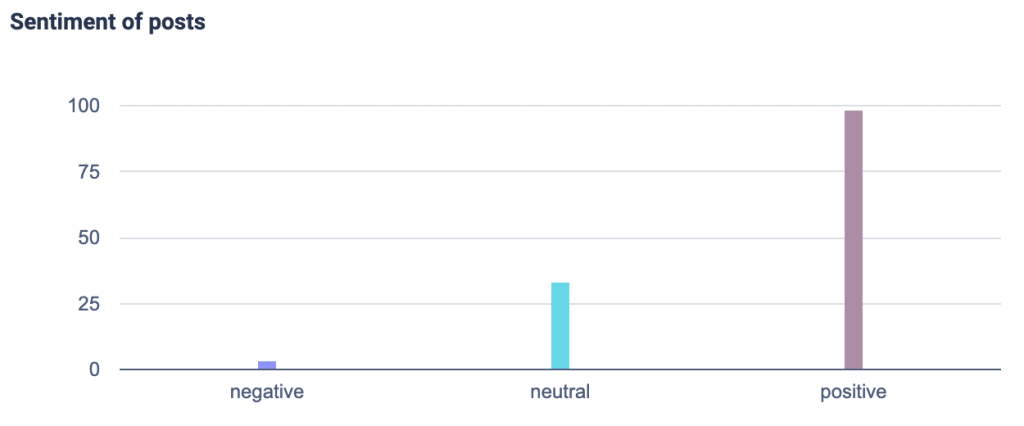
In addition to monitoring performance metrics, it’s important to understand not only your content but also your audience. Social media sentiment analysis goes beyond numbers to uncover the sentiment surrounding posts and comments to them. For instance, an Instagram follower analytics tool reveals whether your content inspires positive or negative reactions, helping you adjust quickly and build stronger, more authentic connections with your community.
By combining Instagram analytics on followers with sentiment data, you can gain a deeper understanding of their behaviors and interests. This insight allows you to adjust your messaging, fine-tune your tone, and craft content that resonates on an emotional level, not just through numbers. When paired with engagement metrics, sentiment analysis provides a deeper layer of audience understanding.
5. KPI monitoring and benchmarking
Effective Instagram performance tracking requires more than glancing at likes or follower counts at the current moment. Rather, you should be looking at how various metrics evolve over time, for both your profile and other similar ones. That’s why monitoring KPIs is essential. Not only for understanding your own progress but also for effective benchmarking against competitors.
Robust Instagram analytics tools provide access to all key metrics, such as impressions, follower growth, engagement rates, and more, all in one centralized place. Tracking these KPIs makes it possible to compare your results with industry peers and identify where you stand. For example, high reach paired with low engagement may suggest your content is visible but not resonating, while strong save counts often signal long-term value.
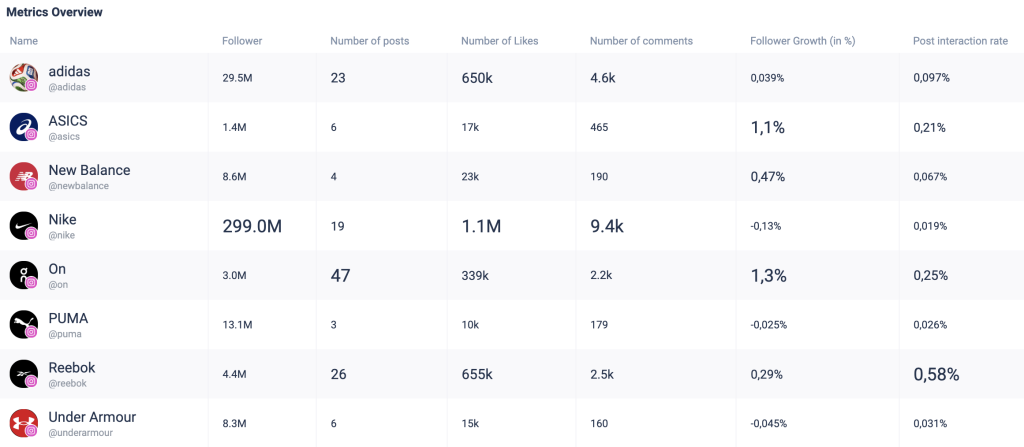
Additionally, keep in mind that each company has its own objectives, and the KPIs you focus on should align with those goals. Some companies prioritize follower growth, while others care more about conversions, brand awareness, or long-term engagement. Selecting the appropriate KPIs guarantees that your benchmarks and strategies remain relevant to your specific needs.
By combining KPI monitoring with benchmarking, you can transform raw numbers into meaningful insights. This approach helps you evaluate your performance in context, uncover best practices, and refine strategies that deliver measurable results rather than just vanity metrics. However, to make this effective, you should always make sure that your social media tool allows you to track the metrics as well as provides historical data.
6. Content tagging for deeper insights
An Instagram analytics tool with content tagging features allows you to go beyond surface-level metrics and understand what truly drives engagement. Instead of only looking at overall performance, a tagging analysis allows you to break down posts into their individual elements and evaluate them in a structured way and then allows you to see how those elements correlate with specific metrics. For example, you can assign tags such as “by product,” “with people,” “tone,” or “format” to each post and then see how they correlate with post interaction rates.
This technique reveals patterns that raw metrics alone might miss. You might discover that posts featuring a specific product or spokesperson consistently attract more interactions or that videos tagged as “tutorial” outperform those tagged as “promo.” By applying tags across your content, you can uncover hidden drivers of engagement and better understand the preferences of your audience.
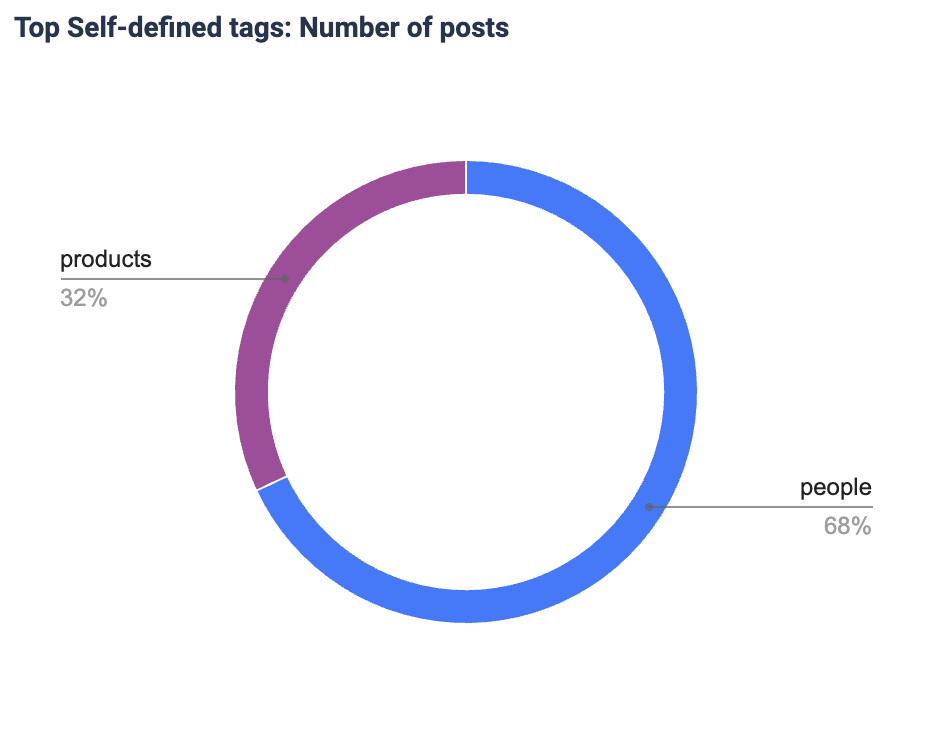
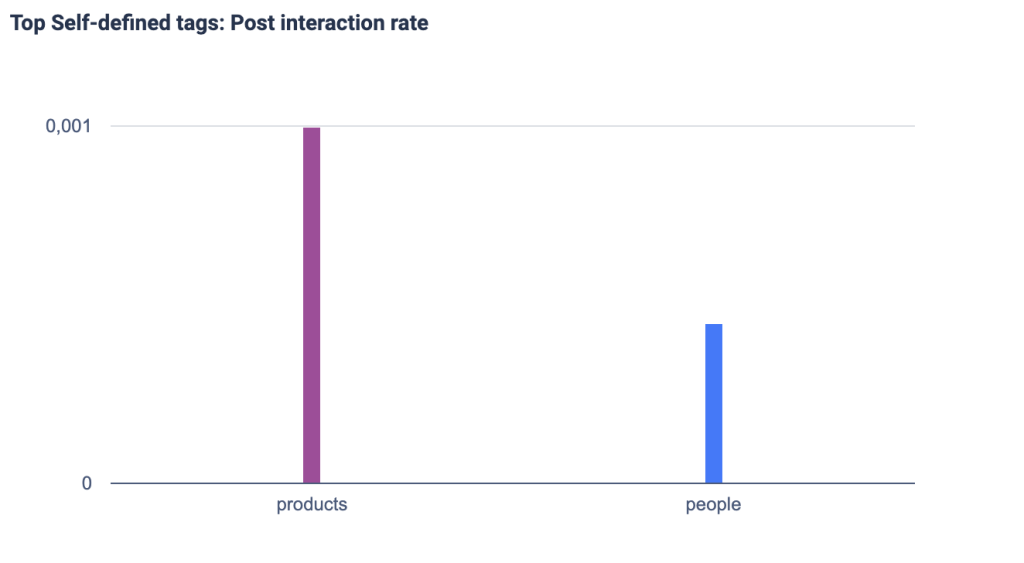
The real power of content tagging lies in its ability to guide strategy. Rather than guessing what might work, you can rely on data-backed insights to refine your messaging, allocate resources more effectively, and build campaigns around proven content elements. When combined with KPI monitoring and benchmarking, content tagging gives you the clarity needed to create content strategies that resonate and deliver measurable results.
7. Custom reports and unified dashboards for better oversight
If you rely only on raw numbers or scattered exports, managing Instagram performance data can quickly become overwhelming. That’s why customizable reports and a unified analytics dashboard are valuable features of modern tools. For one, automated reporting simplifies the analytics process by providing fresh insights without the need for manual tracking. You can build reports tailored to different stakeholders, such as managers, clients, and creative teams, ensuring each group receives the data that matters most to them. With export options in multiple formats, these reports are easy to share in presentations, emails, or project updates.
An Instagram analytics dashboard also brings everything together in one central location, providing an at-a-glance overview of all your KPIs. Easy-to-read visualizations allow you to quickly spot trends, compare campaigns, and track progress toward goals in real time. Instead of switching between spreadsheets and multiple tools, you can manage everything in one place, streamlining workflows and saving valuable time. Ultimately, custom reporting and centralized dashboards transform raw analytics into actionable insights, making it easier to monitor performance, align teams, and make informed decisions that drive growth.
8. AI tools that simplify Instagram performance analysis
Each of the features outlined above can be simplified and made more effective with the help of AI tools. They help marketers and creators work more efficiently by automating time-consuming tasks and providing deeper insights that improve decision-making in the world of Instagram analytics.
With AI, repetitive processes such as tagging posts as part of a content tagging analysis, can help save you time. Moreover, generating an Instagram analytics report, or spotting anomalies in performance can be automated. This not only saves time but also reduces the risk of human error. AI goes a step further by generating insights faster and with greater accuracy, ensuring you don’t miss important patterns in your data.
Think about what AI features you might need to make your work easier when using Instagram analytics tools. Then, let AI do the hard work so you can focus on what really matters: coming up with creative strategies and interacting with your community. However, make sure your social media tool simply isn’t claiming that it integrates AI, but pay special attention to what benefits it actually gives you.
9. Centralized community management for Instagram
Instagram success isn’t just about analyzing your own profile or comparing your account with those of your competitors. It’s also about building and maintaining strong connections with your community. Therefore, a powerful Instagram analytics tool that helps with growth should have centralized community management features that bring all interactions together in one place.
Having everything on a single dashboard provides a clear overview of your community’s activity. Direct messages, comments, and mentions can be efficiently managed within one platform, ensuring quick responses and preventing any interaction from being overlooked. This centralization also facilitates teamwork, as tasks can be divided, and it’s always clear who replied to what and when.
Strong community management plays a significant role in growing your account. When followers feel heard and valued, they’re more likely to stay engaged and continue following your content. Efficiently managing conversations strengthens relationships, increases loyalty, and ultimately increases users’ willingness to connect with your brand.
Always remember that combining analytics and community management allows you to understand your performance and actively nurture the relationships that drive long-term growth on Instagram.
Our List of the 10 Best Instagram Analytics Tools
Measuring your success on Instagram begins with analytics. Instagram’s native Insights tool provides a basic overview of your performance by showing metrics such as likes, shares, comments, and reach. While this is useful for getting a quick snapshot of your activity, it’s not sufficient for developing a deeper strategy. For instance, you can’t benchmark your performance against that of your competitors using native Insights, making it difficult to see how you’re doing in your industry as a whole.
Most of the advanced features are better handled with a dedicated Instagram analytics tool. These features include unlimited profile tracking, competitor benchmarking, in-depth content analysis, and customizable reporting. This is where the Instagram analytics tool comes in. A tool can offer a much wider range of Instagram KPIs and simplify the process of turning data into actionable insights, going far beyond what Instagram’s built-in Insights can offer. Instagram analytics tools allow you to streamline workflows, discover trends, uncover optimization opportunities, and build data-driven strategies.
To help you choose the right tool, we’ve compiled a list of the 10 best analytics tools for Instagram. Each tool has its own strengths, ranging from advanced benchmarking and AI-driven insights to community management and powerful reporting dashboards. Whether you want to track competitor performance, optimize your content, or strengthen your connection with followers, these tools provide features that can help you bring your Instagram strategy to the next level. So, here is our list of the best Instagram analytics tools:
- Fanpage Karma
- Hootsuite
- Metricool
- Sprout Social
- Hubspot
- SocialPilot
- Iconosquare
- Swat.io
- Zoho Social
- Socialinside
1. Fanpage Karma
Fanpage Karma is a powerful, all-in-one Instagram analytics tool designed to help brands, agencies, and content creators organize and grow their Instagram presence. One of its standout features is the ability to analyze and track an unlimited number of profiles, allowing you to compare your account with countless competitors and peers. This feature makes it easy to benchmark performance, spot trends, and identify best practices across your industry.
Its robust benchmarking and reporting features include customizable dashboards and access to historical data, providing a clear overview of your progress over time. With these tools, you can effortlessly build tailored reports, track KPIs, and share insights with your team or stakeholders.
Fanpage Karma also provides in-depth content analysis to help you understand which of your posts, Stories, Reels, or even hashtags resonate most with your audience. While its core strength lies in analytics, the platform goes further by offering publishing, community management, and monitoring features. This makes Fanpage Karma a complete solution for social media management.
To help you get started, Fanpage Karma offers a 14-day free trial, allowing you to explore its features risk-free. You can also join one of Fanpage Karma’s free weekly webinars to learn more about how the tool can support your strategy and simplify your Instagram workflows.

2. Hootsuite
Hootsuite is an all-in-one platform for publishing, monitoring, and reporting on multiple social networks. It provides robust Instagram analytics, enabling businesses to track engagement, measure performance, and benchmark results.
With customizable dashboards and exportable reports, Hootsuite streamlines the process of creating professional monthly reports. Teams benefit from collaboration workflows that ensure smooth content planning and publishing. Reporting is also customizable, helping managers share clear, actionable insights. By combining analytics, publishing, and teamwork in one place, Hootsuite streamlines social media management and provides businesses with the data they need to grow.
3. Metricool
Metricool is a smart solution for small businesses and agencies in need of reliable Instagram analytics and reporting, free of the complexity of enterprise tools. It combines organic and paid performance data so you can clearly see how ads and regular posts contribute to overall growth. With access to historical data, it’s easy to track long-term trends and measure campaign success.
The platform also simplifies reporting, offering polished exports in just a few clicks which is perfect for agencies sharing results with clients. Metricool is easy to use, affordable, and powerful enough to provide detailed insights. It helps you refine your Instagram strategy and prove the value of your efforts.
4. Sprout Social
If you’re looking for powerful Instagram analytics and team collaboration features, Sprout Social is a great option. It offers detailed engagement reports, audience insights, and competitor benchmarking in a sleek interface designed for managing multiple accounts.
The platform stands out for its advanced reporting and seamless integration with CRMs and other marketing tools, easily connecting Instagram results with broader business objectives. For organizations demanding depth, scalability, and professional reporting, Sprout Social is one of the best options on the market.
5. Hubspot
The direct integration of Instagram analytics into the broader marketing and CRM ecosystem by HubSpot facilitates the connection between social performance and leads and revenue. It illustrates how Instagram content affects website visits, sales, and customer journeys, which is great for companies that put a high value on tracking ROI.
Since HubSpot is part of an all-in-one platform, it also makes it easy for marketing, sales, and customer service teams to work together. For businesses that want to connect social media insights directly to strategies for getting new customers and keeping old ones, this all-around approach works really well.
6. SocialPilot
For agencies and small businesses that require dependable Instagram analytics and manage multiple accounts, SocialPilot is a cost-effective solution. It offers teams the necessary data for daily decision-making by providing engagement tracking, audience insights, and performance comparisons over time.
With features like bulk scheduling, reporting, and client management, SocialPilot is a great choice for expanding teams. It is less complicated than big enterprise platforms, but it offers good value and the scalability that agencies require to effectively manage multiple Instagram accounts.
7. Iconosquare
Iconosquare is a popular Instagram analytics tool for brands, agencies, and creators who need clear insights and easy reporting. It tracks performance across posts, Stories, Reels, and hashtags, while also offering audience analytics and competitor benchmarking to show how you stack up in your industry.
With automated, customizable reports and built-in scheduling tools, Iconosquare helps teams save time while managing multiple accounts in one place. It’s a reliable, Instagram-focused solution that balances depth with simplicity.
8. Swat.io
With strong Instagram analytics and strong community management tools, Swat.io is a social media management tool that is focused on collaboration. It offers comprehensive performance insights and engagement tracking, all of which are presented in a user-friendly, transparent dashboard. It is also easy to show results to clients or internal stakeholders because the platform has good reporting and visualization tools.
Although not as well-known as some of its competitors, Swat.io offers dependable analytics and exceptional collaboration capabilities, rendering it an advantageous option for agencies and organizations that prioritize teamwork in addition to performance insights.
9. Zoho Social
An affordable platform with good Instagram publishing, analytics, and monitoring capabilities is Zoho Social. It makes engagement, reach, and audience trends easy to see, which makes it a good tool for small businesses or startups that are just starting out. It is quick and easy to use because its interface is simple and easy to learn.
Being reasonably priced without compromising on functionality is one of Zoho Social’s advantages. Compared to many of its rivals, it provides team collaboration tools, multi-channel tracking, and customized reporting at a lower cost. Zoho Social is an attractive option for organizations that require dependable analytics without incurring substantial expenditures.
10. Socialinsider
SocialInsider is an Instagram analytics tool made for businesses and brands that need to do strong benchmarking and learn more about their competitors. It makes it simple to compare your results with those of other people in your niche by tracking engagement, follower growth, and content performance across posts, Stories, and Reels.
Teams can find trends and best practices while saving time with Socialinsider’s customizable visual reports and side-by-side competitor analysis. For marketers who want clear reporting and deeper insights in one platform, this is a good option.