How to Supercharge your Organic Instagram Growth
- What is Organic Instagram Growth?
- Instagram Organic Growth Strategies 2026
- 1. Lay the Foundation: Goals, Branding & Profile Optimization
- 2. Set up your KPI Tracking
- 3. Study Content That Actually Drives Organic Growth
- 4. Build High-Quality Content With Strategy, Value, and Data
- 5. Focus on Hashtags, Keywords & Searchability
- 6. Research Strategic Posting Times & Be Consistent
- 7. Don’t Forget about Community Management
- Action Plan: 30-Day Instagram Growth Sprint
- Conclusion
Many social media managers believe that only paid strategies can increase reach and brand awareness on Instagram. But there is actually a much more sustainable way to go about it. With the right organic Instagram growth strategy, consistency, and a clear understanding of your audience, you can build a strong presence through your own hard work.
This article will show you the best organic Instagram growth strategies for 2026 and get practical Instagram organic growth tips you can use without relying on costly activities. We will highlight clear steps to attract the right followers, increase your reach, and turn Instagram into a powerful channel for your brand or business.
What is Organic Instagram Growth?
Organic Instagram growth refers to actions that increase your visibility, engagement, and followers without using any paid methods such as ads or buying followers and likes.
On the one hand, Instagram organic growth focuses on the Instagram algorithm. Saves, shares, comments, DMs, profile visits, and repeated views are strong signals that push your content further in the feed, Explore, and Suggested for You section. That is why Instagram organic growth is about creating content that is relevant and valuable enough to spark engagement.
However, it also is about making sure that people can easily find your profile. This involves social SEO strategies, such as using relevant hashtags, optimizing your profile, and interacting with your community on a regular basis.
Paid promotion may sometimes look like the faster, easier option, but it’s not always the most effective in the long run. Investing in organic growth has many benefits:
- More trust: People who find you organically are more likely to see your brand as authentic and reliable.
- Higher-quality followers: Organic Instagram followers usually care about your content, not just a one-time offer.
- Stronger engagement: Real interest leads to more meaningful likes, comments, saves, and shares.
- Better algorithm signals: Consistent organic engagement tells Instagram your content is valuable, which boosts reach.
- Lower long-term costs: You’re not paying every time you want visibility, you build an audience you can reach for free.
- More sustainable growth: You’re building a community that stays, interacts, and converts over time, instead of a number that only grows when you spend.
Instagram Organic Growth Strategies 2026
First, you need to develop a real strategy since it’s not enough to just post and hope for the best. The good news is that there are concrete Instagram organic growth strategies in 2026 that actually work without big budgets. In the following sections, we will show you how to combine smart use of the algorithm, strong content formats, and practical best practices.
These Instagram organic growth strategies include:
- Lay the Foundation: Define Goals, Branding & Profile Optimization
- Set up your KPI Tracking
- Study Content That Actually Drives Organic Growth
- Build High-Quality Content With Strategy, Value, and Data
- Focus on Hashtags, Keywords & Searchability
- Research Strategic Posting Times & Be Consistent
- Don’t Forget about Community Management
1. Lay the Foundation: Goals, Branding & Profile Optimization
A strong Instagram organic growth strategy starts with defining your business goals. Do you want to generate more leads, increase sales, strengthen brand visibility, or build a more engaged customer community? Once these goals are identified, effective Instagram organic marketing would then ensure that every part of your profile supports them.
Your first goal should be to communicate within seconds what your company offers and why it matters. Use a clean, professional profile picture, such as your logo or a branded icon that is easy to recognize. Adding a link in your bio that aligns with your primary objective, whether that’s directing people to your website, a product page, a contact form, or a downloadable resource, is a good start.
After your visuals and branding are in place, the next step for organic Instagram growth is to optimize your profile for searchability and conversions. Use relevant keywords in your bio to help Instagram understand what your business does and recommend your profile in search and suggested accounts. A strong bio should:
- State what your company offers (example: All-in-one project management software)
- Highlight the core value for your customer (example: Built to simplify workflows for small teams)
- Include a direct call to action (example: Start your free trial below).
When your goals, keywords, bio, and link all work together, your Instagram profile becomes more than an online presence since it becomes a conversion-focused entry point into your brand, setting the foundation for sustainable organic growth.
2. Set up your KPI Tracking
Carefully setting up metric tracking is essential to better assess your profile and content’s performance over time. There are many different metrics that you have the option to track since there isn’t one metric that tells you everything you need to know about your performance. While it makes sense to track different metrics, keep in mind to take the time to learn about different Instagram KPIs and what makes the most sense for you to track, such as reach, follower growth, interaction rates, view time, etc.
Don’t forget that benchmarking your performance against competitors can help you set realistic KPI targets since this can show you how your KPIs compare to those of other similar profiles. A benchmarking analysis is made easier with the right social media analytics tool since you can then quickly calculate averages for specific metrics in your entire industry or niche, which you can then use to set specific KPI targets. For example, you may want to set your growth goal to be 10% above the average follower growth rate for your industry. Some metrics you may be interested in creating benchmark averages for may include:
- Follower-Growth Rate
- Post Interaction Rate
- Likes per Post
- Engagement Rate
3. Study Content That Actually Drives Organic Growth
After you’ve set the foundation for your Instagram profile, the next step is to move from guesswork to data. You can start by analyzing your best-performing posts. Remember to regularly review your content and ask yourself:
- Which topics get the most saves and shares?
- Which formats (Reels, carousels, static posts) bring the most reach?
- Which hooks or thumbnails make people stop and watch?
This doesn’t just tell you who your audience is in theory, it shows you what they actually respond to in practice and what your profile should focus on if you want to grow organically and reach your goals. Data is a core part of any solid Instagram organic growth strategy. Instead of posting and hoping for the best, you use numbers to understand where you are now and what results you are aiming for.
Next, expand your view with benchmarking and competitor analyses. This involves looking at similar accounts in your niche and analyzing their performance.
A social media analytics tool is especially useful here, particularly one that allows you to track an unlimited number of other profiles, since you can then bring hundreds of competitor profiles into your analysis, which gives you more data points to analyze. A tool can also more quickly and efficiently help you see where you stand, what’s working, and where you have room to grow, so you can continuously refine your content and keep your organic growth moving in the right direction. There are many different things you can analyze as part of a competitor analysis process, but some interesting ones might include:
- Which content formats they use most often
- Which topics and styles are linked to higher engagement rates
- What their top-performing posts have in common
4. Build High-Quality Content With Strategy, Value, and Data
High-quality content is the foundation of organic growth on Instagram. And no, it’s not just about “pretty pictures.” It is actually a mix of several elements that work together:
- Clear visuals: Sharp images or clean graphics that are easy to recognize and understand at a glance.
- Readable design: Text that’s large enough for mobile, with enough contrast so people don’t have to zoom in.
- Immediate value: Posts that teach, inspire, entertain, or solve a specific problem in just a few seconds.
- On-brand tone of voice: Captions and visuals that consistently “sound like you” and match your brand personality.
- Audience-focused messaging: Content that speaks directly to your followers’ needs, goals, and pain points, not just what you feel like posting.
When these pieces are in place, your content becomes easier to consume, more memorable, and far more likely to drive the saves, shares, and engagement that fuel organic growth.
Quality also means being strategic with your formats and understanding why certain posts work better than others. A social media analytics tool helps you spot patterns, like which formats deliver the strongest engagement or how video length influences watch time. But you can go one step deeper with a tagging analysis. A tagging analysis involves labeling posts by specific attributes, such as tone, topic, format, or focus, and then comparing how each tag performs. This helps turn your content into a structured dataset rather than a random collection of posts.
Let’s look at a clear example of how powerful this can be. Below, we analyzed Instagram posts from several watch brands and tagged each post by content focus (product, person, nature, technology). As shown in the first chart, the vast majority of posts (70.9%) were tagged as Product and only 21.4% were Person-focused, with posts that featured technology or nature taking up only a small amount of the posts. However, when we compare the average interaction rate of posts with these tags, we see the opposite pattern. This is exactly the type of insight you would miss without a tagging analysis. It shows that real people, real stories, and human-centered visuals drive more reactions, comments, and shares in this case.
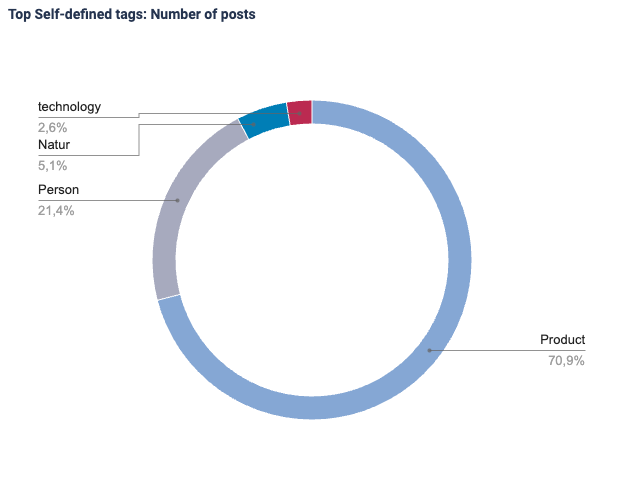
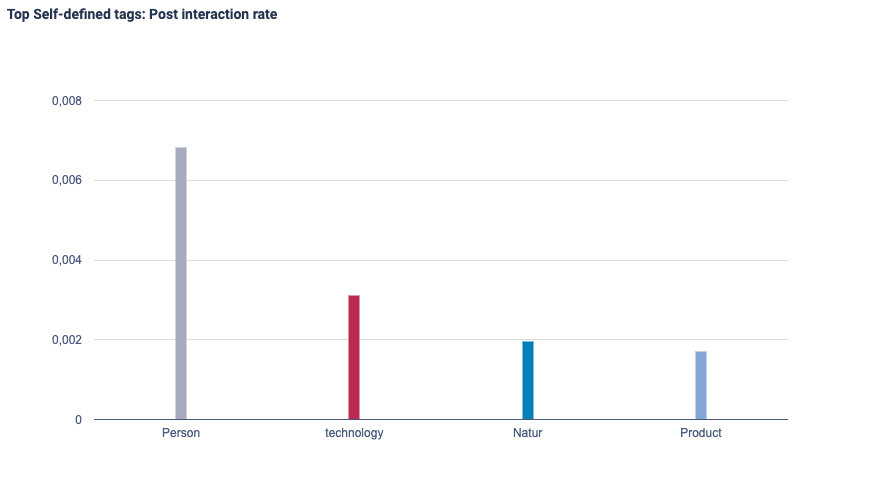
By using social media analytics and a tagging analysis together, you can focus on the formats and themes that actually move the needle, making your organic growth far more predictable and effective, all while utilizing data-based methods.
5. Focus on Hashtags, Keywords & Searchability
To achieve sustainable organic growth on Instagram, you need to treat Instagram like a search engine and understand the basics of Instagram SEO. People don’t just search for brand names, they search for topics, questions, and interests. Your goal is to show up in these searches and in the “Suggested for you” section for the right audience.
To make that happen, you should use relevant keywords and hashtags consistently:
- Bio: Add relevant keywords that describe who you help and what you offer.
- Captions: Use natural, keyword-rich language, Instagram scans captions for search relevance.
- Alt Text: Describe your image or video using the same terms your audience might search for.
- Hashtags: Use niche and topic-specific hashtags to categorize your content and expand search visibility.
These elements help Instagram understand what your account is about, who you serve, and which users are most likely to be interested in your content.
When it comes to your profile, you should understand why each step matters and how it contributes to organic Instagram growth. Here are the two core tips to consider when thinking about hashtags on Instagram:
1. Do keyword research
Keyword research shows you which hashtags are actually being used in your niche and how they correlate with interactions in posts that use them. By analyzing the keywords used by your own posts and by similar accounts, you can build a larger data set that reveals which hashtags are correlated with higher interaction rates.
2. Use a hashtag generator
Use a hashtag generator to expand this research by uncovering related terms you might not think of on your own. Generators can show you find additional, similar keywords that have the most reach and popularity.This helps you target topics your audience cares about while increasing your chances of appearing in search and Suggested posts.
Together, these two keyword practices can help make your profile more searchable and support long-term organic growth.
6. Research Strategic Posting Times & Be Consistent
Consistency is an important driver of Instagram growth organically, and there are several reasons why. When you post regularly, your audience knows what to expect, which builds trust and keeps them coming back. Consistency also trains the algorithm. The more reliably you show up, the easier it is for Instagram to understand your niche, categorize your content, and push it to people who are likely to engage. On top of that, consistent posting gives you more data to analyze, helping you see which topics, formats, and styles perform best over time.
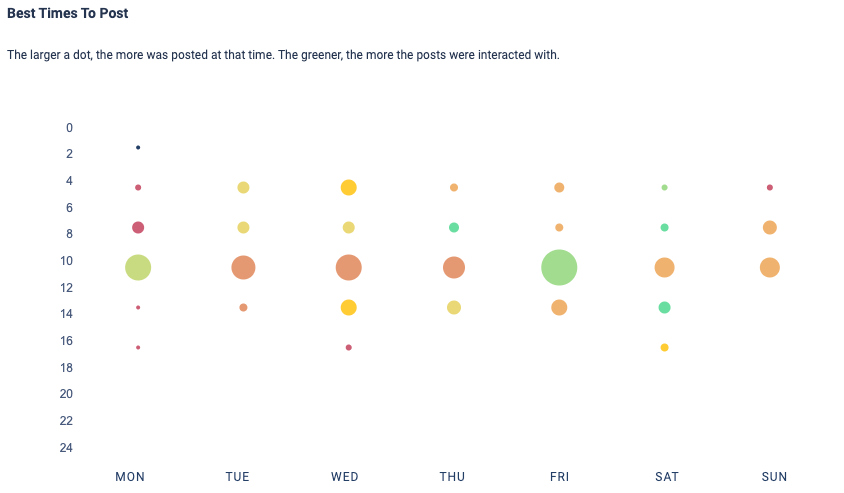
However, consistency is not everything. Timing is also important. This is why it helps to use a social media analytics tool to identify when users are most engaged. This matters because Instagram heavily rewards early engagement, the faster people interact with your post, the more the algorithm boosts it to others. Posting when your audience is most active increases the chance of immediate likes, comments, saves, and views, which gives your content a strong start.
With the right social media analytics tool, you can actually research the best times to post for Instagram in your industry by analyzing not only your own data, but also that of other similar profiles. Analyzing other profiles allows you to study more data points that go beyond just your own performance data.To illustrate the data output, you can view a best time to post chart below. The larger dots indicate times when more accounts are posting (higher competition), and the greener the dot, the more interaction those posts received. In this example, mid-morning posts, especially on Monday, Friday, and Saturday, generate significantly stronger engagement, while late-night posting consistently results in lower interaction. Instead of guessing, you can use this insight to post at these times to maximize your reach. Over time, this makes your posting strategy more predictable, more effective, and better aligned with the algorithm.
7. Don’t Forget about Community Management
Community management can actually be one powerful driver of organic followers on Instagram and it directly boosts your engagement, reach, and overall long-term growth. When you reply to comments, react to Stories, and answer DMs, you’re not just being polite, but you are creating real, authentic conversations and connections with content consumers. These interactions signal to the algorithm that your account is active and valuable, increasing your visibility and helping you attract more Instagram organic followers.
However, strategic community management requires more than answering messages. It means going beyond your own posts: comment on your ideal followers’ content, reply to their Stories, and show genuine interest in what they share. Most of all, you need to show that you care about replying and go beyond overly generic comments by showing that you are putting real thought into how and why you are replying.
Creating a community management strategy doesn’t need to be complicated. To get you started, here are key actions to strengthen your community management that can make up your strategy:
- Reply to all comments and DMs within 24 hours whenever possible
- Engage outside your own content (comment on follower and niche posts daily)
- Use Story features like polls, questions, and quizzes to spark interaction
- Acknowledge loyal followers with shout-outs, responses, or shared content
- Engage consistently, not just during launches or high-activity weeks
- Build relationships with other creators through genuine interactions
- Ask questions in captions to invite conversation and boost early engagement
The more active and present you are in your community, the more your visibility, trust, and organic follower base will grow.

Action Plan: 30-Day Instagram Growth Sprint
If you want to see real organic Instagram growth fast, structure your efforts into a focused 30-day sprint. Instead of trying to do everything at once, you should build step by step. Here is a basic template you can use and adjust to your needs to create an Instagram organic growth strategy:
Week 1: Profile audit, niche clarity, content ideas list
- Make your profile clear and benefit-focused (username, Name field with keywords, bio, profile picture).
- Link important pages outside your profile (website, other profiles, forms).
- Define your niche and 3 – 5 content pillars so your audience and Instagram know what to expect.
- Create a first list of 20 – 30 content ideas based on your audiences.
- Run competitor analysis research to see what similar accounts post, which formats they use, and what gets the most engagement.
- Set your goals and conduct a benchmarking study so you have a baseline to compare your progress against in the coming weeks (save rate, engagement rate, reach per post).
Week 2: Launch consistent posting cadence
- Run a best times to post study to find out when you should be posting
- Follow a realistic posting schedule (e.g. 3–4 posts per week).
- Set up a scheduling tool to plan and publish content consistently.
Week 3: Introduce collabs + engagement routines
- Reply to comments and DMs in a genuine, timely way.
- Actively engage with your ideal followers
- Start at least one simple engagement routine (e.g. daily 10–15 minutes of interaction).
- Reach out for at least one collab (Collab post, Story mention, Live, shout-out).
Week 4: Analyze results, refine content pillars, plan next month
- Set up a simple reporting routine (e.g. a weekly or monthly tracking sheet for key metrics such as follower growth, overall engagement, likes per post, etc.).
- Create a repeatable analysis process (each week, review your top posts and log what worked best).
- Update your content pillars and guidelines based on what consistently performs well (document this for future reference).
- Build next month’s content plan using these insights.
Conclusion
With a clear and well-planned organic Instagram growth strategy, you can build a strong, sustainable presence by focusing on the basics: a well-optimized profile, high-quality content, and a real understanding of your audience. When you know who you’re talking to and what they need, every post, story, and reel becomes more intentional, and that is exactly what the algorithm and your followers reward.
A social media tool can help you with several of the best practices we have mentioned. From analytics to community management and automated posting, social media tools can give you the technological foundation for success on Instagram and other social media platforms. Fanpage Karma is an all-in-one social media tool that offers unlimited profile tracking, as well as strong analytics, community management, publishing, and research functions. You can try Fanpage Karma’s free 14-day trial to see for yourself how it can optimize your presence on Instagram. You can also join one of Fanpage Karma’s free weekly webinars to learn more about how the tool can support your strategy and simplify your Instagram workflows.