How to Create a Gen Z Social Media Marketing Strategy

- Why Gen Z is unique
- Why Gen Z is unique
- Tip 1: Study your audience
- Tip 2: Learn from competitors and similar brands
- Tip 3: Identify the best-performing content formats
- Tip 4: Find your best time to post
- Tip 5: Study content that generates engagement
- Tip 6: Keep up to date on the latest trends
- Tip 7: Optimize your profiles for discovery
- Tip 8: Build a strong community management strategy
- Tip 9: Use collaborations to expand your reach
- Tip 10: Benchmark and monitor your performance against competitors
- Social media marketing for Gen Z audiences: what matters most
Gen Z social media marketing is not just about showing up on TikTok, posting memes, or using younger slang. It is about understanding how a generation uses social platforms to search, compare, react, learn, and decide whether a brand feels worth their time. If a brand treats social media like a simple broadcast channel, it will miss how Gen Z actually moves through the feed.
This matters because Gen Z often uses TikTok, Instagram, and YouTube as search engines, review spaces, entertainment feeds, and community hubs at the same time. A product can be discovered in a short video, questioned in the comments, compared in a creator review, and judged by the tone of the brand’s replies. That entire journey can happen without anyone visiting a website first.
A strong strategy gives this journey structure. It helps your team decide what to post, which platforms matter, how to speak to your audience, and how to measure what is working. In this article, we will explain why Gen Z and social media marketing need a different approach, then walk through 10 practical tips for building smarter Gen Z social media marketing strategies.
Why Gen Z is unique
Gen Z grew up with social media as part of daily life, and that has changed how people search, learn, connect, react, and judge brands online. The link between Gen Z and social media marketing is important because this generation is changing social platforms from simple content feeds into spaces for discovery, conversation, community, and decision-making.
These differences are connected. Gen Z may search for a product in a video app, check the comments for honest reactions, look at a creator’s opinion, and then decide whether the brand feels authentic. This is why social media marketing to Gen Z needs more than a content calendar. It needs a clear understanding of behavior. In some regards, Gen Z is reinventing social media marketing, so brands need to understand these changes before they decide what to post, how to engage, and where to invest their time.
They use social media to search for answers
For Gen Z, search often starts inside social apps. They may open TikTok for a product review, Instagram for outfit ideas, YouTube for a tutorial, or Reddit for honest opinions from people with the same problem. They are not only looking for information. They are looking for context, examples, and reactions from real people.
This changes how brands need to think about content and means every piece of content should have a clear purpose. A post is no longer just a message in a feed. It can become an answer to a question someone has not even typed into Google yet. Captions, comments, profile bios, hashtags, and video titles all help people understand whether a brand is relevant.
Social media marketing to Gen Z should therefore make answers easy to find. If people want recommendations, tutorials, reviews, news, or product information, your content should help them quickly see what you offer and why it matters. The easier you make the search journey, the more useful your brand becomes.
Community is king
Follower counts can look impressive, but Gen Z often looks for something deeper. This audience wants to see whether a brand listens, replies, and understands the people around it. Authenticity is not a nice extra here. It is the base for trust.
Community is built through repeated signals. Does the brand answer questions? Does it react like a real person? Does it understand the jokes, concerns, and values of its audience? These small moments shape whether people feel close to a brand or simply aware of it.
That is why niche profiles can be a real strength. A smaller community can create clearer conversations and stronger connections. If your content speaks to a specific interest, style, challenge, or identity, it can feel more personal than a broad message made for everyone. Therefore, a brand that knows its community can create content that feels closer, sharper, and more relevant. That kind of relevance is difficult to fake.
Short-form content is in style
TikTok-style content has changed what many users expect from social media. Content needs to start quickly, look clear, and give people a reason to keep watching. That expectation now shapes Reels, Shorts, Stories, memes, and fast educational posts too.
The first seconds matter because the feed moves fast. A strong hook can be a question, a visual surprise, a bold statement, or a problem people recognize right away. Good pacing helps people understand the point before they decide to scroll away.
But short does not mean shallow. Every short-form post needs a job. It can answer a question, show a product, explain a mistake, share a quick tip, spark an opinion, or invite the next step. The best short content is focused, not empty.
Engagement takes on new importance
Gen Z does not treat social media as a place for passive watching only. Comments, polls, challenges, replies, reactions, and user-generated content all shape how a brand feels. The conversation around the post can be just as important as the post itself.
Interactive content gives people a reason to participate. A simple question can start a conversation. A poll can make people feel included. A useful reply can show that a brand is paying attention. These actions make the brand feel less distant.
Engagement also teaches you what your audience cares about. If people save a post, it may be useful. If they share it, it may feel relevant to their friends. If they comment, they may want to add an opinion, ask a question, or challenge the idea. If people comment, share, save, remix, or reply, they are showing that something matters to them. That information should feed your next content decisions.
Gen Z uses its own digital language
Gen Z communicates through memes, slang, abbreviations, emojis, sounds, and visual references that move quickly. This language is not just decoration. It shows whether someone understands the culture or is only copying it from the outside.
This is where Gen Z marketing fails on social media. Brands copy trends too late, force slang, misuse emojis, or jump into jokes they do not understand. The result can feel awkward fast. Instead of sounding young, the brand sounds out of touch.
The safer path is to listen before joining a trend. A brand does not need to use every meme or sound to feel relevant. It needs to understand which moments fit its voice and which ones are better left alone. A good rule to follow is that if the trend does not fit your product, audience, or tone, skip it. Gen Z usually notices when a brand is trying too hard. Cultural awareness is powerful, but only when it feels natural.
Why Gen Z is unique
Understanding Gen Z behavior is only the first step. The more important task is to optimize your social media marketing for Gen Z audiences. For this reason, a dedicated Gen Z social media marketing strategy helps your team make decisions with more confidence. It defines who you are trying to reach, what you want them to do, which formats you will test, how you will manage community, and which signals you will use to improve.
A good strategy should help teams find patterns, optimize content, study competitors, manage communities, and understand audience preferences. Here are our top 10 tips to build a strong Gen Z social media marketing strategy:
- Study your audience
- Learn from competitors and similar brands
- Identify the best-performing content formats
- Find your best time to post
- Study content that generates engagement
- Keep up to date on the latest trends
- Optimize your profiles for discovery
- Build a strong community management strategy
- Use collaborations to expand your reach
- Benchmark and monitor your performance against competitors
Tip 1: Study your audience
Gen Z is not one single audience. While there are broad similarities across this generation, your industry, product category, or content niche may behave differently in important ways. A beauty audience, gaming audience, nonprofit audience, and university audience will not always react to the same content.
That is why you need to understand your actual audience before choosing what to post. Audience analytics can show interests, behaviors, demographics, platform preferences, and content reactions. This helps your team create content for real people, not for a generic idea of Gen Z.
Start by asking practical questions. Which platforms does your audience use most? Which topics trigger comments? Which content gets saved or shared? Which questions appear again and again? The answers help you build a strategy around real behavior.
Audience research should also include tone and motivation. Some Gen Z audiences want quick entertainment. Others want detailed explanations, social proof, or a space to talk with people who share the same interest. When you understand why your audience follows, comments, and shares, your content becomes easier to plan.
Do not stop after one audience review. Gen Z behavior can shift as trends, platforms, and interests change. Make audience analysis a recurring task. This helps your team notice new questions, changing content preferences, and platform habits before your strategy feels outdated.
Tip 2: Learn from competitors and similar brands
Competitors and similar creator profiles can show what already works in your niche. This does not mean copying their posts. It means looking for patterns that reveal what the audience cares about.
We recommend to study their strongest posts, recurring topics, comment sections, creator partnerships, and community reactions. You may find content gaps, overused formats, or new angles your brand can own. Good competitor research saves time and reduces blind spots.
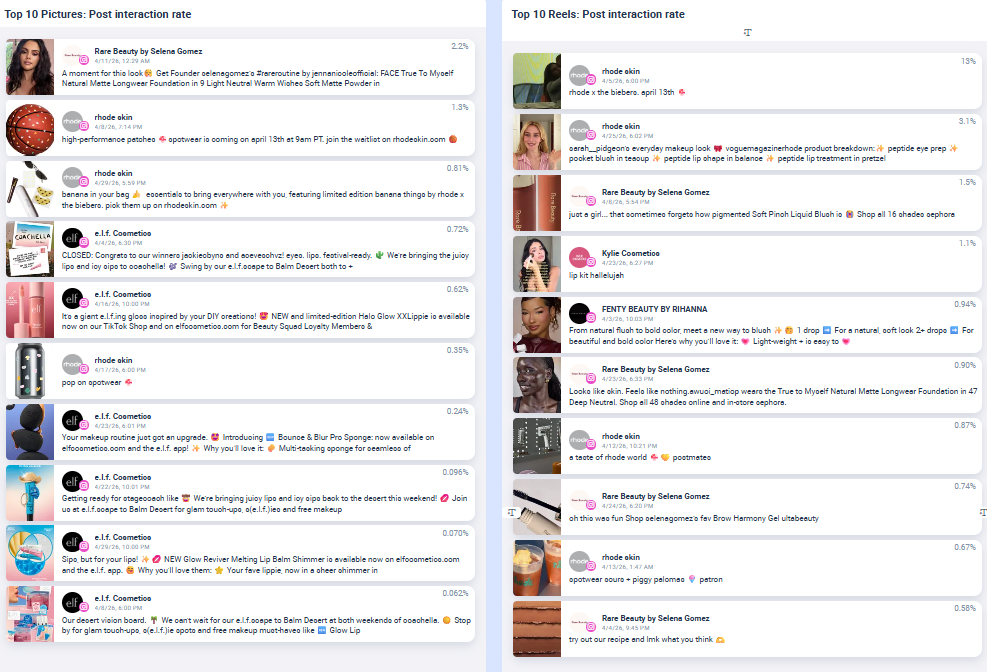
A social media tool can help you learn from competitors by tracking top posts for a specific content format and metric. In this article, imagine that we are tracking top Gen Z skincare and beauty brands on Instagram to learn from them. These include Rhode, Fenty Beauty, Rare Beauty, Kylie Cosmetics, and e.l.f. Cosmetics. Below, you can see the top-performing pictures and carousels by post interaction rate for April 2026.
Tip 3: Identify the best-performing content formats
Reels, Shorts, memes, Stories, carousels, and educational clips all do different jobs. Some formats help with reach. Others drive saves, comments, replies, or deeper interest.
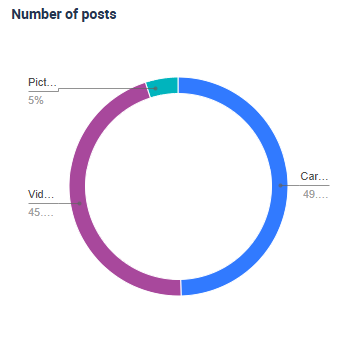
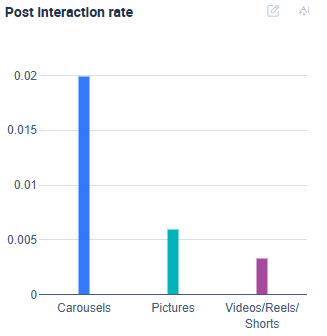
Testing formats with a clear goal helps you learn faster and avoid guessing. In the example below, we look at which content formats worked best for the skincare and beauty brands mentioned above in April 2026. The pie chart shows how often each format was used, including carousels, while the bar chart compares the average interaction rates for those formats. This makes it easier to see which formats may be worth testing in your own strategy if you work in a similar industry.
Tip 4: Find your best time to post
Timing can affect the first wave of visibility and engagement. If your audience is not active when a post goes live, it may start more slowly. Timing is not magic, but it is still a useful signal.
Use analytics to identify when your community is most active. Treat that data as a starting point, then test and adjust. A posting schedule should grow from your own audience behavior, not from generic advice.
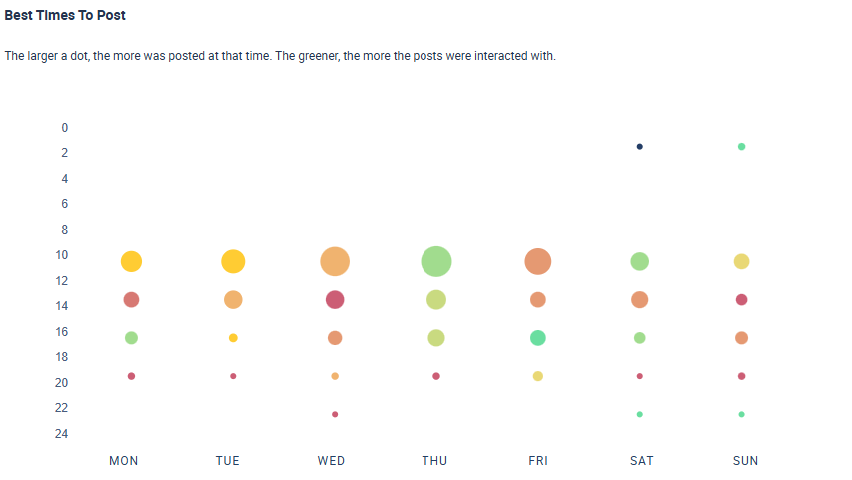
You can use a social media analytics tool to find the best times to post based on your own data and data from your competitors. You can also adjust your analysis for different time periods and platforms, because audience behavior is not always the same everywhere. The chart below shows the best time to post for the skincare and beauty brands mentioned above, with larger circles showing when more was posted and greener circles showing higher average post interaction rates during those times for April 2026.
Our last point is that you should not treat good timing as a replacement for quality. A weak post will not become strong just because it goes live at a good time. Timing can support visibility, but the content still needs a clear hook, a useful message, and a reason to engage.
Tip 5: Study content that generates engagement
Engagement shows what people care about enough to react to. Comments, shares, saves, watch time, and replies can reveal whether people are entertained, helped, challenged, or inspired.
A social media tool can help you run a tagging analysis to study which content characteristics are linked to higher post interaction rates. You can tag posts by factors such as the number of people shown, the tone of the post, or the topic it covers. This makes it easier to see patterns in what your audience responds to, instead of relying only on gut feeling.
Tip 6: Keep up to date on the latest trends
Trends, hashtags, memes, sounds, creator formats, and viral conversations can help brands stay visible. But not every trend belongs to every brand. Relevance needs active listening, not panic. Ask whether the trend fits your audience, your brand voice, and your message. If the answer is no, it is better to skip it and keep your credibility.
Speed matters, but understanding matters more. A trend used too late can feel stale. A trend used without context can feel fake. The strongest trend posts usually connect the moment to something the brand can credibly say or show. Social media tools can help you find trending topics in your industry, such as skincare and beauty. In the charts below (from April 2026), you can see trending keywords and hashtags on Instagram for the accounts listed above, with larger terms showing that they were used more often. The greener the words or hashtags are, the more they appeared in posts with higher average post interaction rates. This can help you spot trending topics that are actually relevant to your market and audience.
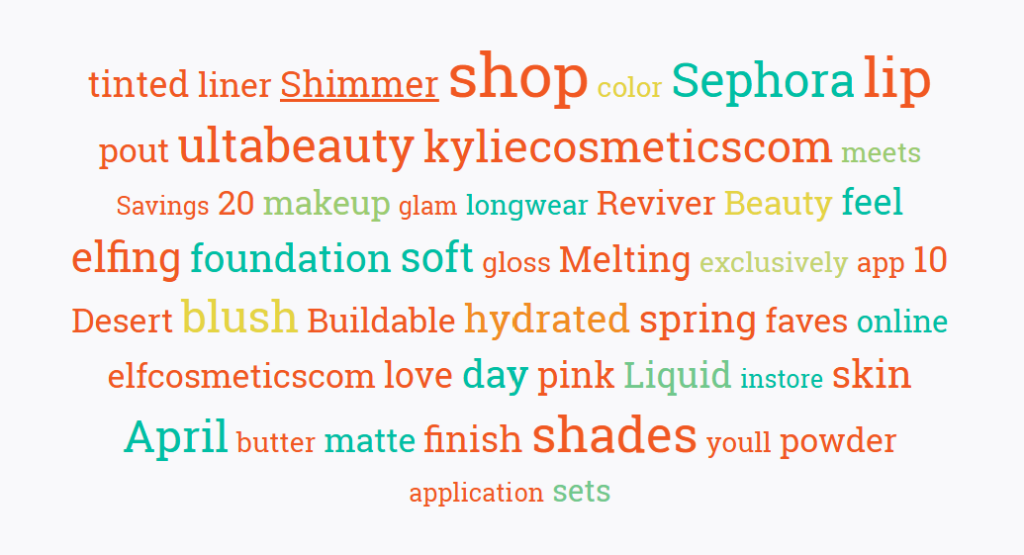
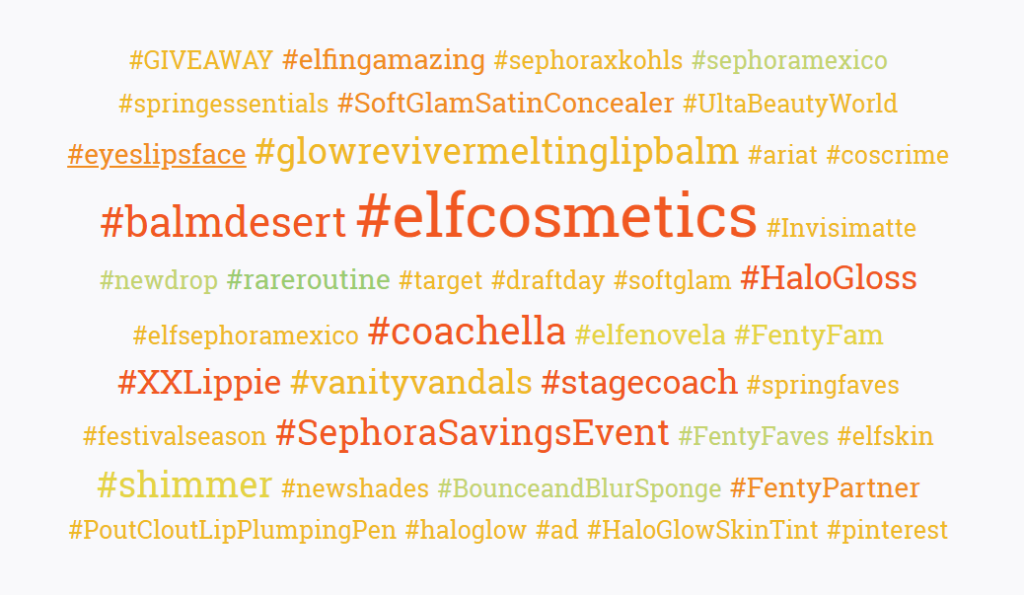
In addition, a social media research tool can help your team detect trends before they become too crowded. This is especially useful when you want to find patterns in a specific industry, country, or language instead of reacting to broad trends that may not fit your audience. Filters help you narrow the search, so you can see which hashtags, formats, topics, or conversations are relevant to your market. That makes trend work more focused and helps protect your brand from random or uncomfortable posts.
Tip 7: Optimize your profiles for discovery
Social search needs social SEO. Profiles, bios, captions, hashtags, keywords, playlists, and pinned posts all help people understand and find a brand. For social media marketing, Gen Z audiences need clear answers inside the apps they already use. Think of your profile as a landing page inside the platform. The bio should be clear. The pinned posts should be useful. The captions should match how people search. When someone arrives, they should understand your value without digging.
Understanding and following social SEO best practices can make your profile easier to find, easier to understand, and more useful for people who discover you inside social platforms. Profile optimization also helps new visitors decide whether to follow. If your latest posts are confusing, your bio is vague, or your highlights are outdated, people may leave quickly. A clear profile gives people a reason to stay, explore, and understand why your brand is relevant.
Tip 8: Build a strong community management strategy
It is important to understand social SEO best practices because they help your content and profiles become easier to find inside social platforms. Replies are part of the brand experience. Fast answers, helpful comments, and active conversations can build trust with Gen Z. Silence can make even a good post feel distant.
Create a response system before the comment section gets busy. Define tone, response time, escalation rules, recurring questions, and moderation guidelines. Consistency makes community work easier to scale.
Good community management also protects your brand voice. If several people answer comments, they need shared rules. That keeps replies helpful, human, and consistent, even when the conversation moves quickly.
Set expectations for how your team handles different types of comments. Questions, complaints, jokes, praise, and sensitive topics may need different responses. A clear system helps your team move quickly without sounding robotic. It is also important to set up and follow community management best practices, so your replies stay helpful, consistent, and on brand. You can use tools to help you manage your communities and reply to them more effectively.

Tip 9: Use collaborations to expand your reach
Collaborations with creators, influencers, and complementary brands can help you reach the right audience faster. But the partnership must feel believable. Gen Z can quickly sense when a collaboration is only built around reach.
Fit matters more than size. The best partner is not always the largest account. It is the one whose community, tone, and content style match your brand and product.
Before choosing a partner, look at their comments, not only their follower count. Do people trust them? Do they start real conversations? Does their audience match the people you want to reach? Those signals matter for credibility.
Finding the right collaboration matters because reach only helps when the partner fits your audience, tone, and product. A social media research tool can help you identify creators, influencers, and complementary brands that already speak to the communities you want to reach. This makes your search more efficient and helps you focus on partners who are more likely to create credible content.
Tip 10: Benchmark and monitor your performance against competitors
Performance needs context. A growing account may still be falling behind if competitors are growing faster. Benchmarking helps brands understand whether their reach, engagement, and content results are strong in their actual market.
Monitor formats, posting frequency, engagement, and growth over time. This helps teams spot content gaps, emerging formats, and changes in audience behavior. A good strategy becomes a learning system, not a fixed plan.
Benchmarking also helps teams explain performance more clearly. Instead of saying a post did well or badly in isolation, you can compare it with your own past content and with relevant competitors. That makes decisions easier to defend.
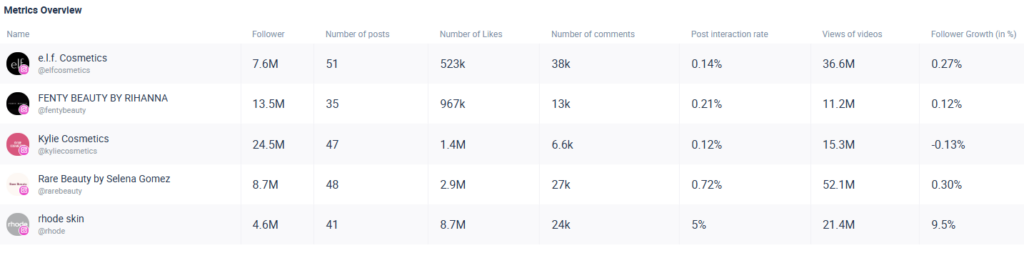
A social media benchmarking tool can help you track several different profiles across social media platforms, compare their performance, and see how reach, engagement, posting frequency, and content formats develop over time. Below you can see a benchmarking table with data from these skin care and beauty brands for April 2026 that makes it easier to compare profiles side by side and spot where your strategy is ahead or falling behind.
Social media marketing for Gen Z audiences: what matters most
Gen Z has changed the social media marketing landscape because platforms now combine search, entertainment, community, product research, and brand trust. This is why Gen Z is reinventing social media marketing rather than simply using new apps. Brands need to show up where questions, comments, and decisions already happen. Social media marketing to Gen Z works best when these parts support each other. A funny video can get attention, but trust grows through repeated useful moments.
A strong Gen Z strategy also needs patience. Trends change, language shifts, formats evolve, and audiences behave differently across niches. The brands that improve over time are the ones that listen closely, test often, and treat data as a guide for better creativity.
Social media tools such as Fanpage Karma can help teams understand audience preferences, track performance, benchmark competitors, and build smarter long-term strategies. That turns Gen Z social media marketing from guesswork into a clearer, more practical process. Sign up for the free 14-day trial to try the various analytic features mentioned above for yourself. You can also register for one of the free weekly webinars to find out more about the tool.