
A Guide to TikTok Analytics: Important Features and Tools

While success may be measured differently across industries, getting all the valuable data to establish your own progress is crucial. The native TikTok Analytics Tool provides key metrics to evaluate your account’s performance, but does this data allow you to draw conclusions and build a sophisticated social media strategy? Collecting data on likes and shares may no longer be sufficient when optimizing content, analyzing competitors, and evaluating user sentiments. Modern strategies require solutions that go beyond mere counting metrics and instead investigate actual user behavior.
The analytics function on TikTok provides a valuable takeoff point for anyone interested in tracking their social media performance. However, for more in-depth analyses, a TikTok analytics tool that supports competitor analysis and shows you which content captivates your followers is required. In shaping your social media strategy, such tools grant data-driven reasoning that guides you toward achieving your goals since they can allow you to analyze larger amounts of data.
In this guide, we will walk you through the 9 main functions a TikTok analytics tool should have, allowing you to up your data-based TikTok strategy. We then offer a list of the 10 best TikTok analytics tools that help you turn your insights into a workable social media plan.
TikTok Analytics: Benchmarking, Competitor Analysis, and Content Optimization
First, let us establish what we mean when we talk about TikTok analytics tools. We already mentioned TikTok’s own analytic tracker, which allows you to gather surface-level data on your own account’s performance. TikTok’s own analytics tool is freely available and can be accessed through TikTok Studio on your account. In the overview section of the analytics tool provided by TikTok, users are provided with standard metrics such as views, likes, comments, and a summary of a profile’s overall engagement. When navigating to content, the TikTok analytics tracker compiles information on post performance, audience retention, and video completion rates. Follower insights are provided, visualized with charts and graphs detailing the gender, age, and location of your followership.
The analytical insights provided by TikTok may be sufficient for many of those on the platform. However, serious social media management, especially for businesses and influencers, often requires an understanding of more subtle differences to establish why a certain strategy works and another fails to generate the outcome you would have liked to see. This means that what you probably need is a TikTok analytics tool that allows you to better detect trends, find patterns, and optimize your content, rather than just looking at basic reports.
For instance, competitor analysis and benchmarking are essential for anyone serious about growing their platform and understanding a wider target audience. It also helps you to understand industry averages so you can set realistic goals. Knowing your average video completion rate has little meaning when disregarding how your competitors are performing in the same space. The goal of benchmarking should be setting realistic and achievable goals based on real data while retaining a growth-focused mindset.
Moreover, data-based analyses of your own performance and that of other similar profiles can provide you with the intelligence to make an informed decision and leave nothing to chance. For instance, understanding whether your target audience prefers posts in which multiple people are featured over posts showing a single person helps your content creation team.
However, in order to find patterns, examine correlations, and discover content optimization potentials, you need to be able to analyze a large number of TikTok profiles. For this reason, the possibilities to conduct your own large-scale studies will be amplified by the right TikTok analytics tool, especially one that allows for unlimited profile tracking.
Key Features of TikTok Analytics Tools
There are several social media analytics tools available on the market that allow you to analyze TikTok. With so many choices, there are a number of factors to take into account to find the right tool for you. For instance, depending on what industry you are in, you may want to track a large quantity of competitors. Or perhaps you want to do certain types of content analyses that not all tools offer.
The best tools for TikTok analytics can offer a wide selection of functions that support you in your daily work and perform time-consuming tasks. In the following sections, we will highlight some of the most important features that TikTok analytics tools should offer. So, if you are shopping for a tool, we think these are the 9 core features that your TikTok analytics tool should provide:
- Create Customizable Dashboards
- Track and Analyze Unlimited Profiles
- Benchmark Your Competitors
- Have Access to Historical Data
- Find the Best Posting Times for Your Profile
- Discover Optimal Hashtags for Your Content
- Employ AI-driven Analytics to Investigate User Preferences
- Explore the Sentiment of Posts
- Visualize Your Findings in Reports
1. Create Customizable Dashboards
It may sound simple, but customizable dashboards are important in any type of social media analysis. Adjustability is key, and a dashboard fulfills its purpose only when it can be modified by adding and removing profiles. A tool that allows you to make your own dashboards and adjust them to your liking will benefit efficiency and save you time on top of it.
Let’s say you want to compare the performance of your competition, but you wish to conduct a comparison by region. While you may choose to organize all the relevant profiles in one singular dashboard and hide the ones you don’t want to compare, you may also create separate dashboards for different regions. The latter is especially useful when you conduct a certain type of analysis frequently.
2. Track and Analyze Unlimited Profiles
Any worthwhile competitor analysis requires a high degree of organization and the ability to build large data sets. Being able to create a dashboard with which you can track as many of your competitors profiles as needed is invaluable in this. An analysis of your competition inevitably contains large data sets, with the size being an important determinant of the accuracy of your findings. That is why unlimited profile tracking should play a major role in the choice of your TikTok analytics tool.
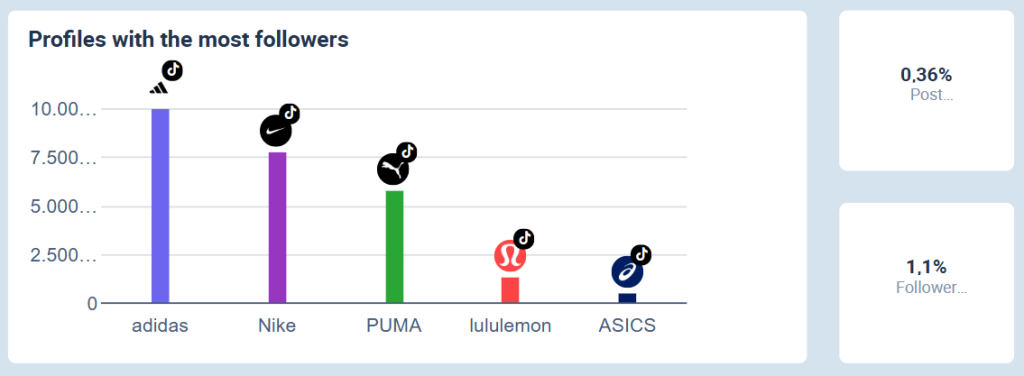
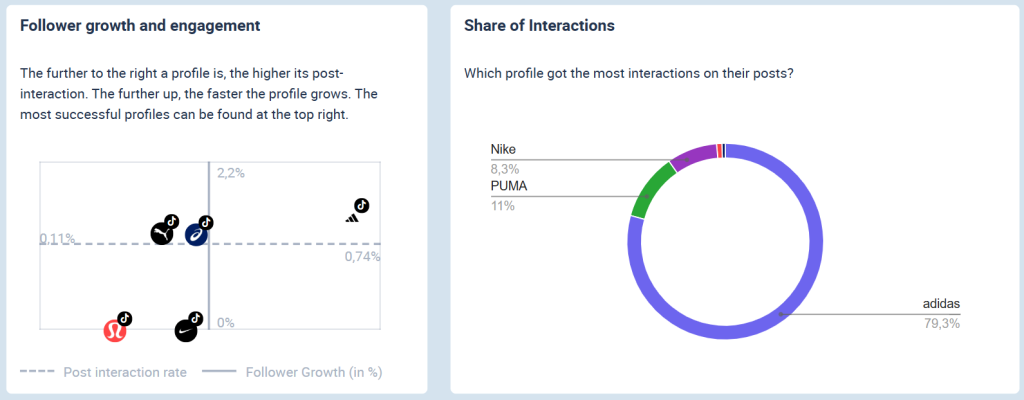
Ideally, a TikTok analytics tool does not only juggle numbers but makes them understandable by visualizing them and allowing you to engage with your findings. TikTok analytics can only be productive if they are conducted with your organization’s goals in mind. Another important factor you need to account for in your decision-making is access to a vast array of different metrics to track and interpret the KPIs you care about. The pictures below just show some of the many key metrics you might want to investigate and how they can be visualized.
3. Benchmark Your Competitors
Monitoring your own performance is important, and keeping track of your competitors is equally as valuable. Similar to standard benchmarking analyses, TikTok analytics tools will allow you to compare your performance to that of your competitor across various metrics. In analyzing the performance of your TikTok account, what you are really looking at are relative averages such as average number of likes, comments, shares, or video completion rates. But, without context, what do those numbers actually mean? Is an engagement rate of 1% subpar in comparison, or is your TikTok strategy outshining that of your competitors?
A TikTok analytics tool should enable you to track an unlimited number of profiles since this will grant you access to large data sets. Hence, you need to ensure that the TikTok analytics tool you are working with enables you to oversee your competition, especially if this requires you to track many different profiles. While some tools may not explicitly limit the number of profiles you can track, more extensive tracking might be tied to higher costs with a price per tracked profile.
Gathering performance data of your competitors allows you to learn from patterns through insights into the correlations of user behavior and your content. Another reason to favor big data is that smaller data sets are more prone to statistical errors. That is because outliers may be skewing your results in one way or another. A bigger picture reveals itself only when benchmarking numerous profiles and a considerable quantity of posts.
4. Have Access to Historical Data
One major way in which TikTok analytics tools can contribute to your growth is the analysis of historical data. The native TikTok analytics only allows you to review your performance in increments, allowing you to look only 1 year into the past. This makes long-term data tracking difficult if you wish to go beyond a year for your analysis. For this reason, a TikTok analytics tool should ensure that you have access to historical data going beyond a year.
The potential to draw from numerous posts over time is equal in importance to that of benchmarking various competitors. This becomes apparent when we think of TikTok analyses as little studies. Every statistic gains its validity from testing from a big enough pool of data. The larger a sample size, the greater the weight a study carries. With amplified accuracy, the confidence in the correctness of your data rises.
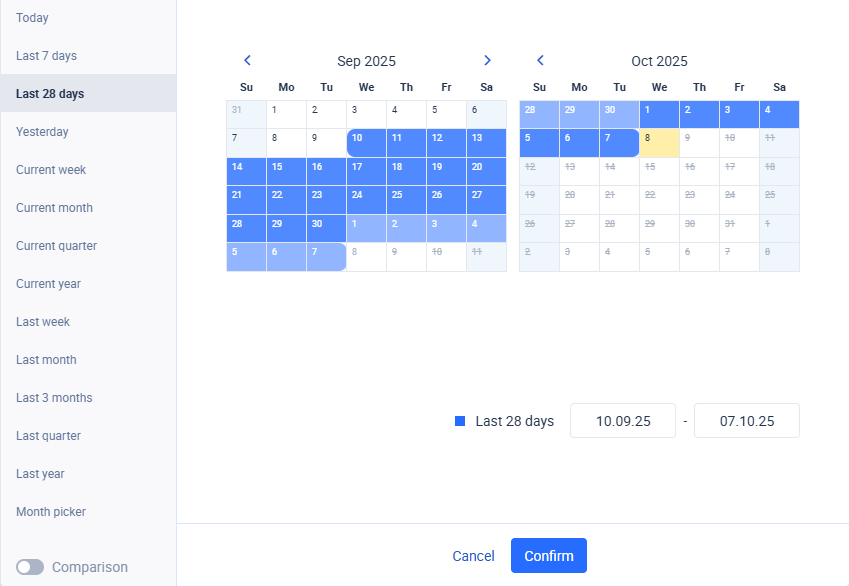
Beyond the mere issue of data collection, you might want to investigate specific windows of time. For instance, if you want to see how your audience resonated and interacted with a certain campaign and the posts related to it. Tools that allow you to customize the timeframe will allow you to really zero in on the campaign in your performance review.
5. Find the Best Posting Times for Your Profile
Success rates on social media are often parallel to the degree to which you understand your audience and have learned to optimize your content for your viewership. So far, we have only presented functions that help you understand your current status as well as past performance. One of the most ways you can optimize for your future content is finding when to post your content on TikTok.
Early engagement matters since where the algorithm rewards interactions. A post that generates likes, comments, an dshare immediately after being posted will not only be shown to your own followers but will also have a higher chance of being presented a wider audience of users. This is owed to the fact that TikTok’s algorithm assigns higher value to such posts.
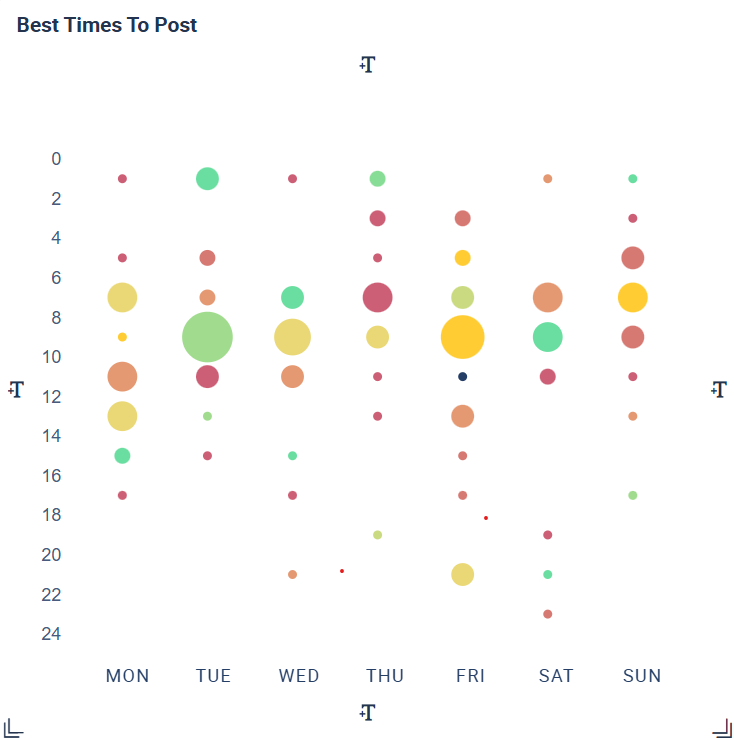
A best time to post feature can help you find out when people are online and ready to engage. In such an analysis, you can bring together your own posting data in terms of post interaction rate with other similar profiles in your industry or content niche. With the right social media tool, you can then analyze this data that leverages the performance of other profiles to find when you should be posting to best reach your target audience.
Below you can see an example of a chart that helps you analyze posting times. The larger circles show you the timeframes when more posts were made, while green circles indicate that there were higher average post interaction rates during these times.
6. Discover Optimal Hashtags for Your Content
Another area of content creation that you can optimize through data collection and analysis is the use of hashtags. Which hashtags are featured on successful posts, and what hashtags are trending at a given time? Moreover, what conversations do we need to be part of? With the right TikTok analytics tool, you can start researching answers to these questions. Keep in mind the right hashtags can influence whether your content is shown to users or not. Through the help of data analysis, TikTok analytics tools will generate valuable insights into what hashtags are resonating with your community.
Luckily, there is a process for finding the best hashtags for TikTok that can drive engagement and get you that visibility on the platform. A TikTok analytics tool that can support you in investigating not only how often a hashtag was used but also the average post interaction rate of posts that used a specific hashtag. Below is an example of a hashtag chart involving some topics that sports brands may be interested in. This can give you a good idea about how often specific hashtags are being used as well as the average post interaction rates of posts that integrate them.

7. Employ AI-driven Analytics to Investigate User Preferences
Understanding what type of content resonates with your viewers can be a challenge. Oftentimes even your audience may not be able to pinpoint why they like one post and scroll past another. An AI-powered tagging analysis can help you understand what the key differences are and if there is any significance to how those posts are received.
Before we get into why tagging analyses are important, let us explore what a tagging analysis looks like. Post tagging is when you assign a tag to posts with a specific characteristic, whether it is the number of people in them or a certain mood that they create for the viewer. Once posts are tagged, your social media tool can then analyze the tags you assigned and how they correlate with a certain metric, such as post interaction rate. Keep in mind that a post may have more than one tag and can thus be part of different groups at the same time, which can give you even more insights.
We can go through an example of how a tagging analysis can work. Imagine that you are a sportswear retailer. You might want to know how posts with people in them perform compared to posts in which products are promoted. You research this topic in just a few simple steps. First, create two tags: one for those posts just with products and those posts with people. Then simply assign the tags to all the relevant posts in your data set. Finally, you select the metric that you want to analyze. With the results of this analysis, your TikTok strategy will be enriched with data-based content recommendations as shown below.
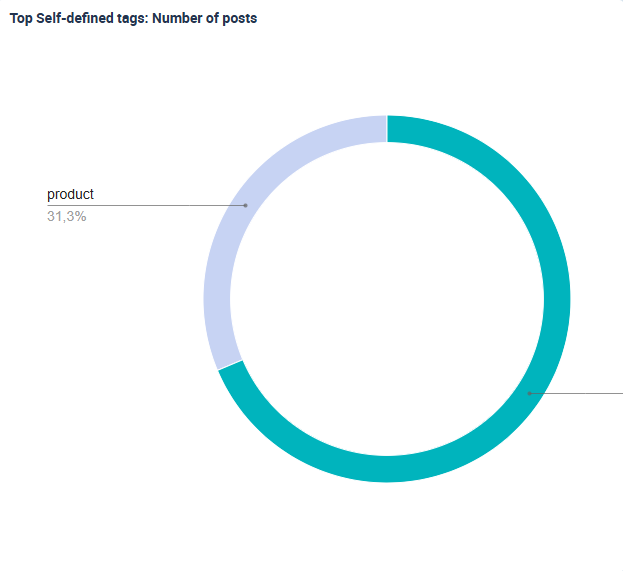
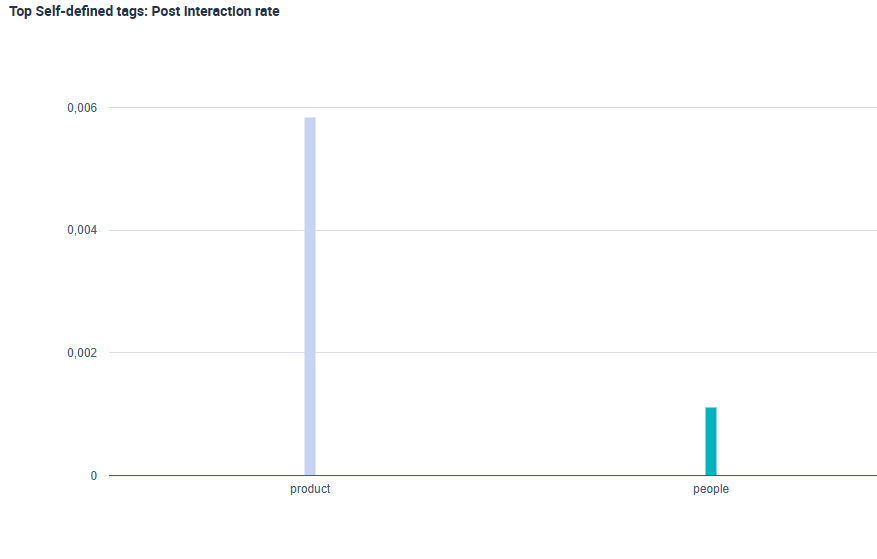
In this case, we see something interesting. In our data set, more posts were tagged with people in them, indicating that content with people was used more often. However, posts with products had a higher average post interaction. This can be a valuable insight for your future content production.
Remember that TikTok analytics tools that feature an AI-driven tagging analysis can be a real help with the process of tagging a large number of posts, especially with multiple tags. The analysis of what tags work in isolation or in combination gives you in-depth knowledge of what content drives engagement. You may also be interested in what tone to take with your audience and what subjects elicit positive responses. Before AI-tagging, you would have been faced with hours of work, manually tagging each post and collecting data on the engagement rates of posts. With tools that have implemented AI tagging functions, AI can handle this workload and return results within seconds.
8. Explore the Sentiment of Posts
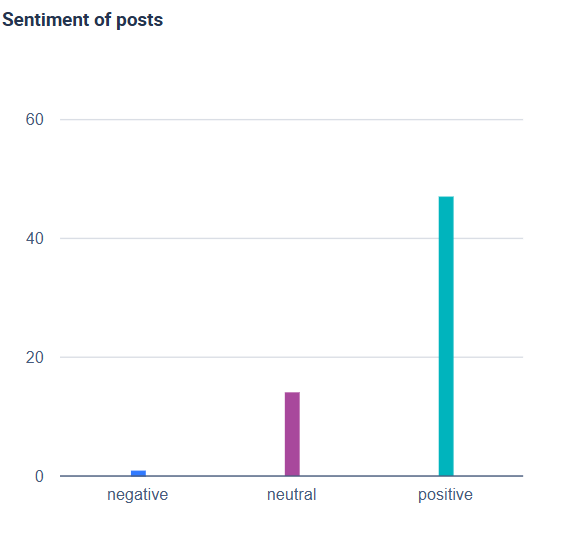
Sentiment analysis helps capture the way your content makes your audience feel by investigating the emotional tone of conversations. It can be an efficient way to know whether the videos you share elicit the feelings you seek to evoke. But how does one quantify a feeling? It is almost impossible to ascribe values to the magnitude of responses a user might have when watching a TikTok video. Therefore, we assign values of positive, negative, and neutral to delineate the overall mood.
Sentiment analysis is particularly useful if you want to understand how your audience perceives the posts of certain profiles, for instance. Sure, you could read through thousands of comments under relevant posts and evaluate each one. However, aside from being time-intensive and imprecise, mere reading does not make sentiment scalable. What you need is a TikTok analytics tool that can seep through the myriad of comments and capture the broader sentiment.
Combining the results of a sentiment analysis with audience-insight tools allows you to catch up on shifts in the affective disposition of your viewers while they are happening. Having this knowledge allows you to adapt your content strategy to protect your brand and make meaningful connections with your viewership.
9. Visualize Your Findings in a Report
Finally, TikTok analytics tools should be whole-in-one solutions, and inevitably you will need a centralized tool in which you can conduct and present your analysis. Reporting on your progress is an important step for many social media managers. For this reason, an encompassing solution should ensure that you can present your results in different formats, whether that be an Excel, PDF, PowerPoint, or CSV. Finally, the style of presentation matters, with management often demanding cutting-edge reports, and marketing teams may prefer the collaboration directly on the dashboard.
Another important feature relates to automated reporting capabilities. This allows you to continually generate reports about the performance of your TikTok activities so that no major changes go undetected and you can keep management up to date. Furthermore, having AI integrations that can help you analyze dozens of charts, tables, and graphs goes a long way to making sure you don’t miss any insights. This also helps you add commentary when creating reports for non-social media exports.
Best TikTok Analytics Tools
Now that we have explored what features your TikTok analytics tool should have, you need to go out and find the tool that is best for you. In the world of social media management tools, there are a lot of solutions to look through. We want to help simplify your search. That is why below you can find our list of the 10 best TikTok analytics tools:
- Fanpage Karma
- Sprout Social
- Hootsuite
- Buffer
- Metricool
- Brandwatch
- Content Studio
- Iconosquare
- Pentos
- Zoho Social
1. Fanpage Karma
Fanpage Karma provides a powerful TikTok analytics tool that is designed to support individual marketers as well as larger marketing teams. Unlike a vast number of other tools, there is no limitation to the number of competitors that the tool allows you to track and analyze. Because of this, Fanpage Karma enables you to build large data sets, which helps in your benchmarking and competitor analysis activities.
In addition to social media analytics, Fanpage Karma offers community management, publishing, research, and monitoring features, supporting your everyday work centralized in one tool. See for yourself and try Fanpage Karma to analyze your TikTok performance with a free 14-day trial. You are also welcome to join a free weekly webinar where you can get an overview of the main functions aiding your social media activities.

2. Sprout Social
Sprout Social is a tool for social media management that was designed to support teams and brands with deep analytics and efficient workflow. For TikTok, Sprout Social offers profile reports including a general overview, demographics, and profiles, making it possible to track video views, engagement, follower growth, and top posts. The platform further lets you track data across different social media networks. Sprout balances publishing, analytics, and engagement tools in one cohesive interface, which is especially useful for teams that want both high-level insight and operational efficiency on TikTok.
3. Hootsuite
Hootsuite is a popular platform for social media marketing analyses. The tool provides a unified dashboard for analytics users to monitor video performance, follower demographics, and engagement metrics like views, likes, shares, and comments. One of the advantages of Hootsuite is extended historical access, with broad data collection. Because it supports cross-platform comparisons and deeper data visualization, it’s a strong option for brands searching for a tool that allows them to publish and analyze their content.
4. Buffer
Buffer is appreciated for its simplicity and clarity, making it a good fit for creators and smaller teams that want clean insights. In its TikTok analytics tool, Buffer features metrics such as reach, engagement, follower trends, and video performance. Reports are built to be visually clean, exportable, and shareable, making them a good fit for freelancers or small teams.
5. Metricool
Metricool presents itself as a balanced tool and is a popular choice for small businesses and agencies that want a bridge between analytics and reporting. Historical data is accessible so that long-term changes can be tracked and identified to refine social media plans. The reporting tool generates exports of the analyses, which is a major advantage for agencies sharing results with their clients or other stakeholders.
6. Brandwatch
Brandwatch is best known for its social listening and sentiment analysis, as well as its TikTok analytics capabilities. The tool allows for more in-depth analyses of metrics by uncovering how communities engage with content. Brandwatch sets itself apart from other social media analytics tools in that it focuses on monitoring functions to establish how a brand is being perceived on TikTok. While it is more complex than other tools, enterprises and data-driven marketers who need to connect TikTok performance with broader social listening will find Brandwatch a good fit.
7. Content Studio
On the Content Studio tool, users can find publishing, collaboration, and analytics functions. The tool can work across social networks and track metrics such as engagement, follower growth, and video performance. Content Studios was created with the aspect of collaboration within or across teams in mind.
The platform implemented functions that ensure effective work together as teams can plan, approve, and analyze content together. For businesses that want a balance of content management and actionable insights without juggling multiple tools, ContentStudio is a suitable solution.
8. Iconosquare
Iconosquare is known for its analytics function, and its TikTok integration gives brands insights into video performance, engagement trends, and audience demographics. The platform supports competitor tracking, enabling businesses to benchmark their TikTok strategy against others in their industry.
Reports can be customized and designed according to the users wishes. Beyond TikTok, Iconosquare provides analytics for other social media platforms, allowing you to compare content performance across social channels. The interface is simple and allows brands to track their TikTok strategy with deeper analytics.
9. Pentos
Pentos specializes in TikTok analytics, offering focused insights into trending hashtags, sounds, and creator performance. It allows you to monitor competitors and track how content is gaining traction across the platform. This makes it particularly valuable for marketers aiming to stay on top of trends and maximize their reach.
Reports are straightforward and can be shared with teams, making it easy to transform their findings into actionable strategies. While Pentos is more niche compared to broader management platforms, it is deeply focused on TikTok.
10. Zoho Social
Zoho Social is cost-effective and provides TikTok analytics, publishing, and monitoring tools. On the platform, users can get insights into engagement, follower growth, and video performance. The tool is simple, and users find it easy to navigate, helping teams adopt it quickly. Additionally, the tool may be an attractive solution for anyone with a limited budget, as it comes at a much lower cost than many competitors’ tools.