How to Find Content Ideas for Facebook

You´ve opened your laptop to create your next Facebook post, and now you’re just staring at the screen without knowing where to start. Don’t worry, you’re not alone. Even experienced marketers sometimes struggle to come up with fresh ideas that perform well.
Facebook still remains one of the most powerful platforms for reaching and engaging your audience. But with so many content formats, changing trends, and rising audience expectations, it’s easy to feel overwhelmed. Most of all, creating original and engaging content can feel like a chore.
Now imagine knowing exactly what to post, backed by data, trends, and proven strategies in your niche. In this guide, we’ll walk you through 6 structured, repeatable methods to help you generate engaging post ideas for Facebook. These methods will keep your page active, relevant, and growing. From identifying trending topics to performing a tagging analysis, these techniques will provide the direction you need to stop guessing and start creating with confidence.
6 Ways to Find Facebook Content Ideas
Before we dive into the techniques for generating interactive Facebook post ideas, it’s important to understand one key principle: effective content inspiration should align with your niche, audience, and goals. In other words, the best Facebook page content ideas aren’t one-size-fits-all but are tailored for your audience. Whether you’re managing a business page, building a creator brand, or publishing for a client, your ideas must match the context.
You could follow popular pages, endlessly scroll through your feed, and manually track what performs well. However, this whole process can be slow, inconsistent, and definitely not really efficient. By the time you recognize a trend, it may already be over. A structured, data-based system can give you a major edge, especially if you’re working across multiple pages or industries.
We will be using the Fanpage Karma social media tool, and especially its analytics and research functions, to show how you can use platform data, trend tracking, and competitor research to spark fresh Facebook content ideas. These techniques are especially helpful for brands, creators, and agencies that want to create content that performs—not just once, but consistently.
Here are 6 techniques that will help you generate Facebook post ideas based on real performance insights:
- Find your Best Content Format
- Understand Who your Target Audience is (and their Interests)
- Find Trending Content
- Study Competitors Pages
- Turn Engagement into Content Ideas
- Perform a Tagging Analysis

1. Understand Who your Target Audience is (and their Interests)
Before you start generating content ideas, you need to be clear about who you´re speaking to. While this may sound simple, defining your audience based on real data is often more challenging than it seems. Simply saying you’re in a “travel” or “food” niche might not be enough since these categories are probably too broad and crowded. Facebook is full of general travel and food pages, which makes it harder to stand out, build engagement, and attract a loyal audience.
That´s why it can be smarter to niche down, and using analytics data can help you do that. By analyzing performance data, you can identify formats, topics, or keywords that consistently drive higher engagement and interaction rates. For instance, you may find that posts about backpacking or solo female travel tend to outperform general travel inspiration posts. These insights allow you to focus your content on sub-niches where engagement is stronger and competition might be lower.
Focusing on a clearly defined group not only makes your page more discoverable, it also can help you position your page as an authority within that niche. When people know what to expect, they´re more likely to follow, engage, and come back. Once you’ve clearly defined your target audience, it becomes much easier to come up with content ideas that speak directly to their interests, needs, and motivations.
2. Find Trending Content
Once your niche is clearly defined, you can start by looking at what’s already working in that space. One of the most effective ways to generate fresh Facebook post ideas is by researching which posts are currently trending within your industry. These trends reflect the kind of content your target audience is actively engaging with—making them a powerful source of inspiration when your content calendar feels empty.
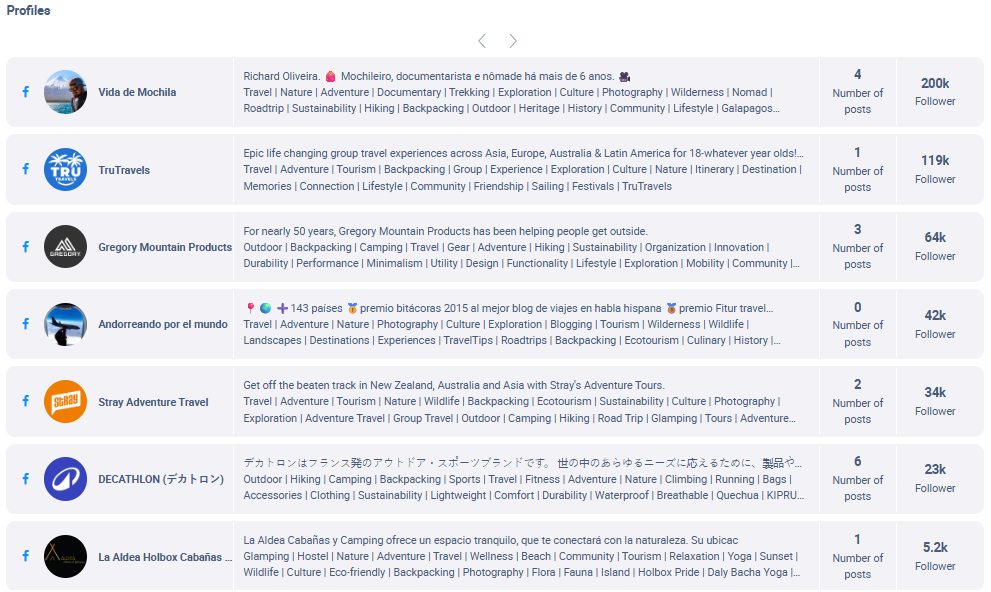
This is where a structured research approach becomes essential. There are two types of analysis you can perform. First, a social media research tool allows you to filter through thousands of Facebook posts by keyword, language, location, and the time period to see what´s performing well in your niche. For example, if you’re focusing on the backpacking category, you could filter posts from the past 7 days in the US in English to uncover the most successful content on that topic.
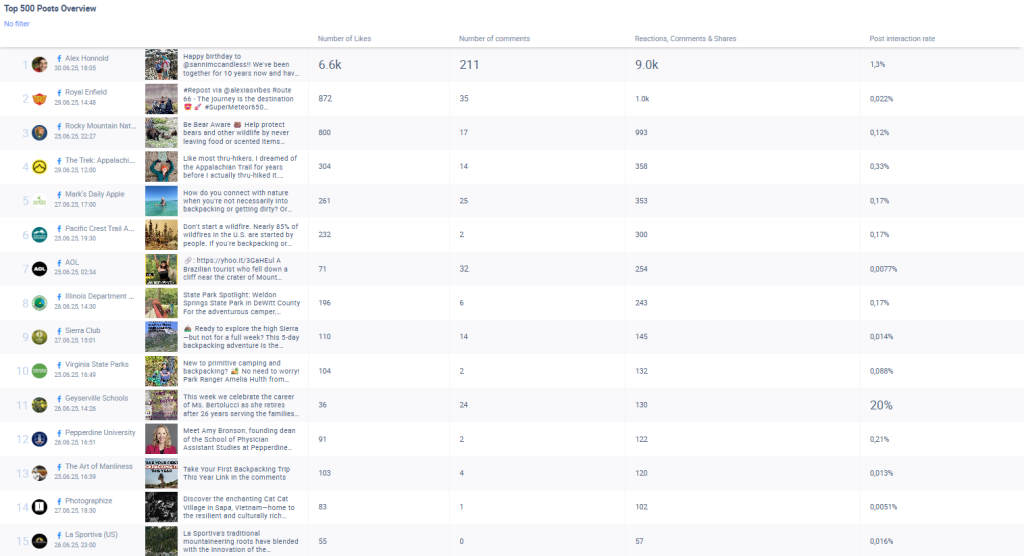
Second, a profile performance analysis helps you dig into the content strategies of specific pages. Using an analytics tool, you can evaluate the post performance of individual creators or brands within your industry. You can also customize the metrics you track for your analysis. Together, these two methods offer a powerful basis for turning trends into content ideas that are really relevant for your profile.
3. Study Competitors Pages
Looking at top-performing creators is one way to get inspired—but if you want more tailored content ideas for your Facebook page, it’s often more useful to study your direct competitors. In this case, we’re talking about actual businesses or brand pages operating in the same space as you. This is especially valuable if you’re working in a niche field or looking for Facebook post ideas for business that go beyond general trends. This type of analysis isn’t about discovering popular topics, but about understanding what’s working for other businesses that target the same audience.
To do this, you’ll need to set up a proper benchmarking analysis. That means comparing your Facebook presence with other pages that share your audience or business goals. With the help of a social media analytics tool, you can analyze competitors based on key performance metrics like engagement rate, post type, and publishing frequency. This gives you a clearer picture of what content strategies are working—and what gaps you might be able to fill.
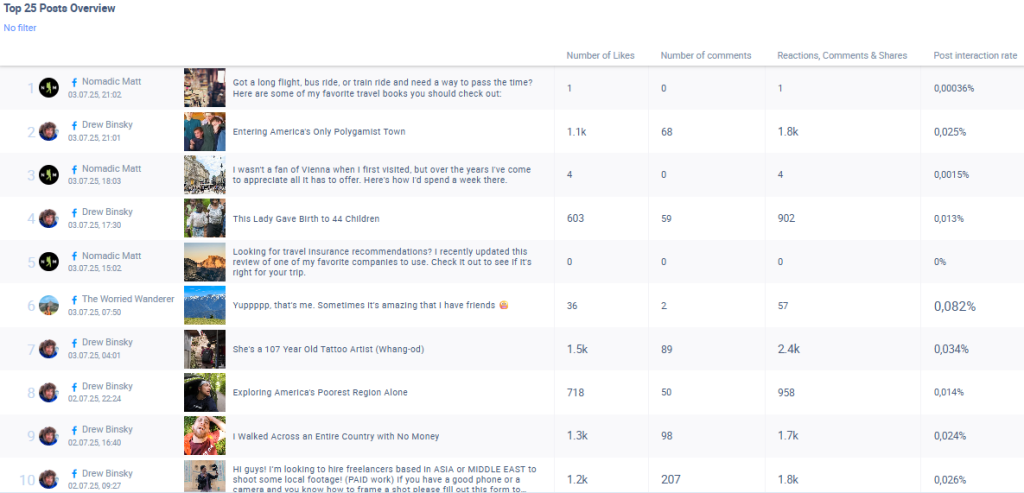
But how do you know who your real competitors are on Facebook? The answer lies in researching the most relevant and high-performing profiles within your niche. With the help of a social media research tool, you can filter profiles by keyword, category, or even audience interest. The more specific your filters are, the better your results will be—so aim to target the exact type of content your audience is already engaging with.
We talked earlier about the importance of clearly defining your target audience. This step is what makes competitor research truly valuable. By narrowing your focus to profiles that serve the same audience as you, you’ll discover pages that are not just popular, but relevant to your own strategy. And the more aligned their audience is with yours, the higher the chances that their successful content formats could inspire your next high-performing post.
4. Turn Engagement into Content Ideas
Sometimes the best content ideas come directly from your audience. After all, they’re the ones who engage with your posts, so it makes sense to pay attention to what interests them. Comments, questions, direct messages, and even post reactions can be gold mines for inspiration. What are they asking? What are they excited about? What kind of posts do they consistently respond to?
Tuning in to these signals not only generates more relevant ideas, but also builds stronger engagement. When your content aligns with your audience’s interests, they’re more likely to interact with it, share it, and come back for more. Use polls, questions, or simple captions asking, “What do you want to see next?” to involve your audience in the content creation process. It’s one of the most organic and effective ways to keep your Facebook content strategy fresh and aligned with real demand.
5. Perform a Tagging Analysis
When it comes to finding content inspiration for Facebook, it’s not always about the big picture, sometimes it’s in the details. A tagging analysis enables you to break down high-performing posts into their constituent parts and identify the attributes that consistently drive engagement. These attributes could include the number of people in a photo, whether the post shows a product or a person, the presence of text overlays, or even the emotional tone of the caption.
If you’re working on business Facebook post ideas, for example, a tagging analysis could help you determine whether posts featuring employees, behind-the-scenes moments, or customer stories perform better than polished product shots. You might find that posts featuring people generate more likes, or that Reels filmed outdoors receive more interactions than those filmed in an office. These insights not only reveal what your audience prefers, but also help you shape interactive post ideas for Facebook that are tailored to their behavior. Instead of guessing, you’ll be working with a data-backed foundation for your next creative direction.
6. Find your Best Content Format
Finding content ideas isn’t just about what you say, it’s also about how you deliver it. Certain formats spark more engagement than others, and that can be a huge source of inspiration. If you know that your audience interacts more with reels, you can then start researching Facebook Reels content ideas that fit this format more naturally.
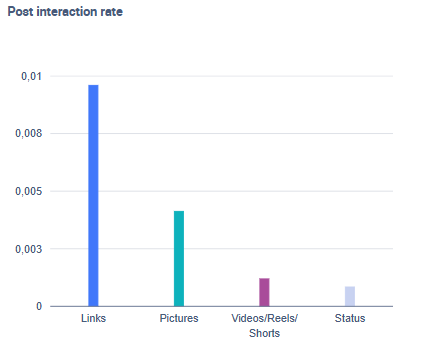
For example, the data below shows that link posts have the highest interaction rate, followed by pictures, while videos and status updates generate less engagement. So instead of forcing every idea into a video, you might turn a tip list into a photo carousel or a blog roundup into a clickable link post. When you understand which formats your audience responds to, you can reverse-engineer content ideas that align with those formats—making them easier to create and more likely to succeed. If you want to go deeper into how different formats affect performance, this content optimization guide breaks down practical strategies based on real engagement data.
How to Create Content for Facebook Page: Final Thoughts
Creativity will always be at the heart of great content, but when it comes to Facebook, inspiration alone isn’t enough. If you want to stay relevant, consistent, and effective, you need a system. This involves understanding your niche, observing successful strategies in your field, listening to your audience, and adapting your ideas to formats that drive engagement.
The difference between average and high-performing pages isn’t just talent; it’s a process based on real data. The ability to spot patterns, test ideas, and iterate based on real insights keeps content flowing and audiences growing. This process becomes much simpler and faster with the right tools.
With Fanpage Karma, you can transform content planning from a guessing game into a data-driven strategy. Discover trending topics and formats, analyze competitors, track unlimited profiles, and turn inspiration into results. If you’re ready to stop asking, “What should I post?” and start building content that performs well, Fanpage Karma offers a free 14-day trial. In addition to analytics and content research, this tool also offers publishing, community management, and monitoring features, helping you manage your entire Facebook workflow in one place.
You can also join a free webinar to learn how Fanpage Karma can help you turn data into high-performing content ideas faster.