How to Get More Likes on Facebook

Have you ever wondered whether Facebook Likes actually serve a real purpose, or if they are just a simple way of showing that people enjoy your posts? For social media teams managing Facebook pages, this question is more relevant than it may seem. That is because Likes are one of the most visible performance indicators on Facebook. This means, for many social media managers, understanding how to get more Likes on Facebook is a topic that they need to research.
In this article, we’ll share 8 proven, practical strategies to help you get more likes on your Facebook posts. From identifying the best posting times and using hashtags effectively to audience insights and strategic collaborations, you’ll learn how to turn data-driven decisions into consistent engagement.
Why Likes on Facebook Matter
Facebook Likes remain an important KPI because they show how your audience responds to your content. Perhaps more importantly, they can help the algorithm determine whether a post should reach more people. When a post receives Likes quickly and consistently, Facebook interprets this as a signal that the content is relevant and engaging. As a result, the algorithm is more likely to distribute the post to additional users, increasing its overall reach.
While Likes are not the only metric that matters, they provide a clear and immediate signal of how a post is performing. From a performance perspective, Likes are valuable because they:
- Indicate audience interest
- Signal content relevance to Facebook’s algorithm
- Support broader organic distribution in the feed
Likes are also relatively low-effort forms of engagement. Unlike comments or shares, they require just a single click, which makes them easier to generate consistently. Therefore, increasing Likes can be an efficient way to strengthen engagement signals and help posts gain early traction. While Likes should always be evaluated alongside other KPIs, they remain a useful indicator for improving Facebook content performance.
How to Get More Likes on Facebook Posts: 8 Proven Tips for Success
So, want to know how to get more likes on your Facebook page? It starts with understanding what engages your audience and how your content fits into their daily scroll. In the parts below, we’ll walk through 8 tried-and-tested techniques that can help you earn more likes consistently.
These tips focus on meaningful engagement, which can help you create content that connects, encourages interaction, and builds community over time. Let’s go through our 8 strategies to get more Likes on Facebook:
- Analyze Successful Content
- Find your Best Times to Post
- Make Hashtags Work for You
- Utilize Effective Call to Actions
- Grow Through Strategic Collaboration
- Engage with your Community on a Regular Basis
- Perform a Tagging Analysis
- Use the Right Content Formats
1. Analyze Successful Content
If you want to gain more likes on Facebook, one of the most straightforward techniques is to simply look at content that already earns a high number of Likes in your niche. You can start by reviewing Facebook pages that target a similar audience. Keep in mind that you should look beyond isolated viral posts and focus on content that performs consistently well over time. This makes it easier to identify patterns that can realistically be repeated.
It may be helpful to use a social media analytics tool so you can sort and filter posts by Likes to see which ones generate the strongest response. Combining this with keyword or topic filters can also help you narrow the analysis to specific themes and understand what type of content correlates with a higher number of Likes.
As you analyze competitor content, ask practical questions such as:
- Which posts regularly attract a high number of Likes?
- Which topics or themes repeatedly generate Likes across multiple Pages?
- Which formats appear most often in high-Like posts?
- What kind of tone or visual style gets the strongest number of Likes?
This type of analysis works best when you compare data across multiple pages. Reviewing Likes across competitors helps you spot trends faster and understand what drives Likes across your niche, not just on your own page. You can see an example below where you can filter for metrics such as Likes across profiles you are tracking.
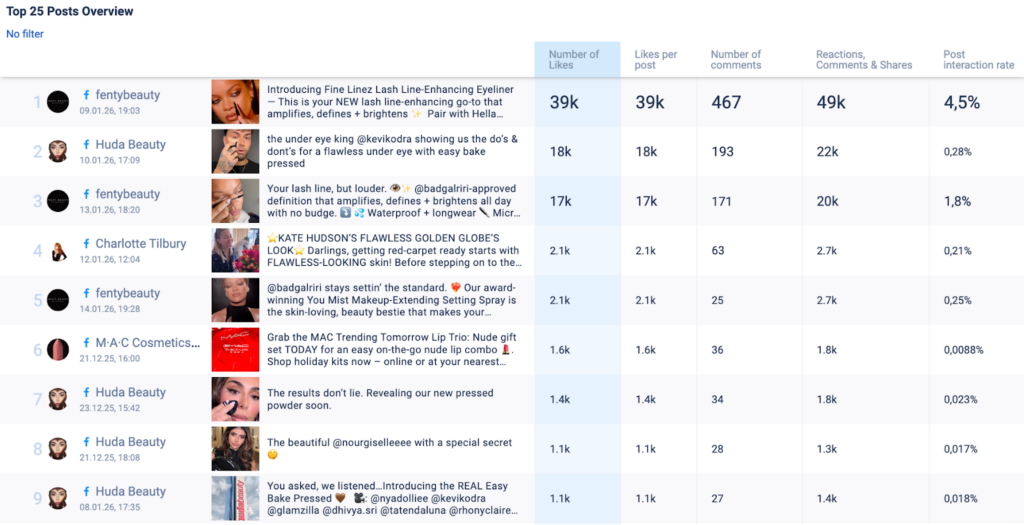
For social media teams, this approach creates a strong foundation for content planning. Instead of guessing what might work, you base decisions on actual Like performance, increasing the likelihood of publishing posts that earn more Likes on your Facebook page.
2. Find your Best Times to Post
If you’re wondering how to get more likes on a Facebook post, the times you are posting is one of the best places to start. A well-crafted post can easily get buried if it goes live at the wrong time. Posting at the right times increases the chances of early Likes, which helps posts gain visibility in the feed.
Early Likes matter because they signal relevance. When people like a post shortly after it’s published, Facebook is more likely to show it to additional users. Importantly, you should remember that finding your best posting times is not about guessing but rather about using data to understand when Likes are most likely to happen.
The most reliable way to identify these time slots is through data-based analysis. Instead of only looking at data from your own profile, the right social media analytics tool will allow you to bring together historical data from multiple competitor pages that reach a similar audience. By aggregating all of these data points, you can more accurately look for recurring patterns relating to what times Likes tend to occur most often. Using a larger, combined data set makes it easier to identify meaningful posting trends, rather than relying on isolated results from a single page.
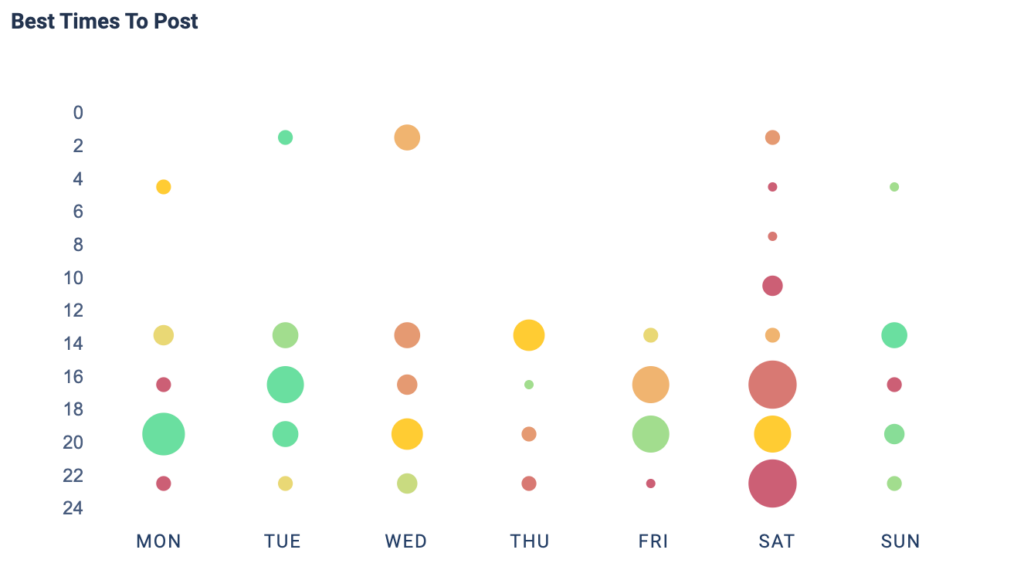
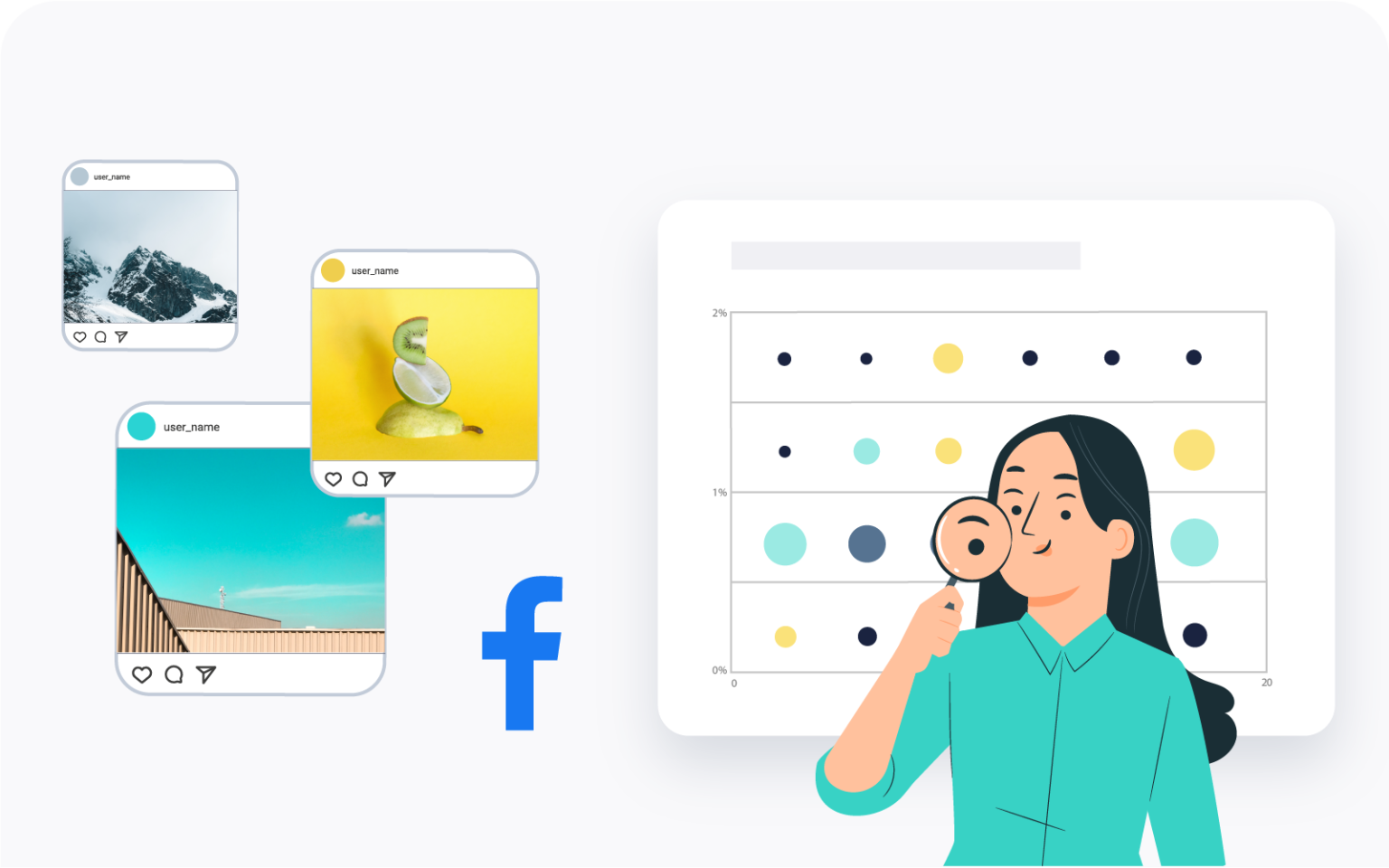
The best times to post chart below makes these patterns easy to spot. Each dot represents a time slot.Thelarger the dot, themore posts were published at that time, and thegreener the dot, thehigher number of Likes those posts received. So if you are creating a strategy to get more Likes on Facebook, posting during the days and times that show the green circles can be one effective method to use.
3. Make Hashtags Work for You
If you want to get more Likes on Facebook, your content needs to be discoverable by the right people. Hashtags help the Facebook algorithm understand what your post is about and decide who is most likely to see it. While hashtags alone won’t guarantee more Likes, they can support visibility and make it easier for interested users to find and interact with your posts.
The key is not whether you use hashtags, but which ones you choose. Random or overly broad hashtags often bring little value. If you want to make hashtags work, focus on two steps:
- Step 1: Make sure that you identify hashtags that are linked to Likes
Use data-based hashtag research to look at your top-performing posts (and those of similar Pages) and identify which hashtags consistently appear in posts that get high Like counts on average. - Step 2: Consistently use the right hashtags in your posts
Once you’ve found effective hashtags, apply them regularly. This helps Facebook categorize your content and show it to people who engage with similar topics, improving discoverability over time.
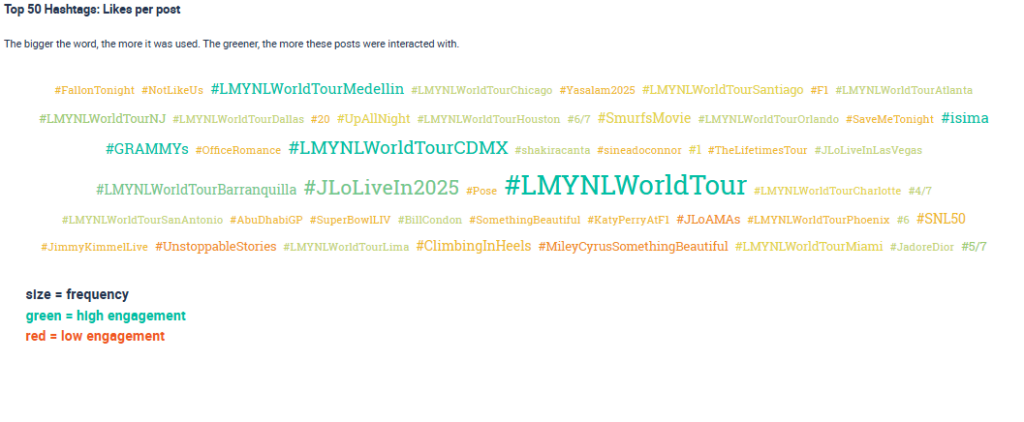
Below you can see how to visualize the results of your hashtag analysis. The size of each word shows how frequently the hashtag is used(the bigger, the more used), while the color indicates how strongly it correlates with the number of Likes posts get on average when using a specific hashtag. Greener hashtags are typically linked to higher Like performance, while red or pale ones tend to perform weaker.
This type of overview helps you quickly spot hashtags that are both relevant and effective. By researching the best hashtags to use on Facebook, you can more effectively find which ones you might consider using if you want to generate more Likes.
4. Utilize Effective Call to Actions
If you’re wondering how to get more page likes on Facebook, consider how you are guiding your audience. Sometimes, people just need a little push. A simple call to action (CTA) can encourage someone to take that next step, in this case like your post.
A call to action is a clear instruction that tells users what to do next when they see a post. On Facebook, this can be as simple as asking viewers to like your post. CTAs help remove uncertainty and guide people toward a specific action instead of hoping they engage on their own.
The most effective CTAs are those that feel natural and relevant to your content. It could be something straightforward such as “Like this post if you agree.” Or it could be something more creative, like teasing future content: “If this gets 100 likes, we’ll share part two.”
These suggestions not only invite interaction, but also create a sense of momentum that keeps your audience involved. CTAs don’t have to be limited to the captions. You can place them:
- In on-screen text within images or videos
- At the end of a video, where attention can be high
- In the comment section to keep the conversation going
When used thoughtfully, a call to action becomes more than just a prompt, it becomes an opportunity to connect more deeply and spark the kind of activity that can lead to broader reach and more likes. If you use them consistently, CTAs can also help train your audience to interact. Over time, this leads to more predictable Like behavior and helps posts gain early traction, increasing the likelihood of earning more Likes on Facebook.
5. Grow Through Strategic Collaboration
Sometimes, reaching new audiences is simply a matter of teaming up. If you’ve ever asked yourself how to get more likes on your Facebook page, collaborations should be something to consider. On Facebook, collaboration means creating content together with another Page or creator so that both audiences are exposed to it. This can include joint Lives, co-created posts, shared campaigns, or cross-promotion. When done correctly, collaborations help your content reach new users who are already likely to interact, making them an effective way to get more likes on your Facebook page.
The key to a successful collaboration is relevance. You should partner with Pages that target a similar or complementary audience, not just any large account. When the collaboration looks and feels natural, followers from both sides are more likely to trust the content and interact with it by liking the post.
You can start by identifying potential partners whose content consistently performs well in terms of Likes and who share a similar tone, topic focus, or values. Social media research tools can help you identify collaborators by helping find profiles with strong performance and aligned interests. The right tool can make the entire process go faster and be more effective. Useful collaboration formats on Facebook include:
- Joint Facebook Lives, where both Pages promote the session in advance
- Co-created posts or videos, shared across both audiences
- Content swaps, where each Page features the other in a relevant post
For example, a creator in the wellness space might team up with a yoga instructor for a Facebook Live on “5 Minute Stress Relief Techniques”. Since both audiences are already interested in wellness content, the post is more likely to attract Likes from both communities rather than just passive views.
Collaborations usually work because they combine reach with trust. Users are more inclined to Like content that is recommended by a Page or creator they already follow. This leads to higher Like activity, especially in the early stages after publishing, which helps the post gain additional visibility.
6. Engage with your Community on a Regular Basis
There’s no shortcut to building a loyal, engaged audience. But one of the most effective ways to grow sustainably, especially if you’re exploring how to get more likes on your Facebook business page, is to actively engage with the people already following you. A responsive, human connection often goes further than the most polished piece of content.
When followers feel seen and heard, they’re more likely to support your content by liking it. This kind of interaction also signals to the algorithm that your page is worth amplifying. Prioritizing authentic conversation might not always be the fastest route, but it’s one of the most reliable ways to create lasting engagement and grow your presence over time.
Engaging with your community doesn’t need to be complex. It’s about being present and responsive. This includes simple but effective actions such as:
- Responding to comments and messages in a timely way
- Asking questions in posts to encourage replies instead of passive scrolling
- Reacting to and acknowledging repeat commenters
- Using polls or short prompts to invite quick interaction
7. Perform a Tagging Analysis
To get more Likes on Facebook, it’s not only important to interact with your community, it is just as important to understand what actually drives their engagement. One effective way to gain these insights is through a data-based tagging analysis.
Tagging analysis works by labeling each post from your own account and from competitors with specific characteristics you want to evaluate. These tags can include attributes of a post such as content type, topic, or purpose. The goal isn’t just to simply categorize posts, but to analyze how these tags correlate with specific performance metrics such as Likes. This makes it possible to better identify which content characteristics are consistently associated with more Likes, rather than relying on assumptions or isolated examples.
Tags should describe clear, recurring content attributes that allow you to group competitor posts in a meaningful and comparable way. The objective isn’t to label every detail, but to focus on elements that generate more Likes on Facebook. When done correctly, tagging helps reveal patterns between content characteristics and engagement outcomes.
Common tagging dimensions include:
- Product presence: Whether a product appears at all, or which product category is featured (e.g. new launch or bestseller). This helps assess how strongly product-led content performs compared to other approaches.
- People featured: No people, a single person, or a group. These tags help evaluate whether human presence is associated with higher interaction rates.
- Campaign format: Giveaways, collaborations, seasonal campaigns, user-generated content, or announcements. This makes it easier to see which campaign types consistently generate stronger engagement.
- Creative style: Studio shots, lifestyle visuals, before-and-after comparisons, memes, or behind-the-scenes content. These tags allow you to compare polished content with more authentic formats.
- Content angle: Educational, inspirational, entertaining, controversial, or testimonial-based. This helps identify which messaging styles resonate most with your competitors’ audiences.
To get a better understanding, let’s look at how a tagging analysis works in practice. The charts below show the results of a tagging analysis of Facebook posts from several major beauty companies. The goal was to understand which content, specifically used in the makeup industry, gets more likes: Makeup Tips, Product Displays, Brand Personality (Trends) or Discounts.
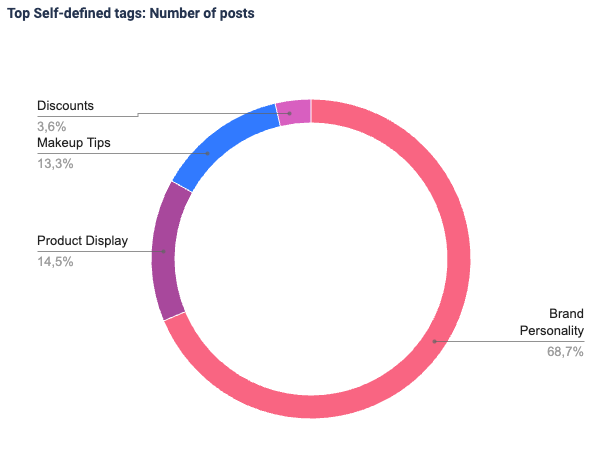
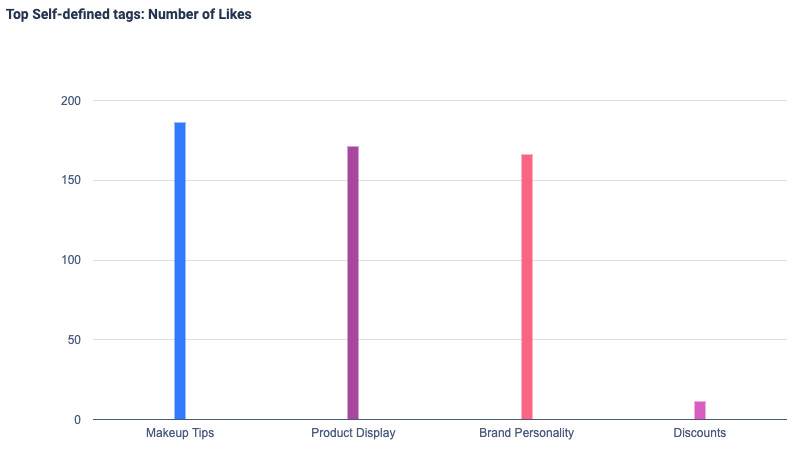
The charts show clear differences between what makeup brands post most often and what audiences actually reward with Likes:
- Brand Personality dominates the content mix with 68.7% of all posts.
- Product Display accounts for 14.5% of posts.
- Makeup Tips make up 13.3% of posts.
- Discounts are rarely used, with only 3.6% of posts.
However, the Like results tell a slightly different story:
- Makeup Tips generate the most Likes (around 185).
- Product Display follows closely (around 170 Likes).
- Brand Personality performs similarly (around 165 Likes) despite being posted far more often.
- Discount posts receive the fewest Likes (around 10–15).
Overall, this suggests a gap between brand strategy and audience preference since some brands mostly publish personality-driven content, but the audience responds especially well to Makeup Tips. For brands aiming to increase Likes in this content niche, it could be worth posting more tip-based content or combining tips with the brand’s personality style, while keeping discounts as a smaller supporting category.
8. Use the Right Content Formats
Not all the Facebook content formats generate Likes in the same way. Some formats are easier to consume, while others invite stronger interactions. If your goal is to get more Likes on Facebook, choosing the right content format is just as important as choosing the right topic.
The most effective way to identify which formats drive Likes is by looking at past performance data. With a social media analysis tool, you can analyze how many Likes each format receives on your own Page and compare it with similar Pages in your niche. This helps you understand which formats consistently correlate with higher Like counts, not just occasional success.
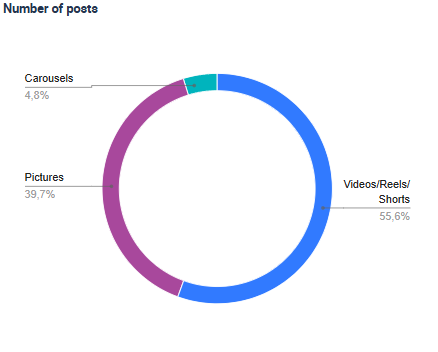
To understand this better, the charts below compare how often each content format is used with how many Likes those formats actually generate:
- Format distribution: the first chart shows the distribution of published posts by format. Here, we can see that Videos/Reels/Shorts account for 55.6% of all posts, Pictures make up 39.7%, and Carousels are used far less frequently, at 4.8%.
- Number of Likes: the second one shows the average number of Likes per format. In this example, Videos and Reels clearly outperform other formats, receiving the highest number of Likes by a wide margin.
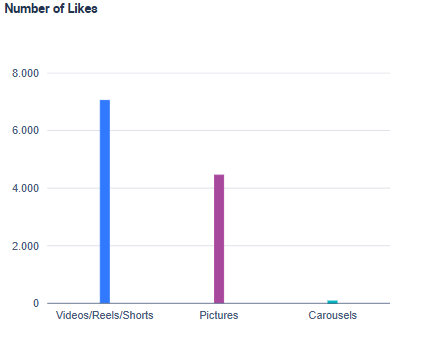
This type of analysis helps shift format decisions from habit to strategy. Instead of relying on assumptions, you can prioritize formats that consistently show higher Like potential, while reassessing formats that underperform.
Conclusion: Gaining Likes on Facebook
As we’ve seen, getting more Likes on Facebook isn’t just about posting often—it’s about combining the right strategy with ongoing analysis and a willingness to adapt. Whether it’s finding your best time to post, researching ideal hashtags, or partnering with other creators, each step you take can help improve your visibility and drive stronger engagement.
Now that we’ve explored several effective techniques related to how to get more Likes on Facebook, it’s time to start putting them into action. The first requirement is the desire to improve your performance and the crafting of a long-term strategy. However, it also is useful to have the right social media tool at your disposal, which can help you craft effective strategies using data.
If you are looking for such a social media tool, you should try Fanpage Karma’s free 14-day trial. This all-in-one social media tool gives you powerful analytics, competitor analysis, community management, research, and publishing features. In this way, it equips you with actionable insights such as finding optimal posting times and hashtags from day one.
You can also join one of Fanpage Karma’s free weekly webinars to learn how to make the most of the platform and sharpen your social media strategy—not just on Facebook, but across all your key channels.