Gen Z Emoji Codes: Brands Can’t Take Emojis Literally Anymore

- What Emojis Does Gen Z Use? From Pictograms to Insider Codes
- Why Emoji Codes Make Brand Communication More Complicated
- Gen Z Is Not a Monolithic Target Group but Is Made Up of Many Communities
- Social Media Monitoring Instead of an Emoji Dictionary
- When Brands Should Use Emojis and When They Shouldn’t
- Understanding, Checking, and Correctly Classifying Emoji Codes
- What Emoji Codes Reveal About the Future of Social Media
For a long time, emojis were considered the simplest form of digital nuance. A smiley face made a message friendlier, a heart signaled agreement, and a thumbs-up meant “all good.” This logic still applies, but it’s no longer universally reliable. On social media and especially for Gen Z, emojis have evolved into cultural codes, indicating irony, belonging, distance, overwhelm, or humor. And they’re often most effective precisely when their meaning isn’t obvious.
For social media managers, emojis are more than just an amusing side note. An emoji that seems perfectly natural for a lifestyle brand on TikTok can quickly look forced when used by a B2B company on LinkedIn. That’s exactly why it’s not enough to simply memorize popular Gen Z emojis. What matters is identifying patterns, correctly interpreting contexts, and consciously deciding whether a particular code fits your own brand—or whether it’s better to simply observe.
What Emojis Does Gen Z Use? From Pictograms to Insider Codes
Gen Z often doesn’t use emojis literally but as flexible shorthand for moods, attitudes, insider knowledge, and so much more. In many contexts, the skull emoji 💀 doesn’t stand for death or horror but for uncontrollable laughter: “I’m dying of laughter.” The clown 🤡 can signal embarrassing behavior, while the slightly smiling face 🙂 doesn’t come across as friendly but rather passive-aggressive. Even the classic thumbs-up 👍 doesn’t always symbolize approval. Depending on the context, it can be interpreted as aloof, annoyed, or sarcastic.
This shift is most evident in emojis used by Gen Z on TikTok. There, emojis are sometimes deliberately misused. The chair 🪑 was at times used as an absurd substitute for laughter. The cable car 🚡 became a running gag in certain TikTok contexts, precisely because it doesn’t actually have an obvious meaning. The humor arises from the shared knowledge that a symbol is being used differently than outsiders would expect.
This turns emojis into a kind of social filter. Those who understand the code signal their belonging to the platform’s culture or to a specific community. Those who use it incorrectly may, in some cases, signal the opposite. This is tricky for brands because symbolic language is not neutral. It conveys not only mood but also cultural positioning.
The following overview highlights some common emojis used by Gen Z and their typical meanings on social media. This list should be viewed as a snapshot: meanings may vary or change rapidly depending on the platform, community, and current trends.
| Emojis | Meaning for Gen Z |
|---|---|
| 💀 | I’m dead / super funny |
| 🥀 | emotional / ironic sadness |
| 🗿 | sigma energy / unbothered |
| 🫠 | stressed but pretending it’s fine |
| 🧢 | that’s cap / that’s a lie |
| 📉 | aura vibe loss / that hurt |
| 🪑 | inside joke / meme |
| 😭 | this is too funny / too real |
| 🙂 | passive-aggressive |
| 🧿✨ | protection / good energy |
| 💅 | confidence / attitude / main character energy |
| 👀 | watch this / drama / gossip |
| 👁️👄👁️ | shocked silence / surprise |
| ☝️🤓 | well actually |
| 🤡 | embarrassing / acting like a fool |
| ☕ | gossip / watching drama |
| 🤸♀️🕳️ | bye, I’m out / disappearing |
| 🫥 | pretending not so see it |
| 🫳🎤 | mic drop |
| 🥺👉👈 | shy / nervous |
| 🤠 | “yeehaw” but you’re actually losing it inside |
| 🤔✋ | wait / hold on |
| 🤨🕶️🤏 | what did I just see |
| 😮✊😐 | nevermind |
Why Emoji Codes Make Brand Communication More Complicated
Emojis can make brand communication more accessible. They convey tone, provide visual cues, and can create a more informal rhythm in captions, comments, or Reels. The problem begins when emojis are seen as a quick shortcut to youthfulness. Gen Z, in particular, often recognizes very clearly whether a company truly understands its language or is just copying it.
The difference is small but crucial. An emoji can be part of a credible brand voice or come across as a tacked-on trend signal. Codes that depend heavily on context are especially risky. A heart can express agreement, but in combinations like “No ❤️” it can soften a harsh statement. A smiley face can show friendliness but also irony. A seemingly harmless comment can thus have a different effect than intended.
For social media managers, there’s the added challenge that not every company has the same degree of creative freedom. An entertainment brand can respond differently in comment sections than a financial services provider. A food brand can test meme codes more quickly than an NGO dealing with sensitive topics. A local retailer requires a different approach to emojis than an international SaaS company. Using the same set of emojis across all brands does not lead to efficient standardization but increases the risk of tonal inconsistencies.
Gen Z Is Not a Monolithic Target Group but Is Made Up of Many Communities
A common mistake in trend communication is treating Generation Z as a monolithic group. In reality, however, Gen Z emoji codes do not emerge across an entire generation simultaneously but in niches such as in creator communities, on TikTok, in fan bubbles, on Instagram, in group chats, or in comment sections. Some codes spread quickly into the mainstream, while others remain short-lived inside jokes.
For your social media strategy, this means that not every brand needs to know every code. It’s more important to observe your own community. Which emojis appear regularly in comments? Are they used positively, ironically, or critically? Which codes do competitors use, and how does their community react to them? Are there differences between platforms? An emoji that feels organic on Instagram may already be overused on TikTok and seem inappropriate on LinkedIn.
Social media teams can benefit from brand-specific emoji guidelines. Rather than simply listing which emojis are allowed or prohibited, it makes more sense for these guidelines to follow a three-category framework:
- Emojis that align with your brand voice
- Emojis observed in your community but not yet used
- Emojis that you consciously avoid
Guidelines like these create a pragmatic structure that allows for creativity without turning every post into a case-by-case decision.
Social Media Monitoring Instead of an Emoji Dictionary
Lists featuring the most popular Gen Z emojis can provide guidance. However, they quickly become outdated because meanings aren’t static. What works as an inside joke today might be mainstream or ironically subverted tomorrow. That’s why, for social media teams, the ability to interpret emoji meanings in context is more important than individual translations.
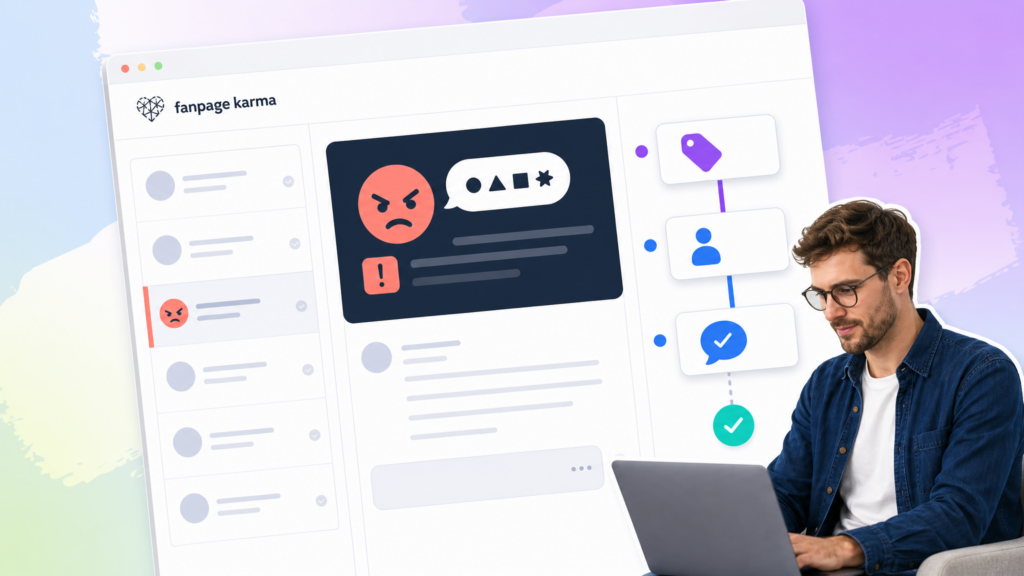
The first step towards a smart workflow is social media monitoring and analysis. But it’s not just about keeping track of how many emojis are used. What really matters is how they’re used: what topics they appear in, the sentiment behind them, which comment threads they’re in, and how they relate to the actual content. If a specific emoji frequently shows up under popular posts by influencers, that sends a different signal than if it’s used sporadically in critical comments. If your competitors use an emoji and people react with mockery, that’s just as relevant as a spike in engagement.
For social media teams, this perspective is especially valuable because it reduces subjective matters of taste. Instead of debating within your team whether an emoji is “too juvenile,” “over the top,” or “still funny,” you can rely on concrete observations: What language does the target audience actually use? What content generates high-quality comments? Where do shares, saves, or recurring running gags emerge? Which codes appear first in the community before brands adopt them?
This is precisely where the relevance of professional social media tools becomes clear. If you plan content, manage social media accounts, monitor your competitors, analyze your performance, and research trends, looking at Gen Z emoji codes in isolation will not suffice. While they are small, they offer a revealing glimpse into how your community communicates and what resonates with them.
When Brands Should Use Emojis and When They Shouldn’t
Not every emoji code is appropriate for every type of brand communication. The key question is not, “Is this emoji popular right now?” but rather, “Can your brand use it authentically?” A trend can be relevant without your brand needing to actively participate in it. Sometimes it’s strategically wiser to simply understand a code to properly interpret comments, rather than using it in your own captions.
Instead of adopting emoji codes across the board, it’s worth doing a quick strategic check before using them:
- Is the emoji already being used organically within your own community?
- Is its meaning clear, including any ironic connotations?
- Does it fit your brand voice?
- Is the trend still alive or already overused?
- Would the post work even without the emoji?
- Are there any cultural, linguistic, or regional risks?
The last question is particularly important. While emojis appear visually universal, they are not understood the same way everywhere. Meanings can vary across countries, platforms, and age groups. Anyone managing international or multilingual social media channels should therefore exercise caution with symbols that are heavily culturally coded. When in doubt, a clear sentence is better than a misleading insider code.
Understanding, Checking, and Correctly Classifying Emoji Codes
This strategic check helps determine whether an emoji code fundamentally aligns with your brand. To avoid having to make this assessment from scratch every time, social media teams should develop clear routines for monitoring, content review, and analysis based on it.
1 – Set Up Emoji Monitoring
Community managers should regularly document which emojis stand out in comments, mentions, and competitor posts. The goal here isn’t a comprehensive database but rather identifying recurring patterns. If certain symbols suddenly appear more frequently or their meaning shifts, this should be factored into content and community planning.
2 – Integrate Emoji Guidelines Into Content Reviews
For trend-driven posts, it’s not just about checking whether the hook, visuals, and caption work, but also whether the emojis used are current and brand-compliant. Community managers play a particularly important role in this process because they often work closest to the actual language of the target audience.
3 – Evaluate Performance and Tonality Together
A post with many emojis can generate high engagement yet still come across as inappropriate if the comments are mainly ironic or critical. Conversely, a restrained use of emojis can be effective if it strengthens the brand voice. Therefore, it is not just the number of reactions that matters, but also their quality.
What Emoji Codes Reveal About the Future of Social Media
Gen Z emojis are not an isolated trend but rather demonstrate how digital language and communication on social media are changing overall. Emojis are no longer merely decorative elements but cultural signals. They can create a sense of closeness, convey irony, connect communities, or unintentionally make brands look outdated. The risk rarely lies in the individual emoji itself but rather in a lack of understanding of the context in which it is used.
For social media teams, this shifts the most important skill set. It’s no longer about jumping on every trend immediately. What’s more important is identifying cultural signals early on, strategically contextualizing them, and deciding on a brand-specific basis whether they present a communication opportunity. Trend competence doesn’t mean having a say in everything. It means knowing when participation is credible and when observation remains the better strategy.
Anyone who wants to understand how target audiences, competitors, and communities really communicate on social media needs more than just individual trend lists. Fanpage Karma supports social media teams with tools for analysis, content planning, and research, helping them make informed decisions about which emojis fit their brand and which are better left in the comments section.
If you’d like to try out all of Fanpage Karma’s features, you can now try the all-in-one tool for free for 14 days. In the free weekly webinar, you’ll learn how to improve the overall quality of your social media performance.